• عربي
Fadel Abdulghany
No Result
View All Result
  • Home
  • BIO
  • Articles
  • Researches
  • Books
  • Quotes to the Media
  • Transitional Justice
  • Interviews
    • Talks and Lectures
    • Videos
  • Home
  • BIO
  • Articles
  • Researches
  • Books
  • Quotes to the Media
  • Transitional Justice
  • Interviews
    • Talks and Lectures
    • Videos
No Result
View All Result
Fadel Abdulghany
No Result
View All Result
Home Articles

What Are the Most Disturbing Details for Russia in the OPCW Report on the Incidents in al Latamena City?

13 April 2020
What Are the Most Disturbing Details for Russia in the OPCW Report on the Incidents in al Latamena City?

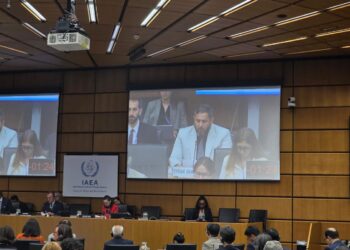
On June 27, 2018, the mandate of the Organization for the Prohibition of Chemical Weapons (OPCW) was expanded , with its new remits including the ability to identify those responsible for the use of chemical weapons, a crucially important achievement in the fields of law and human rights. The primary cause behind the OPCW’s expanded remit were the victims killed or injured by the Syrian regime’s use of chemical weapons against them, especially after Russia ended the work of the international Joint Investigative Mechanism established by Security Council Resolution 2235 in August 2015 in order to identify the perpetrators of the crime of using chemical weapons. Russia achieved this by using its veto power at the Security Council in November 2017 on two consecutive occasions within 24 hours.

A few months later, on April 7, 2018, the Syrian regime again used chemical weapons against the people of Douma city in Damascus Suburbs. With no specialist chemical committee qualified to officially identify the perpetrators of the crime (there is a committee specializing in identifying the perpetrators of crimes, namely the Independent International Commission of Inquiry (COI), whose mandate includes all violations committed in Syria, including those using chemical weapons, but this committee does not specialize in chemical weapons specifically). On April 10, 2018, the United States of America submitted a draft resolution to the Security Council to establish an investigation committee that would have the remit to identify those responsible for using chemical weapons, but this effort was thwarted again by the Russian veto; Russia’s ability to invoke a veto in this way is why most of the world’s countries have resorted to supporting expansion of the OPCW’s mandate. As expected, a number of countries hostile to giving broader powers to international law opposed expanding the OPCW’s remit, and it virtually goes without saying that these countries are: Russia, China, Iran, Lebanon, Venezuela, Cuba, North Korea, and similar authoritarian states that brutally control their peoples and seek to vote for each other in international forums as a bloc opposed to democracy and human rights.

View full Article

ShareTweetShareSend

Related Posts

What Did the International Atomic Energy Agency Decide Regarding Syria?
Articles

What Did the International Atomic Energy Agency Decide Regarding Syria?

17 September 2026
Legitimacy After Authoritarian Rule: The Daily Test of Transitional Justice
Articles

Legitimacy After Authoritarian Rule: The Daily Test of Transitional Justice

17 September 2026
From Documentation to the Court: The Limits of What the Record Can Prove and What It Cannot Claim
Articles

From Documentation to the Court: The Limits of What the Record Can Prove and What It Cannot Claim

7 September 2026
Women Searching for Syria’s Missing and the Significance of an International Day
Articles

Women Searching for Syria’s Missing and the Significance of an International Day

7 September 2026
When Accountability Reaches Further: The Informant Abdul Nasser Barraqi as a Case in Point
Articles

When Accountability Reaches Further: The Informant Abdul Nasser Barraqi as a Case in Point

30 August 2026
From a Request for the Death Penalty to Life Imprisonment: The Case of Ahmed Badreddin Hassoun and the Path of Accountability in Syria
Articles

From a Request for the Death Penalty to Life Imprisonment: The Case of Ahmed Badreddin Hassoun and the Path of Accountability in Syria

30 August 2026
Tweets by Fadel
Fadel Abdul Ghany

Fadel Abdulghany

Founder and Head of the Syrian Network for Human Rights from June 2011 to date.

Master’s in International Law (LLM)/ De Montfort University/ Leicester, UK (March 2020).

Bachelorette in Civil Engineering /Projects Management / Damascus University.

Recent Posts

  • After 90,000 cases, how can Syria restore rights lost to the Anti-Terrorism Court?
  • Syria’s abolition of Assad-era terrorism court ‘welcome’
  • Syrian Network for Human Rights welcomes abolition of Terrorism Court

Quick links

  • Home
  • BIO
  • Articles
  • Researches
  • Books
  • Quotes to the Media
  • Transitional Justice
  • Interviews
    • Talks and Lectures
    • Videos

© 2023 SNHR - Fadel Abdul Ghany.

No Result
View All Result
  • Home
  • BIO
  • Articles
  • Researches
  • Books
  • Quotes to the Media
  • Transitional Justice
  • Interviews
    • Talks and Lectures
    • Videos

© 2023 SNHR - Fadel Abdul Ghany.