Fadel Abdulghany
The contemporary international legal system is based on a set of fundamental principles that are supposed, in theory, to apply with equal force to all sovereign states, foremost among them the prohibition of the use of force stipulated in Article 2(4) of the Charter of the United Nations, and the principle of the inviolability of territorial sovereignty; however, actual practice reveals deep contradictions that weaken the legitimacy of the international legal structure itself.
The phenomenon of double standards – where some countries enjoy de facto immunity from accountability mechanisms, while others face swift condemnations and sanctions – is one of the most prominent factors that undermine the credibility of international law and accelerate the erosion of its peremptory rules.
This disparity is clearly evident when examining the international community’s reaction to repeated Israeli military operations inside Syrian territory, particularly those that intensified significantly after the fall of the Assad regime in December 2014.
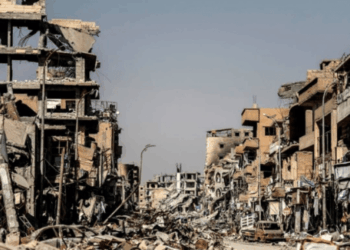
The recent Israeli ground incursions and air raids against the Syrian civilian population have resulted in heavy losses of life and property, and have raised serious questions about respect for international humanitarian law and the basic principles of state sovereignty.
The question then becomes legitimate: If another country had committed similar acts against Israel, how would it have reacted, and what kind of political and legal actions would have been taken in its defense?
Sovereignty, the Prohibition of the Use of Force and the Violation of Treaties
The principle of sovereignty constitutes one of the founding pillars of the contemporary international system, and it means, in essence, that the state enjoys supreme and exclusive authority in exercising its powers within its territorial boundaries without illegitimate external interference.
The prohibition against the use of armed force in international relations has acquired the status of a peremptory norm that cannot be contradicted by agreement, and all states are bound by it regardless of their other treaty obligations.
When military forces cross internationally recognized borders without the consent of the state concerned, carry out arrests, and use lethal force resulting in civilian casualties, these actions constitute a clear violation of the state’s sovereignty and territorial integrity.
The Israeli military operation in the town of Beit Jann on November 28, 2025, clearly embodies this pattern; Israeli reserve forces entered Syrian territory late at night, between approximately two and three in the morning, resulting in the killing of at least thirteen Syrian civilians, in addition to two children who were among the victims, and wounding twenty-five other civilians with varying injuries.
The 1974 disengagement agreement between Israel and Syria adds an additional contractual constraint on any military operations in the geographical area concerned, as it aims to prevent escalation and maintain a degree of regional stability.
The conceptual framework of international law assumes that these basic principles apply to all states without exception. However, the documented pattern of Israeli aggression reveals a worrying gap between the universality of the rules at the level of discourse and their selective application in practice.
Escalation Patterns and the Erosion of Standards
The above does not represent an isolated incident, but rather reveals a systematic escalation pattern that is accelerating the erosion of international legal standards.
This attack constitutes the third major Israeli military operation in southern Syria since the beginning of the transitional phase in the country, following previous incursions that also resulted in civilian casualties and arrests within Syrian territory.
Israel has significantly intensified its military operations across various Syrian regions since the collapse of the Assad government in December 2014, taking advantage of the fragile transitional situation and the power and security vacuums.
Legal rules do not derive their strength merely from being codified in treaty texts or customs, but from adherence to them and their consistent application. When serious violations are repeated without significant consequences, the binding nature of the rules diminishes, because potential violators perceive a tangible decrease in the cost of non-compliance, and the international community’s failure to respond effectively is implicitly understood as acceptance or tolerance of such behavior.
This escalating pattern also raises broader questions about regional stability, since confronting these operations with armed resistance, and the accompanying clashes that last for hours and require significant reinforcements including air raids and artillery, greatly increases the risk of the region sliding into wider spirals of violence.
The international community’s firm response to violations by some actors contrasts sharply with its silence or timid stances when similar actions are committed by Israel, actions that would likely have provoked widespread condemnation, severe sanctions, and possibly military responses if committed by other countries.
The Israeli killing and bombing, which aim to impose forced peace arrangements on Syria, necessitate, by law and morality, the building of a cohesive Arab and international position in solidarity with Syria, rejecting the normalization of this pattern of violations and demanding serious and non-selective accountability for the crimes committed.