Fadel Abdul Ghany,
On this day last year, Syria was liberated from one of the most brutal and criminal regimes in contemporary history. The fall of Bashar al-Assad’s rule marked the end of an era of terror and humiliation. For me, it was also the end of a profound personal alienation; a forced interruption in the course of my life that began in March 2011, when I chose, irrevocably, to stand with the great Syrian revolution, thereby losing my ability to return to my city and my country.
I cannot recall that historic day without memory summoning an older wound: the Hama Massacre of 1982. I grew up in a city whose streets carried the silence of destroyed neighborhoods, the absence of fathers, and families who learned to coexist with oppression and loss. Hafez al-Assad slaughtered the people and also buried the truth under the rubble. Then came the son, inheriting power, carrying the full apparatus of repression with him. For me, the brutal Assad regime was a daily reality that my city absorbed long before my political consciousness was formed.
When the Syrian Revolution erupted in March 2011, I knew my position clearly. I joined it as a human being whose life path had been predefined by the crimes of this regime. From the very first moments, I sided with those who demanded dignity, freedom, and the end of hereditary despotism. Within a few months, I became wanted by several security agencies.
The painful cost of this became apparent later: On November 27, 2011, my father passed away. Under normal circumstances, a son accompanies his father through his final days, holds his hand, says goodbye, and stands by his family at the grave. I was denied all of that. I could not return to Hama, nor could I stand by my mother during those difficult moments. I did not participate in the funeral procession, I did not pray at the grave, and I did not place my hand on the freshly turned earth.
In June 2011, amid this turmoil, I founded the Syrian Network for Human Rights (SNHR). The network was born out of a moral necessity, a response to the killing, arrests, torture, and enforced disappearances that Syrians were facing across the country. What began as a modest initiative soon evolved into one of the most prominent Syrian human rights organizations and a key reference for information on violations. From outside the country, my colleagues and I embarked on a journey of documentation: we recorded names, dates, places, and circumstances, collected testimonies, preserved evidence, and issued reports. We ensured accuracy and professionalism in an environment where denial, distortion, and erasure were among the Assad regime’s primary tools.
However, my work did not put only me at risk. Due to my role and public presence, my family became a potential target. My mother and my older brother, Mo’taz, faced real threats simply for remaining in Syria while I led an organization exposing the Assad regime’s crimes to the world. They were forced to leave their home, their careers, and their stable life, joining the ranks of refugees.
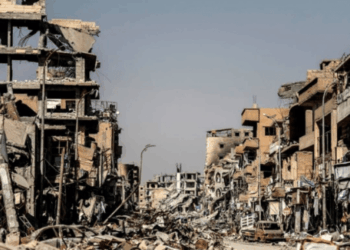
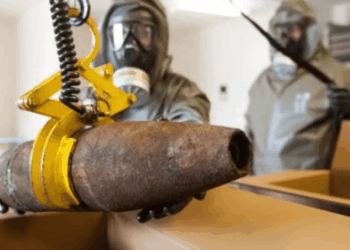
Over the following years, the violence escalated to levels that surpassed our worst initial fears: suffocating sieges, indiscriminate shelling, barrel bombs, chemical weapons, systematic torture in detention centers, and unprecedented mass displacement. Our databases became filled with hundreds of thousands of records; each record represents a life with its face, its family, and its future that was cut short.
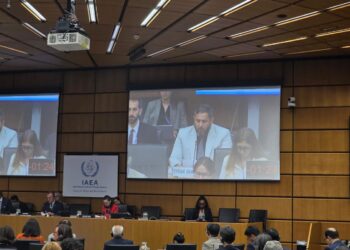
In many moments, the Assad regime seemed impervious to collapse, protected by international paralysis, power balances, and the world’s fatigue with “another Syrian tragedy.” Many thought nothing would change, and that the Al-Assad family’s grip on power would endure longer than the world’s attention. Nevertheless, I continued to document and speak to various countries around the world, providing regular briefings. My conviction was clear: even if justice was delayed, the truth must not be neglected, evidence must be preserved, and the voices of the victims must not be drowned out by the noise of geopolitics.
Against the backdrop of that extended suffering and apparent stagnation, the fall of the Assad regime seemed almost impossible—until it happened. When the news of the regime’s collapse and the end of Bashar al-Assad’s rule was confirmed, a flood of mixed emotions overwhelmed me. On one hand, this was the moment I had dreamed of since the dawn of the revolution: the end of a hereditary despotism that had ruled Syria with blood and terror for over five decades. On the other hand, it was a profound personal victory over a regime that had exiled me, threatened my family, and denied me the chance to bid farewell to my father.
But my joy was neither pure nor light. It was a joy mixed with the memory of the martyrs, the disappeared, and the displaced. I knew that no proclamation, no matter how historic, would bring back those who perished under torture, who were buried under the rubble of their homes, or who passed away in exile, longing for a return they were never fated to witness. The fall of the regime did not erase the scars it left on the country’s body and its people’s soul. Nevertheless, Syrians, for the first time in decades, could now imagine a political future that does not revolve around the continued rule of a single family.
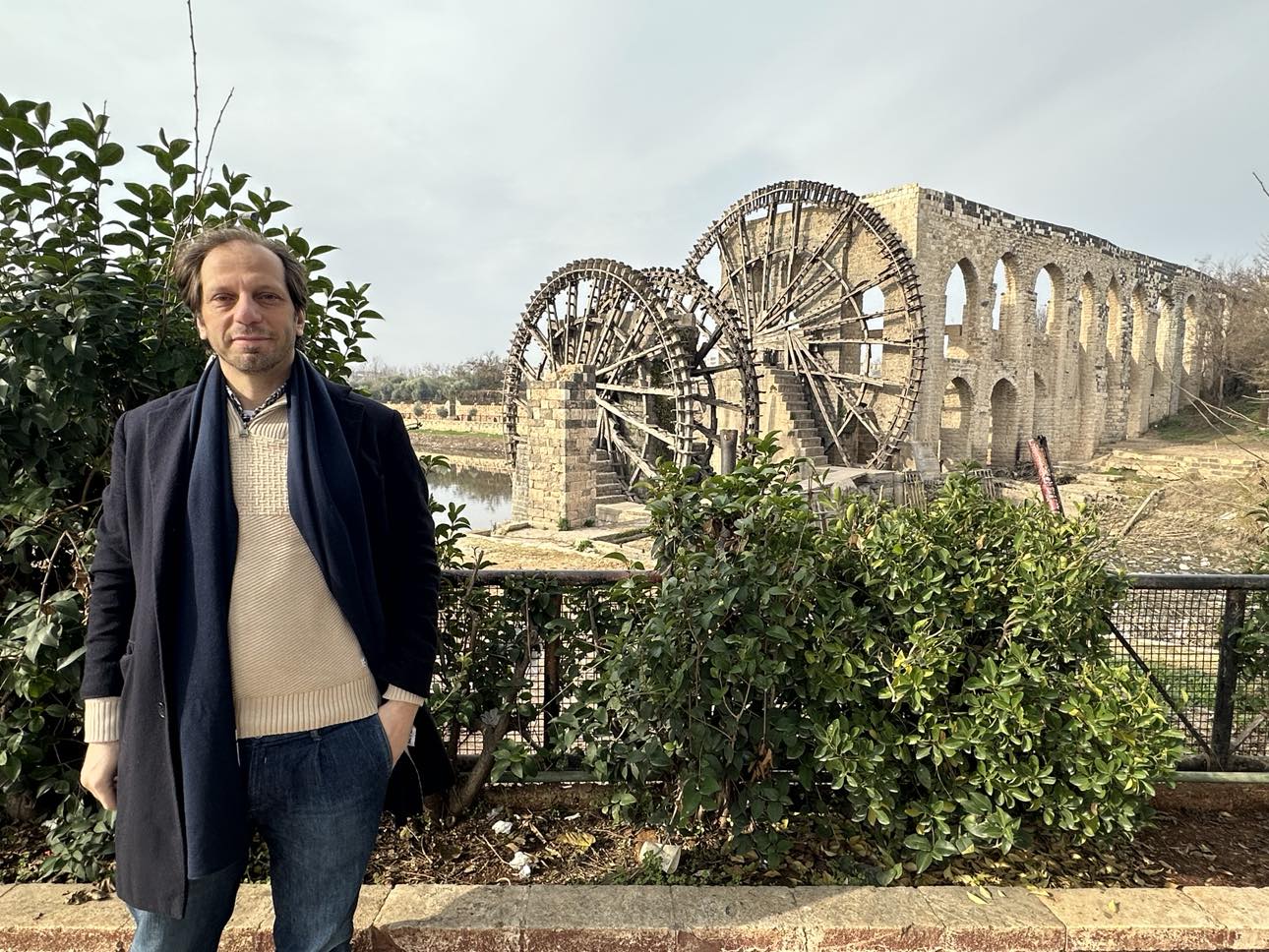
After the liberation of Syria, I was able to do what had been impossible for years: return to my homeland. My border crossing was the termination of a forced exile, the restoration of ties severed by a criminal regime. I headed to Hama, my city, which survived the 1982 massacre and everything that followed. I walked through its streets with layers of accumulated memories inside me, and the weight of the years I had spent away from it.
The heaviest and most deeply significant stop on that journey was my father’s grave. I stood before it after long years of being utterly unable to visit it, and I wept bitterly. My tears were for what the dictatorship had stolen from our lives: the final moments I never had with him, the funeral I missed, and the years I was unable to comfort my mother in her grief. At that grave, the fall of the regime ceased to be a purely political event and transformed in my being into a profound act of personal reclamation.
Therefore, my overwhelming joy at the fall of the Assad regime is the joy of a Syrian who spent years confronting the regime’s crimes through documentation and testimony; the joy of one who witnessed up close the heavy price paid by the victims, survivors, and their families; the joy of a person who refused to accept that his country was eternally destined to submit to the same dynasty that massacred his city in 1982 and devastated Syria in the following decades.
At the same time, I fully realize that liberation is only the beginning of the path. The end of Assad’s rule does not, in itself, guarantee justice, reconciliation, or institutional reform. My work at the Syrian Network for Human Rights taught me that the absence of accountability makes the recurrence of cycles of violence probable. The fall of a criminal regime opens a window of opportunity, but what fills the void depends on the choices Syrians and the international community make in the coming years. For me, the joy of liberation is inseparable from the responsibility to continue working toward a comprehensive transitional justice process that honors the victims, preserves rights, and rebuilds institutions on sound foundations.
A year after the fall of the Assad regime, I reflect on this journey with a mixture of sadness, pride, and resolve. I grieve for my father and for the hundreds of thousands of Syrians who did not live long enough to witness the fall of the dictatorship. I am proud that, despite the devastating cost, I chose to stand with the revolution and dedicated my life to documenting the truth and defending human rights. And I remain determined that this historic moment will not turn into another chapter of an unfinished tragedy.
My story is one of millions of Syrian stories, but through it, the broader meaning of the regime’s fall is revealed: the story of a person who was exiled for demanding freedom, and who then returned to his city and his father’s grave, neither hiding nor in secret, in a Syria that has finally broken the shackles of hereditary despotism. My joy at the fall of Bashar al-Assad is, at its core, the joy of believing that after all we have endured, Syria can finally begin to breathe as a free homeland.
Source:
Radio Free Syria (Facebook)