Fadel Abdulghany
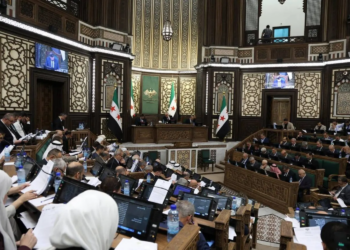
On Tuesday, April 7, the UN Security Council failed to adopt a draft resolution calling for the reopening of the Strait of Hormuz, after Russia and China vetoed the text, which had received the support of 11 of the 15 members.
Bahrain had submitted the draft resolution on behalf of a Gulf alliance comprising the United Arab Emirates, Saudi Arabia, Qatar, Kuwait, and Jordan, with the aim of reaffirming the principle of keeping the strait open to international navigation. Pakistan and Colombia abstained from voting.
In this sense, the vote concluded a long diplomatic process and embodied a deeply entrenched pattern in the Council’s work: a structural inability to reach a decisive agreement when the will of the majority clashes with the interests of the veto-wielding states.
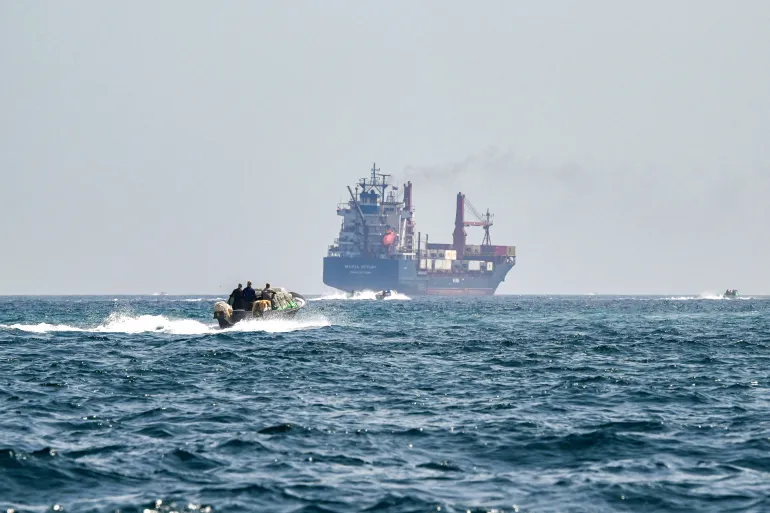
The Strait of Hormuz has been closed to most commercial shipping since the outbreak of the US-Israeli war against Iran on February 28, 2016. Iran’s position prohibits the passage of ships belonging to the United States, Israel, or their allies, while allowing passage to ships from other countries after coordination.
Tehran has indicated its intention to impose transit fees once the conflict ends, while the Iranian navy has declared that the strait has entered what it described as a “new reality” from which it will not return to its previous state.
Approximately 11% of global trade passes through this waterway, including more than a quarter of seaborne crude oil trade, some 20 million barrels per day of oil and its derivatives, and nearly a fifth of the world’s liquefied natural gas trade.
Therefore, its closure would paralyze global energy supply chains, affecting countries far removed from the conflict, particularly food and energy importers in Asia and Africa.
The legal framework governing the strait, in its treaty dimension, is quite clear. Part III of the United Nations Convention on the Law of the Sea, specifically Articles 37 to 44, enshrines the right of innocent passage through straits used for international navigation and stipulates that such passage may not be obstructed or suspended.
This system did not emerge in a vacuum. The International Court of Justice, in its 1949 judgment in the Corfu Channel case, established the principle that states do not have the right to impede innocent passage through international straits.
The subsequent framework of the Law of the Sea Convention was based on this principle, and many international law scholars consider it a binding customary rule. However, this characterization remains debatable regarding the consistency of state practice and the belief in its binding nature, sufficient to establish a full customary obligation against non-party states.
Herein lies the dilemma that was present, explicitly or implicitly, in the background of the vote. Iran is not a party to the Law of the Sea Convention, having abstained from ratifying it. This created a loophole in the direct treaty obligation, which it used to justify its position.
It does not dispute the existence of the right of transit passage in principle, but rather its applicability to the treaty. Instead, it bases its position on the right of self-defense under Article 51 of the UN Charter and on the laws of maritime warfare, which permit belligerent states to restrict access to waters within their area of operations.
However, portraying this selective closure as an inherent consequence of armed conflict remains contested under international humanitarian law and international human rights law, as its consequences fall disproportionately on neutral states with no connection to the hostilities.
Therefore, the underlying legal question of the vote was not whether the right of transit passage existed, but rather whether Iran’s status as a non-party to the Convention, and its reliance on the rights of belligerents, created a recognized legal exception, and whether this exception could hold when the primary victims were neutral commercial entities rather than the parties to the conflict themselves.
The Vote as a Revealing Moment
The significance of the April 7 vote lies in its stark revelation of the limits of what the Security Council can say, not just what it can do. The draft resolution put to a vote was not, in its final form, an explicit enforcement measure, but rather a text that had been gradually weakened to increase its chances of passage.
Previous versions had invoked Chapter VII of the UN Charter and included authorization to use force to ensure freedom of navigation, but Russia and China had rejected these formulations.
When the final text was presented, it had been stripped of any reference to Chapter VII and transformed into a declaration affirming the legal obligation to open the Strait, without any accompanying practical enforcement mechanisms. However, this softening failed to overcome the objection, and the draft was vetoed.
This means that the objection was not only to the proposed enforcement mechanism but also to the very idea of the Security Council taking a collective stance on the Hormuz crisis.
Even after the text was stripped of any direct coercive effect, it remained unacceptable to Moscow and Beijing. From this perspective, the vote revealed the limits of the legitimacy these two countries grant the Council on this issue: not only preventing the adoption of a mandate, but also preventing the establishment of a clear institutional position that would affirm an existing legal precedent.
The significance of this failure becomes even clearer when compared to what happened on March 10, when the Council adopted Resolution 2817 (2026), condemning Iran’s attacks on its regional neighbors, while a competing Russian draft resolution on the maritime crisis failed during the same session.
The Council was not entirely absent from the conflict, but it failed, in every attempt, to address its maritime dimension specifically. Thus, the question is no longer whether the Council discussed the crisis, but rather why it was able to address some aspects of it while failing to address the aspect most closely linked to the global economy.
The Motives Behind the Veto: Between Jurisdiction and Balance Management
The Russian and Chinese vetoes can be understood through their stated positions, without needing to assume unsubstantiated motives. Both countries opposed portraying the Strait’s closure as an enforcement matter falling within the Security Council’s purview, particularly given their stance on the US-Israeli campaign against Iran.
China’s position, however, is more complex, as its direct economic interests appear—ostensibly—to lie in the opposite direction. It imports significant quantities of Gulf oil and has a clear interest in reopening the Strait.
Nevertheless, Beijing suggested that voting against the resolution was consistent with its traditional adherence to the principle of non-intervention and its opposition to any formulations that might open the door, even politically, to enforcement mandates sponsored by Western states.
It is likely that the Chinese veto was not a simple sacrifice of an immediate commercial interest, but rather an expression of a multi-layered strategic calculation. Beijing believes that upholding the principle of non-intervention serves its long-term interests, even if it entails short-term economic costs.
The Russian position, however, appears more straightforward. Moscow maintains a clear alliance with Tehran and consistently seeks to dismantle the Western-led blocs within the Security Council.
The Russian veto, like its Chinese counterpart, did not reflect a positive legal ruling on the legitimacy of closing the Strait, but rather a political assessment that the Council is not the appropriate forum for addressing this crisis.
The vote was not merely a division between supporters and opponents; it also revealed the significance of abstention as a political stance in its own right. Pakistan’s abstention stemmed from its role as a key player in the ongoing regional mediation efforts, coordinated with Egypt, Saudi Arabia, and Turkey.
Islamabad chose to neither vote for nor against the resolution, a calculated decision to avoid damaging its negotiating position. A vote in favor would have been interpreted as siding with the Gulf and Western camps, while a vote against would have placed it on the side of the Russian-Chinese veto and strained relations with its partners in the Gulf alliance.
Colombia’s abstention appears more like an expression of cautious neutrality on an issue dominated by great power rivalry, without carrying the same strategic weight as Pakistan’s abstention.
Nevertheless, the eleven votes in favor still carry considerable political weight. They reflect a clear majority within the Council that supported the principle of keeping the Strait open in accordance with international law. Even if this support does not translate into a binding resolution, it constitutes a political precedent that Bahrain and its allies can draw upon in future proceedings, including at the General Assembly, where the veto power does not apply.
This veto vote raises an institutional question: Does the Security Council still retain an effective role in managing maritime security when it uses its veto power to protect those who disrupt vital maritime infrastructure?
In this context, the Bahraini Foreign Minister’s warning against establishing an “irresponsible pattern of behavior” seems analytically accurate, because the repeated use of the veto to block any action against a specific pattern of disruption not only obstructs the current resolution but also sets a precedent that undermines the Council’s very function. This dynamic is not new to the Council’s failure and inaction, as it has appeared in other crises where the interests of the five permanent members were directly intertwined—all examples of the same structural logic. However, what distinguishes the case of the Strait of Hormuz is the exceptionally wide-ranging economic impact.
Therefore, the gap in this case between the scale of the disturbance and the Council’s ability to respond appears wider than in most precedents. The reason is not the absence of legal authority, but rather its political obstruction from within the Council’s own structure.
It might be argued that the Security Council is not the most appropriate forum for such maritime disputes, and that the Law of the Sea Convention includes specific dispute resolution mechanisms, including arbitration under Annex VII.
However, this objection does not negate the problem so much as it reframes it. Iran is not a party to the Convention, which limits the possibility of directly resorting to its mechanisms. Furthermore, the International Maritime Organization lacks enforcement powers.
The General Assembly remains an option for issuing a declaratory resolution or requesting an advisory opinion from the International Court of Justice, but neither of these paths provides the binding force that a Security Council resolution would have.
The practical result is that the vacuum created by this incapacity may be filled by unilateral measures or maritime alliances outside the multilateral framework, similar to the tanker escort operations during the First Gulf War in the 1980s, thus returning maritime security to the logic of the balance of power rather than the logic of law.
Conclusion
The vote on the Strait of Hormuz was not merely a procedural gaffe, but rather a revealing moment exposing a recurring structural problem within the Security Council.
The Council, designed to guarantee international peace and security, with the veto power intended to prevent enforcement measures against a major power, has effectively reached a point where this right can even block the issuance of a formal statement reaffirming existing legal obligations.
In the case of Hormuz, the veto not only blocked a resolution authorizing the use of force, but also a watered-down version that merely reaffirmed a fundamental legal principle. Herein lies the true significance of the vote: the Council has not only lost its enforcement power, but, in some cases, is also losing its very institutional capacity for expression.
As for the economic cost of closing the Strait, it remains borne by states and peoples who have no connection whatsoever to the decision to close it, nor to the obstruction of its resolution.