Fadel Abdulghany
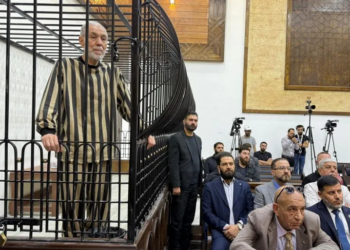
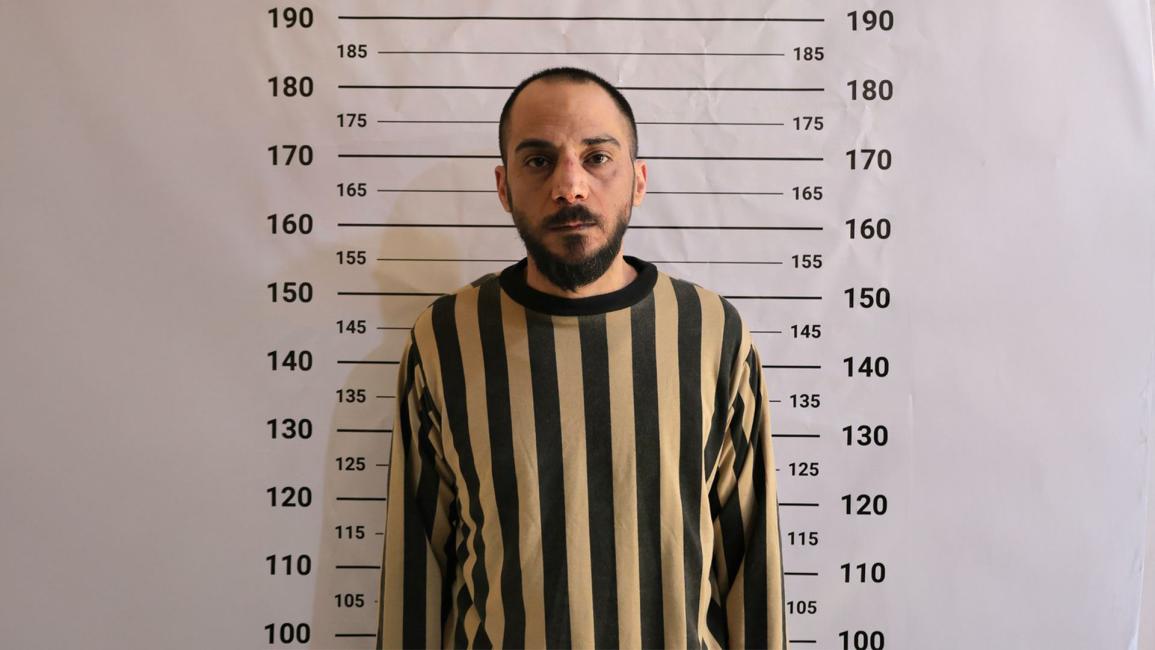
Amjad Youssef was arrested on 24 April of this month in the Hama countryside, in an operation carried out by the Syrian Internal Security Forces. He is the principal suspect in the perpetration of the Tadamon neighborhood massacre in southern Damascus in 2013, and was responsible for security operations in the south of the capital during the years of the conflict. This arrest is among the most prominent cases in post-Assad Syria in which a person accused of perpetrating a mass crime documented by direct material evidence comes into the custody of the state. Yet detention, however significant, opens a path toward accountability and does not in itself constitute complete accountability; it is the beginning of the judicial road, not its end.
The massacre took place on 16 April 2013, and its execution was attributed to members of Branch 227, known as the Region Branch, affiliated with the Military Intelligence Directorate. The leaked footage published by The Guardian in 2022, as part of an investigative report prepared in collaboration with researchers from the Holocaust and Genocide Center at the University of Amsterdam, showed the execution of blindfolded civilians who were forced to run before being shot, with their bodies thrown into a pit that was later set on fire. That recording documented the execution of 41 people, but it was one of 27 video recordings of similar killings at the same site. Estimates by the Syrian Network for Human Rights indicate that the toll of victims and missing persons in the Tadamon massacre may exceed 450 people. Amjad Youssef appeared in some of that footage, and also confessed in recordings to committing crimes in the Tadamon neighborhood.
Perpetrators documenting their crimes themselves represents one of the most direct forms of evidence in cases arising from the Syrian conflict. However, this type of evidence does not dispense with a full judicial investigation, but it lightens the burden of proof that public prosecutors in international crimes cases often need years to build from disparate sources, including survivor testimony, satellite imagery, security documents, detention records, and incomplete video clips.
The importance of this arrest also stems from the operational position Youssef held within the structure of the security branch. Mid-ranking members may possess detailed knowledge that is not equally available to senior commanders or lower-ranking executors. This knowledge may include the identities of victims who have not yet been documented, the burning and burial sites in Nisreen Street and the surrounding areas, the structure of extortion and abduction networks at the checkpoints, and the chain of command within Branch 227 and the Military Intelligence Directorate more broadly.
The filmed conduct carries legal significance that goes beyond the killing incident itself. The deliberate recording, the driving of victims into a pre-prepared pit, shooting them in succession, and then burning the bodies, are all indicators of organization, intent, and a sense of impunity. As for the precise legal characterization, it requires linking these acts to the broader context. Establishing that they were committed as part of a widespread or systematic attack directed against a civilian population, with the perpetrators’ knowledge of that attack, satisfies the elements of crimes against humanity. Likewise, willful killing and inhuman treatment of protected persons fall within the grave breaches of international humanitarian law and constitute war crimes. The evidence available in this case, particularly the video recordings, the accused’s confessions, and survivor testimonies, allows for consideration of both characterizations together, not one to the exclusion of the other.
This case leads to a question that goes beyond individual responsibility. As James Waller explains in his book Becoming Evil, violent systems do not produce atrocities through direct orders alone, but through institutional and social environments that normalize cruelty, reward absolute obedience, and marginalize those who hesitate or object. From this angle, Amjad Youssef does not appear as an anomaly within the Assad regime, but as one of its products. This does not lessen his individual criminal responsibility; rather, it underscores the need to try the direct perpetrator and to investigate the institutional structure that enabled and protected him. Furthermore, the repetition of these acts, their organization, and their connection to a clear security structure constitutes circumstantial evidence of the knowledge of higher levels in the chain of command, or at the very least of what they ought to have known, opening the door to consideration of command responsibility.
The families of the Tadamon victims are rights-holders. What these families demand is not limited to the detention or punishment of the accused, but includes knowing the fates of the victims, locating the remains, obtaining death certificates, and securing official acknowledgment of the identities and fates of their loved ones. These rights require a parallel investigation process to be conducted during Amjad’s detention, and within a framework of legal guarantees, to extract information related to the mass graves and the burning and burial sites. The information the accused may possess could be the last opportunity to uncover the fates of victims whose fates remain unknown. The importance of this track increases with regard to the women and girls who were abducted at the checkpoints, whose fates remain unknown. Many of them may not appear in lists of the killed or missing, due to fear of social stigma, the annihilation of entire families, the collapse of civil records, or families’ refusal to report. This is a documentation gap in the Tadamon neighborhood file, and it cannot be addressed by traditional means alone. It requires gender-sensitive investigations, safe and semi-confidential interviews, and the cross-referencing of testimonies from survivors who were released in exchange for sums of money or through local mediation.
For this reason, Amjad Youssef is more valuable alive before an independent court than if he were summarily executed. His presence in state custody should be transformed into an opportunity to expose the broader network, locate the bodies, link the crimes to the chain of command, and widen the circle of accountability from the direct executors to those who ordered, covered up, enabled, and concealed.
Amjad’s arrest shows that the Syrian authorities are capable of exercising operational influence in pursuing some perpetrators, but its value will be measured by what follows: the filing of formal charges, the preservation of evidence according to international criminal standards, the guarantee of a fair and public trial before an independent judiciary, the involvement of victims and their families, the protection of witnesses and researchers, and the prevention of any political settlements that would in practice lead to the impunity of senior figures involved.
The residents of the Tadamon neighborhood came out celebrating the arrest of the principal suspect in one of the most documented crimes in the history of the Syrian conflict, and many Syrians shared in this, including Palestinians of Syria, with a feeling that accountability has become possible. However, the actual meaning of this day will not be complete with mere arrest, but with its conversion into a judicial path that uncovers the truth, preserves the rights of the victims, and opens the way to holding accountable the structure that produced the crime, rather than settling for punishing one of its faces.