Fadel Abdulghany
For many years, access to much of the evidence and information critical to achieving justice on behalf of Syrian victims of atrocity crimes was not possible. Today, domestic Syrian officials pursuing accountability measures hold the names of suspects, records, and materials that were not available to investigators for more than a decade. However, turning this access into credible convictions requires meeting a substantial threshold: proving what a specific accused did, based on a law that was in force at the time of the attack, and through proceedings that guarantee a fair trial and allow for international cooperation.
On Sept. 3, 2026, the Syrian Ambassador to the United Nations, Ibrahim Olabi, told the Security Council that Syria is working toward holding the first trial of those who used chemical weapons in the country. Earlier in 2026, the Syrian authorities announced the detention of 18 people connected to the former chemical weapons program, among them senior officers, former employees of the Syrian Scientific Studies and Research Center (the state agency that developed and produced the former regime’s chemical weapons), and security officers who supervised the program.
In separate announcements, the Ministry of Interior named several detainees and set out the charges against them:
- Major General Adnan Abboud Helweh is accused of being one of the officers most responsible for the sarin attack on Ghouta in August 2013.
- Brigadier General Khardal Ahmad Dayoub is accused of contributing to the logistical coordination of the chemical bombardment of Eastern Ghouta.
- Colonel Ahmad Habib Ali is accused of supervising the storage of sarin and the manufacturing of chemical weapons.
Also in September 2026, security forces detained at least 16 former pilots and air force officers over the conventional bombardment of populated areas (distinct from the chemical attacks).
These individuals have been formally accused of these alleged crimes by the Syrian government, but the charges are not judicial findings. The available information indicates that the government is detaining accused individuals and preparing for trials; however, it does not, so far, show that any indictment relating to the use of chemical weapons has been filed.
At the same time, access to evidence has widened. In January 2026, the Organization for the Prohibition of Chemical Weapons (OPCW) published the findings of an investigation into the perpetrators of a chemical attack – the first such investigation with which the new Syrian authorities cooperated. In August 2026, the OPCW received documents found at the Scientific Studies and Research Center. The OPCW also continues to share information with the United Nations’ International, Impartial and Independent Mechanism (IIIM).
With the support of this increased evidentiary resourcing (as well as the change in government), Syria now has an opportunity for domestic criminal investigations into the use of chemical weapons that was not possible under the Assad regime. However, proving who carried out an attack does not necessarily mean proving the guilt of a specific accused individual, as a matter of criminal law. A credible prosecution requires five elements:
- A law criminalizing the conduct at issue that was in force at the time the act was committed;
- A mode of individual liability that is both legally available and can be attributed to the accused;
- Evidence linking that person to a specific attack;
- A penalty that the law permitted at the time the act was committed;
- Proceedings that guarantee a fair trial and allow, where needed, international cooperation.
Syria’s access to evidence is advancing at a faster pace than the development of its domestic criminal framework and its arrangements for international cooperation. This gap will determine whether the first chemical weapons trial will be built on a solid legal basis.
Two Attacks, Two Different Gaps to Conviction
International investigators have established that many chemical weapons attacks took place in Syria during the armed conflict, and some investigations have identified the forces responsible for them. The mandate of the OPCW Fact-Finding Mission (FFM) is to determine whether toxic chemicals were used as weapons, without identifying the perpetrators of the attack. The OPCW’s Investigation and Identification Team (IIT), meanwhile, identifies the perpetrators of attacks based on the “reasonable grounds” standard of proof. These OPCW teams, as well as various U.N. mechanisms, have produced reports of significant import for potential accountability for chemical weapons use. However, two specific incidents illustrate the gaps that must be filled before a credible prosecution can proceed.
Chemical Weapons Use in Kafr Zita
The case of Kafr Zita illustrates the limits of what such a finding can prove. In its fifth report, published in January 2026, the IIT concluded that there are reasonable grounds to believe that an Mi-8/17 helicopter belonging to the Syrian Arab Air Force dropped at least one chlorine cylinder on a cave system in Kafr Zita on Oct. 1, 2016. The helicopter had taken off from Hama Air Base and was operating under the control of the so-called “Tiger Forces,” an elite Syrian Army formation commanded by Brigadier General Suhail al-Hassan, which the IIT had also found in control of the helicopter used in the 2018 chlorine attack on Douma. The use of chlorine injured 35 people, who are named in the report.
The team has therefore attributed the attack to a specific military entity, but only on the “reasonable grounds” standard, a threshold lower than that required for a criminal conviction. The report itself also stresses that the team is not a judicial body authorized to determine individual criminal responsibility.
What any specific person did, or knew, still needs to be proven. Building a case against any individual pilot to prove that they carried out the attack and knew that the munition involved was a chemical weapon requires establishing his assignment to the aircraft, the sortie he flew, the mission assigned to him, and his knowledge of the nature of the payload, with each element supported by independent evidence. In contrast, a case against a military commander will depend on establishing the orders that they gave, their approval of the operation, effective control, knowledge, or the lines of command and reporting. Military rank alone does not prove any of that. Nor is there public information linking any of the current accused to the Kafr Zita attack.
Chemical Weapons Use in Ghouta
Ghouta witnessed the largest and most notorious chemical attack in Syria, but the road to conviction is even longer. The OPCW IIT’s attribution mandate (as well as that of the OPCW-UN Joint Investigative Mechanism) extends only to the incidents first investigated by the OPCW Fact-Finding Mission, which was established in April 2014, eight months after the Ghouta attack. As a result, Ghouta falls outside the scope of these mandates.
Other pre-existing UN entities did investigate the incident, but they are also limited in their ability to advance a potential criminal prosecution. For instance, the report of the United Nations Mission to Investigate Allegations of the Use of Chemical Weapons in the Syrian Arab Republic, issued in September 2013, concluded that there was clear and convincing evidence that surface-to-surface rockets containing sarin had been used. However, the mission’s mandate was limited to verifying whether chemical weapons had been used, and it did not include identifying who used them. In February 2014, the UN Commission of Inquiry on Syria found that the perpetrators “likely had access to the chemical weapons stockpile of the Syrian military,” but it concluded that its evidentiary threshold for identifying them had not been met. No UN or OPCW mechanism has since formally attributed the attack to a specific party. The Permanent Representative of Syria to the OPCW acknowledged, in a statement to the Syrian Arab News Agency (SANA) in August 2026, that no international investigation has been mandated to identify the perpetrators of the Ghouta attack.
Civil society documentation is subject to similar limits. The Syrian Network for Human Rights (SNHR) documented 222 chemical attacks between Dec. 23, 2012, and Dec. 8, 2024. It attributed 217 of them to the Assad regime forces. The attacks attributed to the regime killed 1,514 people, among them 1,413 civilians. This record documents incidents, victims, and patterns; however, it was not designed to prove the individual criminal responsibility of a specific accused.
Nonetheless, there are strong indications that the Syrian state plans to pursue these prosecutions. For instance, Syrian authorities have linked at least two of the detainees whose names were announced, Helweh and Dayoub, to the Ghouta attack.
Accordingly, with regard to Ghouta, the Syrian prosecution will first have to prove who carried out the attack, then prove what each accused contributed to it, according to the applicable criminal standard of proof. Unlike in Kafr Zita, the prosecution cannot start from an OPCW attribution finding that identifies the responsible military formation. In other words, there is much ahead for the Syrian state if it is to advance credible prosecutions against individuals accused of contributing to this attack.
The Legal Basis for Prosecution
To properly assess the legal basis for prosecution, the Syrian state must include in its consideration the following factors: (1) treaty obligations and their temporal limits; (2) whether to charge ordinary versus international crimes; (3) and four distinct legal questions that arise in the instance that the state opts to pursue international crimes, which I will articulate below.
Treaty Obligations and Their Temporal Limits
Article VII of the Chemical Weapons Convention (CWC) obliges States Parties to prohibit natural and legal persons from undertaking any activity prohibited under the Convention, including by enacting penal legislation. In its Article VII implementation report dated Aug. 26, 2026, which reflects the position as of July 31, 2026, the OPCW classified Syria as having “No legislation” under its assessment of the initial measures required to implement the Convention, but noted that Syria had draft legislation “under development and consideration.” However, that classification does not mean that Syrian law contains no ordinary criminal offenses capable of applying to chemical-weapons-related conduct.
The Convention entered into force for Syria on Oct. 14, 2013, that is, about two months after the Ghouta attack, and therefore it cannot serve as the source of a treaty obligation with respect to that attack. However, Syria had acceded to the 1925 Geneva Protocol in 1968. The Protocol prohibits the use of chemical weapons “in war” (although the extent of its applicability to a non-international armed conflict remains debated). As for the customary prohibition, discussed below, it is not subject to this limitation in the same way, and may be the stronger avenue.
Ordinary or International Crimes? The Najib Verdict
When it comes to charging options, the prosecution has two possible paths, and they may overlap. The first is to bring charges based on crimes that already exist in national law, such as murder or intentional bodily harm. This path can provide a legal basis whenever the elements of these crimes and the jurisdictional requirements are met, even if the legal characterization does not reflect the (potentially) international nature of the conduct. As for the second path, it is to charge, or to characterize, the conduct as a war crime or a crime against humanity, which requires an independent legal basis. The problem arises when the court convicts a person of ordinary crimes and then gives the same acts the legal characterization of an international crime, or attaches to them the consequences of this characterization, without establishing the legal basis that permits it.
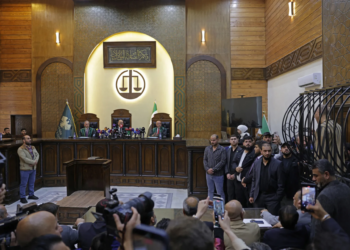
The verdict issued on Aug. 11, 2026, against Atef Najib, the former head of the Political Security Branch in Daraa, illustrates this difficulty. According to the official account of the verdict, the Fourth Criminal Court in Damascus convicted him of offenses under national law, including premeditated murder, intentional killing in aggravated forms, torture resulting in death, deprivation of liberty, and kidnapping. The court classified his conduct as crimes against humanity and national crimes. Because it found that his acts occurred between February and April 2011, before mid-July 2012, the date it fixed for the start of the non-international armed conflict, it did not classify them as war crimes. It applied that additional classification to the defendants tried in absentia (including former President Bashar al-Assad), whose acts it found extended beyond that date. Human Rights Watch, which monitored several hearings and obtained the referral decision unofficially, reported that the court’s decision used the Rome Statute definition of crimes against humanity (despite the fact that Syria is not a party to the Rome Statute), that the decision had not been made public, and that the court had published no official written document setting out the charges.
SNHR’s pre-verdict analysis of the indictment decision had identified a related gap: the Syrian Penal Code does not define crimes against humanity or war crimes and does not codify command responsibility as a mode of liability. In the summary of the judgment read in court on Aug. 11, as reported by SANA, the presiding judge stated that the established acts of the defendants tried in absentia, committed “as principals or by virtue of command responsibility” (author’s translation), extended beyond mid-July 2012. The same summary described Bashar al-Assad as an indirect perpetrator whose contribution went beyond a failure of oversight. Human Rights Watch reported after the verdict that the other defendants tried in absentia were convicted of similar crimes, including on the basis of command responsibility, and noted that neither command responsibility nor indirect perpetration is codified as a mode of liability in Syrian law. The full written judgment is needed to determine which acts the court attributed to which defendants through command responsibility, and the legal basis and elements it applied.
The court said that its 396-page decision will be published once the names of protected witnesses have been redacted. That has not yet happened. Until it is published, the legal basis of the verdict and its reasoning cannot be fully assessed.
Four Distinct Legal Questions
Beyond these considerations, any charge of an international crime relating to a chemical attack must answer four distinct questions, which I take in turn below.
- 1. Was the weapon prohibited?
Yes. In Prosecutor v. Tadić (Decision on the Defence Motion for Interlocutory Appeal on Jurisdiction, 1995), the Appeals Chamber of the International Criminal Tribunal for the former Yugoslavia (ICTY) concluded that there was a general consensus that the use of chemical weapons is prohibited in internal armed conflicts. The International Committee of the Red Cross (ICRC) study on customary international humanitarian law (IHL) reached the same assessment in Rule 74.
- 2. Did its use entail individual criminal responsibility at the time of the act?
That the weapon was prohibited does not, on its own, settle whether its use constituted inherently criminal activity, that is, whether that action entailed individual criminal responsibility at the time. The Tadić decision treated the existence of individual criminal responsibility as a separate condition for a violation to qualify as a war crime. It concluded that customary law imposes criminal responsibility for serious violations of Common Article 3 of the 1949 Geneva Conventions, and for breaches of certain fundamental principles and rules regarding means and methods of combat in civil strife. However, Tadić did not rule on criminal responsibility for the use of chemical weapons specifically; therefore, it provides building blocks for legal reasoning, not a conclusive answer on this specific matter.
The 2010 Kampala amendment, contained in resolution RC/Res.5, added to the Rome Statute the use of poison, poisoned weapons, and asphyxiating, poisonous or other gases in non-international armed conflicts. Its preamble indicates that these acts constitute serious violations reflected in customary international law. This is a relevant legal indication, but it has clear limits:
- It does not bind Syria, because Syria is not a State Party to the Rome Statute;
- It does not conclusively settle the content of customary law on the date of each individual attack; and
- It does not create jurisdiction and does not specify a penalty.
Therefore, any Syrian court must identify a sufficiently clear legal basis, drawing on these references and other relevant legal sources, in order to conclude that the conduct entailed individual criminal responsibility on the date of the attack.
- 3. How can responsibility be attributed to the accused?
The mode of liability to be applied must also be sufficiently recognized, and its application must have been legally foreseeable at the time the act was committed. National Syrian law does not codify command responsibility for the acts of subordinates, although the ICRC study of customary IHL considers it a customary rule applicable in both international and non-international armed conflicts (Rule 153). Nevertheless, a senior officer can be charged on the basis of ordering, instigating, or other forms of participation in the attack where the evidence supports this. This legal gap matters most when the evidence only proves the commander’s failure to prevent the crime or punish its perpetrators. As noted above, a Syrian court’s oral summary has already invoked command responsibility in relation to defendants tried in absentia. To better understand whether this has any precedential value for future prosecutions pertaining to chemical weapons use, the written judgment will need to be examined to determine the defendants and acts to which that mode of liability was applied, its elements, and the legal basis on which the court applied it.
- 4. What penalty was legally available at the time of the criminal conduct?
Article 15(1) of the International Covenant on Civil and Political Rights (ICCPR) prohibits imposing a heavier penalty than the one that was applicable at the time when the criminal offense was committed. Therefore, characterizing the act as an international crime (and specifically one for which national law did not specify a penalty at the time it was committed) raises a separate issue relating to the principle of legality of crimes and penalties (nullum crimen, nulla poena sine lege). Where, however, the prosecution relies on an existing national crime, the penalty prescribed for that crime provides a clear legislative basis for sentencing. Any other basis for the penalty requires an independent, lawful, and non-retroactive legal basis.
Article 6(2) of the ICCPR adds another restriction, as it permits the death penalty to be imposed only for “the most serious crimes.” The UN Human Rights Committee, in its General Comment No. 36, interprets this phrase narrowly, limiting it to crimes involving intentional killing.
From Records and Documentation to Criminal Evidence
Additionally, the Syrian state will need to effectively utilize the records and documentation now available to it to establish the elements of the crimes it seeks to prosecute – it is not enough simply to have possession of this information. Turning documentation into prosecutions requires two parallel tracks of investigation:
- Establishing the facts of the attack: identifying the chemical used, the munition, the delivery platform, the launch point, the target, the medical evidence, and any alternative explanations (such as claims that the incident was staged, or that a conventional strike released toxic chemicals stored at the site).
- Establishing the chain of responsibility: identifying who planned the operation, who approved it, who authorized it, who loaded chemical munitions, who flew the sortie, who reported on the outcome of the operation, and what each person knew, when.
For each element of each charge, investigators should maintain an evidence matrix (an internal working document that later underpins the indictment and disclosure to the defense), recording the evidence supporting it, its source, what other evidence corroborates it, any material that contradicts it, and the gaps that remain. They should also:
- De-duplicate material, because the same video or the same witness may appear in several databases and thus appear to represent several independent sources, but is in fact merely a repetition of the same source;
- Attach to each item provenance information and any restrictions imposed on its use (such as a provider’s requirement of prior consent before onward disclosure, the limits of the consent given by witnesses, or a condition that the material not be used in proceedings that could lead to the death penalty); and
- Actively test alternative explanations, such as the possibility that another aircraft carried out the sortie or that the records were altered.
Prosecutors should be involved from an early stage in setting investigation priorities. Archivists and evidence managers should also maintain an unbroken chain of custody, documenting who has held each item, when, and what was done to it; any gap gives the defense grounds to challenge the item’s authenticity. They should likewise preserve the provenance and integrity of the materials, as well as the separateness of the original collections from which they were drawn.
The question of preservation is urgent. During its August 2026 deployment, the OPCW verified the treaty-obligated destruction of 42 declared and unfilled chemical aerial bombs. It also collected samples from the remaining bombs and, as of late September, was awaiting the analysis of those samples before the remaining bombs were destroyed. The OPCW is also processing recovered documents from the government’s chemical weapons program. This work serves verification purposes under the Chemical Weapons Convention, not criminal investigation, and is subject to the OPCW’s mandate and its confidentiality rules. This has a practical consequence for prosecutors: the OPCW decision that established the IIT provides for the OPCW to preserve and provide information to the IIIM and other investigatory entities established under U.N. auspices, not to national prosecutors, and each transfer must comply with the OPCW’s confidentiality rules. OPCW-held material is therefore most likely to reach a Syrian court through the IIIM, and on the IIIM’s own conditions, discussed below.
Destruction remains a treaty obligation. Under Articles I and IV of the Convention, each State Party must destroy the chemical weapons it owns or possesses, under OPCW verification. In 2013, the Security Council, in Resolution 2118, made Syria’s compliance with an accelerated destruction timetable legally binding. The purpose is disarmament: to eliminate the weapons irreversibly, so that they can neither be used again nor fall into other hands. The Convention makes no exception for material that might serve as evidence.
These treaty obligations and the pursuit of criminal justice are nonetheless not inherently in conflict. The Convention itself requires States Parties to criminalize the conduct it prohibits (Article VII), and destruction removes the weapon but not the crucial information it carries — provided that this information is captured first. The key evidentiary issue, therefore, is how to preserve the evidentiary value of these materials before irreversible steps are taken. This can be done by photographing and documenting each item, recording its markings and storage location, and taking samples under a documented chain of custody, where the OPCW’s mandate and the applicable confidentiality rules allow this.
The Death Penalty and Access to International Evidence
The IIIM is preparing case files on the sarin attacks that took place in March and April 2017 in Hama and Idlib, including the Khan Shaykhun attack. It only shares material with jurisdictions that respect fair trial standards, and on the condition that the death penalty is not applicable to the crimes concerned. The frequently asked questions published by the Mechanism confirm that the same standard applies to the Syrian authorities.
Both the Najib verdict and the verdict the same court issued on Aug. 18, 2026, against Wassim al-Assad, a cousin of the former president convicted of murder and torture, included death sentences. Therefore, the possibility of applying the death penalty in a case related to chemical weapons may prevent the Syrian authorities from obtaining the Mechanism’s assistance, unless the case is heard under arrangements that meet its conditions. A discretionary assurance issued by the prosecution may not be enough, because the Mechanism asks whether the death penalty applies to the offenses under consideration, and that is a question of law that the court, not the prosecution, will settle at sentencing. Any workable arrangement must therefore bind the court or the state as a whole: for example, legislation excluding the death penalty for the offenses concerned, or a formal and binding committment at the state level that any death sentence will be commuted, for instance of the kind used in extradition practice. Since only the Mechanism can judge whether a given arrangement meets its conditions, it should be agreed with the Mechanism directly, before any request for assistance is submitted.
The fair trial guarantees set out in Article 14 of the ICCPR, as interpreted by the Human Rights Committee in its General Comment No. 32, play a similar practical role. These guarantees include adequate time and facilities for the preparation of the defense, the right to examine, or have examined, witnesses and challenge expert evidence, and the public pronouncement of judgment. These guarantees not only determine how far a conviction can withstand legal scrutiny, but may also determine whether the IIIM, and other authorities subject to their own legal requirements, are able to provide assistance.
What Should Be Done Now?
Syrian prosecutors and investigating judges should not bring charges relating to chemical weapons against any detainee unless they are able, for each accused, to identify the incidents concerned and the evidence linking each individual to those incidents. When they seek to characterize the conduct as an international crime, the indictment should answer the four legal questions that I have set out above. They should also coordinate with the OPCW so that, where its mandate allows, the evidentiary value of the remaining munitions and recovered documents is captured before any irreversible step is taken.
The Syrian legislature, meanwhile, should undertake two separate tasks. The first is the full national implementation of the Chemical Weapons Convention with respect to future conduct, which would require penal legislation that criminalizes every activity the Convention prohibits (including the development, production, stockpiling, transfer, and use of chemical weapons, and assisting or inducing others to engage in them), extends to Syrian nationals wherever they act, and sets penalties commensurate with the gravity of these offenses, together with regulatory controls over the toxic chemicals and precursors listed in the Convention’s schedules. The second is to enact legislation establishing a clear legal framework for international crimes that defines the crimes, the modes of liability, jurisdiction, and penalties. Any application of this framework to past acts must remain within the limits of the principle of legality, and must apply to all perpetrators equally.
The Ministry of Justice, for its part, should agree with the IIIM on arrangements relating to the death penalty that allow the Mechanism to provide assistance. It should then submit specific requests naming the suspects and the incidents concerned. As for Ghouta , the Ministry should seek the relevant judicial records from third-party states through mutual legal assistance channels, above all from France, whose investigating judges have been examining the August 2013 attacks since 2021 and have issued arrest warrants in that case. Like the IIIM, these states are likely to apply their own human rights and death penalty conditions to any such cooperation.
International donors and supporting states should fund the forensic and technical capacities, and the evidence management and prosecutorial capacities, that these cases require. The OPCW and the IIIM should also provide technical cooperation, each within the limits of its mandate: the OPCW, for instance, by training Syrian investigators and forensic personnel in the sampling and handling of chemical evidence and by helping them interpret the technical findings of its reports; and the IIIM by sharing its analysis of military and security command structures and by advising on how to build case files that link specific units, aircraft, and commanders to specific attacks.