Fadel Abdulghany
Damascus-SANA
The director of the Syrian Network for Human Rights, Fadel Abdul Ghani, affirmed that on this day, fifteen years ago, Syrians took to the streets carrying the simplest human demands: freedom, dignity, and justice, without carrying weapons, but rather their voices in the face of a machine of repression that continued for decades to crush everything human, and they were well aware of what awaited them, and so it was.
A Record that Reveals the Extent of the Violations
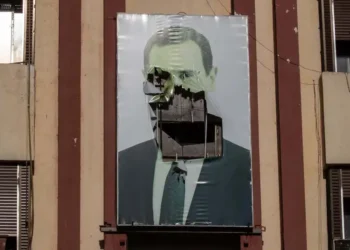
Abdulghany indicated in a statement to SANA’s correspondent on Wednesday that the fifteenth anniversary comes this year with Syria without the Assad regime, whose crimes the Syrian Network for Human Rights has documented over fourteen years with patience and determination.
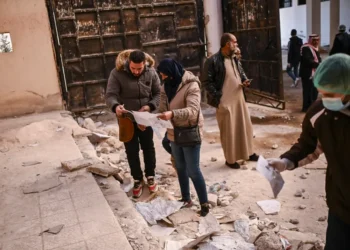
He explained that fifteen years revealed the extent of the crime committed by the defunct regime against the Syrian people, from crimes against humanity documented by the network in Daraa, Hama, Aleppo and other governorates, to systematic war crimes, from bombing hospitals and using chemical weapons, to the policy of systematic starvation and the suffocating siege of civilian areas, stressing that this was proven with documents and testimonies despite the denial of the regime and some of its sympathizers.
Justice is a Cornerstone for Building a New Syria.
Abdulghany explained that the Syrian revolution was not launched to overthrow a single individual, but rather to establish a radically different state. He emphasized that the path to building this state passes through justice, as there can be no genuine reconciliation without accountability, and no secure future without actual reparations for victims and their families. These are principles confirmed by comparative experiences and enshrined in international law.
He pointed out that the file of detainees and the forcibly disappeared remains open and bleeding. The tens of thousands of prisoners whose fate is unknown constitute a deep wound in the body of Syrian society, which will not heal until their fate is fully revealed and the remains of those who have died are returned to their families. He affirmed that the Syrian Network for Human Rights will continue to pressure all relevant parties to give this file the highest priority.
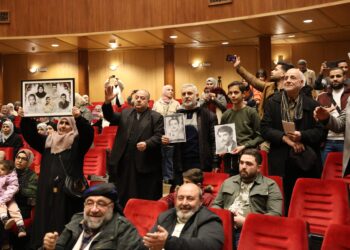
Abdulghany added: On this anniversary, heads are bowed before the souls of all the martyrs of the Syrian revolution, and before the names of those who ignited its spark, while remembering all those who died under torture in the regime’s prisons, stressing that the duty of the living is to inform the world about what happened and to ensure that it is not repeated.
Building Constitutional Institutions
The director of the Syrian Network for Human Rights believes that the next phase imposes a historical responsibility on all Syrians: to move beyond the calculations of the past without erasing them from collective memory, to embrace Syrian diversity within a unified national project, and to build constitutional institutions that protect citizens from any future tyranny.
Abdulghany concluded by emphasizing that this anniversary represents a day to renew the pledge to the martyrs who dreamed of a different Syria, and to future generations who deserve a homeland that does not arrest, starve, or displace its children.
Throughout more than a decade of the Syrian revolution, the massacres perpetrated by the former regime constituted one of the most brutal chapters of the war. Amidst widespread destruction and the absence of local justice mechanisms, human rights documentation emerged as the most crucial weapon in combating amnesia and impunity.
The reports issued by the Syrian Network for Human Rights (SNHR) are considered a reliable source for many UN bodies, and several international resolutions have been based upon them.
The Syrian Network for Human Rights (SNHR) is an independent human rights organization founded in June 2011 in response to the systematic increase in human rights violations in Syria. It monitors and documents these violations, mobilizes efforts to reduce them, contributes to protecting the rights of victims, exposes perpetrators to ensure their accountability, raises awareness among Syrian society about their civil and political rights, promotes human rights, advances transitional justice, supports democratic change, works towards achieving justice and peace in Syria, and preserves the narrative and history of events.