Fadel Abdulghany
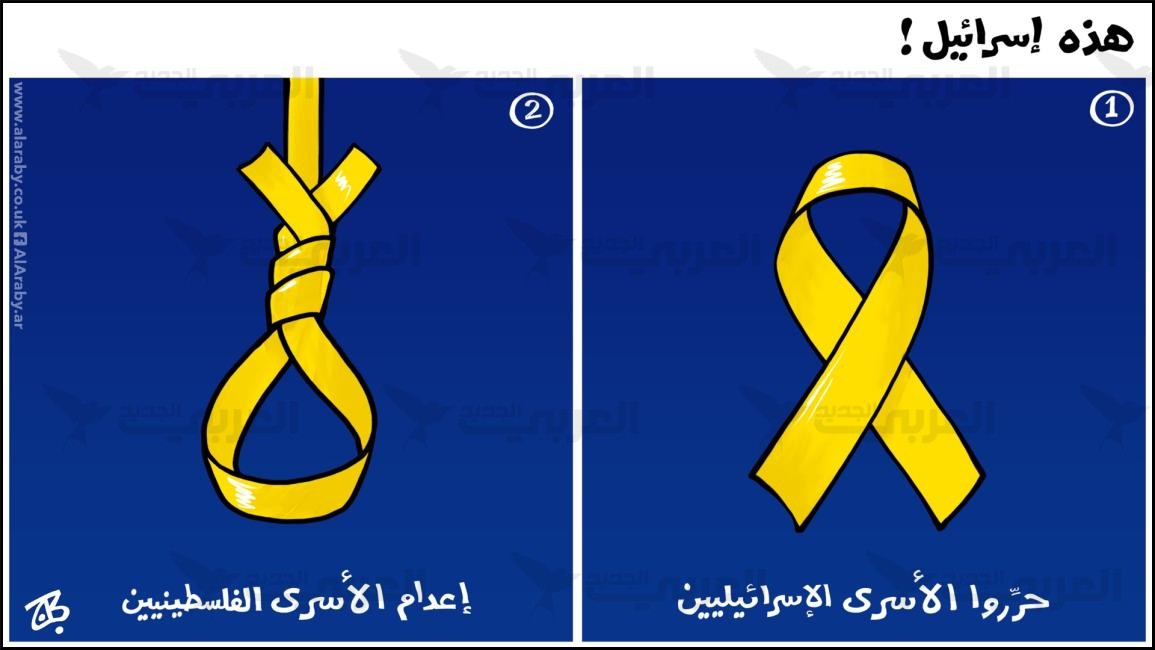
The Israeli Knesset voted 62 to 48 to pass a law making the death penalty the default punishment for Palestinians convicted in military courts of killing Israelis. The law was passed through standard legislative procedures and by a simple majority in a parliament that defines itself as democratic. The result is a system of capital punishment that, by its very legal structure, is applied to one national group and not another within the same territory. The fundamental problem lies, firstly, in the severity of the punishment, and secondly, in the mechanism by which it was passed: a democratic vote that enshrined a discriminatory penalty in law.
The legislation operates along two parallel legal tracks, the outcomes of which differ depending on the national identity of the accused. Palestinians in the occupied West Bank are subject to Israeli Military Order 1651 and are tried before military courts, where the new law stipulates the death penalty by hanging as a default punishment for murders classified as acts of terrorism. Israeli settlers in the same area, however, are tried before civilian courts, thus preserving judicial discretion and leaving the death penalty as one of the available punitive options. The law explicitly excludes Israeli citizens and residents from the jurisdiction of military courts. This discrimination is deliberate; the scope of jurisdiction was specifically designed to achieve this outcome: subjecting Palestinians to the death penalty while providing procedural protection for Israelis.
The procedural conditions further exacerbate this disparity structurally. Military courts already operate with a conviction rate of approximately 96%, and these convictions rely heavily on confessions extracted under conditions documented by numerous human rights organizations as coercive. The new law reduces the requirement for judicial consensus in death sentences from unanimity to a simple majority, eliminates the historical power of the military commander to commute sentences, prohibits pardons, mandates executions within 90 days, and restricts appeals. Meanwhile, human rights data indicates that approximately 93% of complaints regarding settler violence against Palestinians are closed without charges being filed. Thus, the law introduces an expedited death penalty within a system that simultaneously guarantees near-total impunity for deadly violence perpetrated in the opposite direction.
These violations encompass three branches of international law. Under international humanitarian law, Article 68 of the Fourth Geneva Convention permits the death penalty in occupied territories only under specific conditions: that the crime be punishable by death under the law in force before the occupation, and that it be limited to crimes of espionage, serious sabotage, or willful killing. The 90-day deadline for carrying out the execution is a clear violation of international humanitarian law, as stated by the United Nations High Commissioner for Human Rights. Furthermore, the prohibition on commutation of the sentence violates Additional Protocol I, which guarantees the right to seek clemency. The High Commissioner has described the application of this law to the population of the occupied Palestinian territories as a war crime.
Under international human rights law, the International Covenant on Civil and Political Rights limits the death penalty to the most serious crimes, with strict procedural safeguards. The 2018 General Comment of the Human Rights Committee affirms that mandatory execution, which eliminates judicial discretion, is inherently arbitrary. Article 26 also prohibits discrimination in law on grounds including national origin. A system of capital punishment whose application depends entirely on a specialized judicial system whose jurisdiction is determined by whether the accused is Palestinian or Israeli constitutes a discriminatory application of the death penalty.
Under international criminal law, this falls under the definition of apartheid, meaning inhumane acts committed within an institutionalized system of systematic oppression and domination exercised by one ethnic group over another. This definition includes a system of unequal application of the death penalty to one ethnic group but not another within the same territory, administered through separate court systems with significantly different procedural safeguards and conviction rates.
The deeper structural problem lies in the relationship between democratic procedures and substantive legitimacy. International human rights law clearly distinguishes between the two, and procedural legitimacy—that is, the regularity of parliamentary voting—does not address the lack of substantive legitimacy. The entire structure of treaty obligations rests on the premise that certain rights are inalienable, regardless of what the local legislative majority decides. Parliamentary ratification of this assessment does not alter this. Apartheid laws in South Africa were enacted through parliament, and the Nuremberg Laws through the Reichstag. The post-1945 human rights framework was specifically based on the understanding that procedural regularity provides no guarantee against systemic discrimination when the affected population is denied effective political representation in the legislature. Palestinians in the West Bank have no right to vote in the Knesset, no legal standing in Israeli civil courts, and no recourse to challenge the jurisdiction of military courts. The law was passed by a body that is not electorally accountable to the population it primarily affects.
The law reveals a structural situation where the democratic facade and discriminatory content coexist without contradiction at the local level, making the only corrective mechanisms international in nature. The question is: will these mechanisms succeed?