Fadel Abdulghany
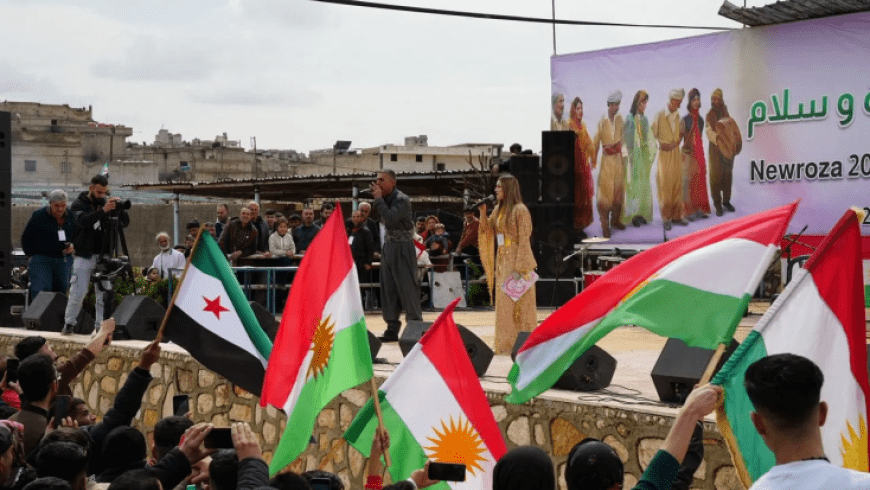
Nowruz 2026 in Syria marked a significant turning point. For the first time since the Ba’ath Party seized power in 1963, it was celebrated in multiple regions, from Afrin and Sheikh Maqsoud to Hasakah and Mount Qasioun, not only as a permitted gathering but also as an officially recognized national holiday.
After decades in which participating in Nowruz entailed serious personal risks, including surveillance, arrest, and security persecution, this year the occasion was observed with full official state recognition.
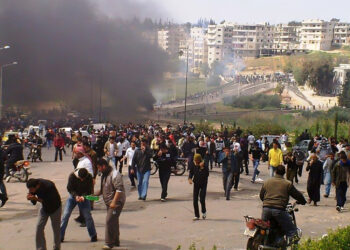
Under both Hafez al-Assad and Bashar al-Assad, the regime treated Nowruz as a security issue. Public gatherings associated with it were banned or subjected to strict censorship, and lighting fires, wearing Kurdish clothing, and displaying cultural symbols were prohibited. Attempts to celebrate were often met with excessive force, as happened during the 2008 Nowruz events in Qamishli, which resulted in deaths and injuries. Repression was not limited to the occasion itself but extended to the entire Kurdish cultural fabric. Arabization was imposed on predominantly Kurdish areas, including changing the names of villages and towns. The teaching of Kurdish in public and private schools was banned, and its use in media, publishing, and public life was restricted. These policies were part of a broader project to forge a monolithic Arab national identity, refusing to acknowledge that ethnic and linguistic diversity in Syria was a structural reality. Nowruz did not pose a material threat to the state, but rather it contradicted this project because it represented a public and collective affirmation of a cultural identity whose existence the regime refused to recognize.
After the fall of the Assad regime in December 2014, this reality began to gradually change. Legislative Decree No. 13, issued by President Ahmed al-Sharaa on January 16, 2016, marked the most significant legal milestone in this transformation. The decree declared Nowruz an official national holiday, recognized Kurdish as a national language, authorized its teaching in schools in predominantly Kurdish areas, and repealed the exceptional measures resulting from the 1962 Hasakah census. That census had stripped approximately 120,000 Kurds of their Syrian citizenship under the pretext that they had “infiltrated” from Turkey, creating two legal categories: “foreigners of Hasakah” and “stateless persons.” This statelessness persisted across generations, with the number of those affected reaching several times the original figure, according to estimates by international human rights organizations.
It is worth noting that Legislative Decree No. 49 of 2011, issued by Bashar al-Assad in an attempt to contain the popular protests, reinstated citizenship specifically for the “foreigners of Hasakah” category, but left the “stateless” category unaddressed and did not include any provisions for linguistic or cultural recognition. What distinguishes Decree 13 is its broader scope, encompassing both categories and linking the restoration of citizenship to a comprehensive framework of cultural and linguistic recognition. This goes beyond simply rectifying a single legal status to redefining the relationship between the state and a component of Syrian society.
The official news agency SANA covered the Afrin celebrations, a coverage that carries political significance: Kurdish cultural presence is no longer treated in official discourse as a threat to state cohesion or a subject of security censorship, but has become part of the national landscape embraced by state media institutions. Furthermore, the celebration of Nowruz on Mount Qasioun overlooking Damascus gave the occasion a presence in the capital itself, something impossible under the previous regime, when Nowruz was practically confined to predominantly Kurdish areas and subject to strict security control.
The right of any group to revive its traditions, celebrate its holidays, and express its cultural identity in the public sphere is a fundamental right under international human rights law. Article 27 of the International Covenant on Civil and Political Rights explicitly states that persons belonging to ethnic, religious, or linguistic minorities shall not be deprived of their right to enjoy their culture and use their language. Syria is a country comprised of multiple ethnic, religious, and linguistic groups, and the traditions and holidays of each of these groups are not privileges to be granted or withheld by any authority, but rather inherent rights guaranteed by the rules of international law and the principle of equality of citizenship. The experience of the Assad regime itself demonstrates that a state that suppresses cultural rights does not produce national unity, but rather injustice, alienation, and conditions conducive to conflict.
At the very least, Nowruz 2026 represents proof that something has changed. Kurds in Syria celebrated openly and legally in multiple regions, and the legal framework that denied their citizenship and suppressed their cultural expression was officially dismantled. However, these measures depend on being translated into constitutional texts and detailed legislation that will bind any future government. The cultural rights of all components of Syrian society are inherent rights, not a gift from anyone, and the credibility of any post-Assad political system in Syria will be tested by its commitment to this principle for all its components without exception.