Fadel Abdulghany
For fourteen years, we worked in obscurity and exile. Our team members risked their lives daily, working under bombardment, surveillance, and the constant threat of arrest. Three of our colleagues remain forcibly disappeared to this day, their absence a painful reminder of the price they paid for the truth under the former regime.
Others were killed under torture, targeted and injured in airstrikes, or left work due to the psychological stress of witnessing unspeakable atrocities.
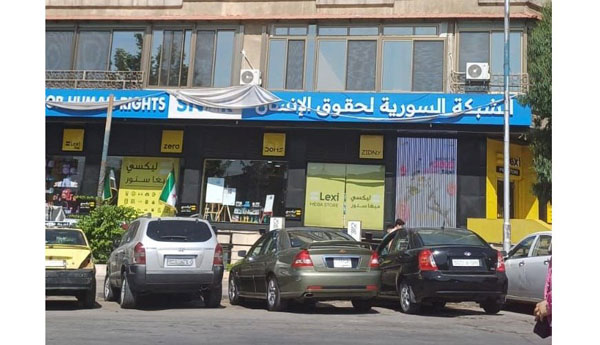
Today, as I stand in our office in Damascus, I remember those who continued to document violations even under a barrage of barrel bombs; those who smuggled testimonies, photos, and videos through security checkpoints; and those who created databases while living as refugees, subjected to the harshest forms of racism and threats regarding their most basic identification documents. Their sacrifices are what brought us to this pivotal moment.
Engineering of Truth
Over these fourteen years, we have built a systematic documentation system that has transformed individual suffering into legal evidence. Our databases contain information on approximately 234,576 documented civilian deaths, 163,718 cases of detention and enforced disappearance, 45,342 victims of torture, and more than 16,000 officials implicated in committing violations.
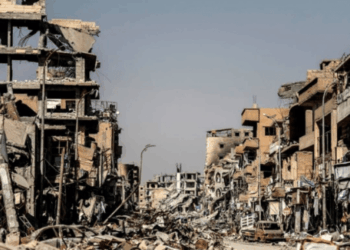
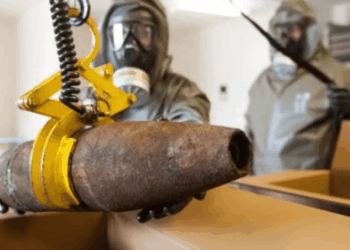
We also documented 81,954 barrel bomb attacks, 222 chemical weapons attacks, 919 attacks on medical facilities, and 1,477 attacks on places of worship. Each of these numbers is a testament to a life shattered, a family torn apart, and a community torn apart. Behind every data point is a name, a story, and a demand for justice that we have persevered through in the face of repeated attempts at erasure.
Our methodology has evolved from simple daily reports in 2011 to databases that meet international legal standards.
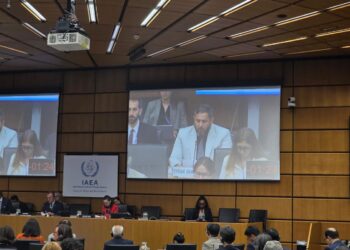
Today, our data is accepted by the Office of the United Nations High Commissioner for Human Rights, the International Commission of Inquiry, the International, Impartial and Independent Mechanism (IIIM), as well as European courts considering numerous cases.
The Weight of Testimony
The psychological burden involved in this work is immeasurable. Team members suffered from psychological exhaustion from daily exposure to images of victims and detainees, and from constantly listening to the testimonies of torture survivors.
Nevertheless, we continued working because we realized a fundamental truth: in the absence of immediate justice, documentation becomes an act of resistance.
Every name recorded, every testimony preserved, and every violation documented is a denial of the tyranny’s right to have the final say.
The former regime realized this reality and launched cyberattacks on our servers, established a fake organization bearing our name to mislead public opinion, and launched organized disinformation campaigns. Other parties to the conflict, primarily Russia, also engaged in similar actions to varying degrees. Nevertheless, the truth, carefully documented and meticulously preserved, remains resilient against all attempts at suppression.
Transitional Justice from Theory to Practice
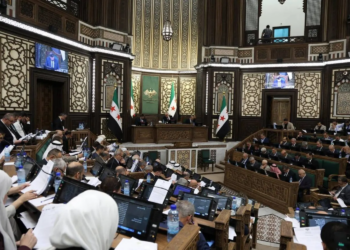
With our presence firmly established in Damascus, Syria today stands at a critical crossroads.
The fall of the former regime in December 2024 represented an irreplaceable historical opportunity, and our vision for transitional justice is based on five fundamental pillars:
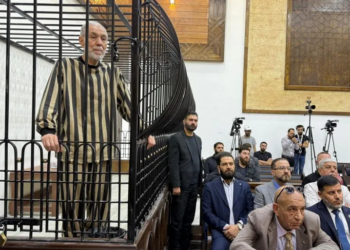
- First, accountability without compromise: The first and second tiers of officials documented in our databases must be held accountable. A lasting peace cannot be established with impunity, and we are ready to submit our evidence to any legitimate judicial process, whether domestic or international.
- Second, uncover the fate of the missing: The issue of the forcibly disappeared represents the most urgent humanitarian crisis in Syria. Our recent memorandum with the International Commission on Missing Persons is a first step on this long road.
- Third, institutional reform that goes beyond cosmetic change: The security and military apparatuses must be restructured, under clear civilian oversight and within a legal framework that prevents the recurrence of violations.
- Fourth, constitutional guarantees for victims’ rights: The new Syrian constitution should recognize victims and their rights to truth, reparations, and the principles of transitional justice. This is not about revenge, but about preventing the recurrence of tragedy.
- Fifth, preserving and honoring memory: Systematic attempts to obscure crimes, whether through misinformation or the destruction of evidence, must be countered by preserving the truth with an equally meticulous methodology. Our archives constitute a key tool for protecting Syria’s historical memory.
Looking Forward
Our presence in Damascus gives us the ability to work directly with victims and survivors who, for fourteen years, have only been allowed to share their testimonies in whispers through encrypted channels.
To the survivors who trusted us when uncovering the truth meant risking their lives: your courage made this moment possible.
To the families who sent photos of their loved ones who died under bombardment or torture, their grief still flowing through their veins: your trust built our archive.
To the activists who brought evidence from besieged areas under bombardment: your dedication made this documentation possible.
To my colleagues, your efforts are the true foundation of every success. We still have a long way to go.
Building a new Syria requires time and effort from all its people, and for the first time in fourteen years, we are walking this path, not as exiles, but as Syrians in their homeland.