Fadel Abdulghany
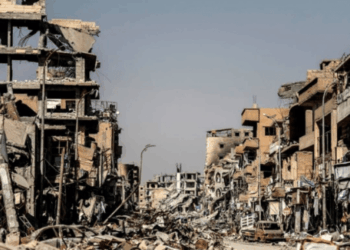
Syria, despite not being a party to the armed confrontation that erupted on February 28 and continues between the US-Israeli alliance and Iran, is suffering from numerous civilian deaths and injuries, repeated violations of sovereignty, and severe economic disruptions as a direct result of its territory and airspace being used as a theater for military operations by the warring parties.
The law of neutrality, which was codified primarily in the Fifth Hague Convention of 1907, is based on a clear equation: neutral states refrain from interfering in the conflict, and in return, the belligerent parties commit to respecting the inviolability of their territories and not using them for military purposes.
However, developments on the Syrian scene since the June 2015 war, which escalated following the events of February 2016, have undermined these protections. Israel has unilaterally transformed Syrian airspace into an active interception zone, engaging Iranian missiles and drones without Syrian consent.
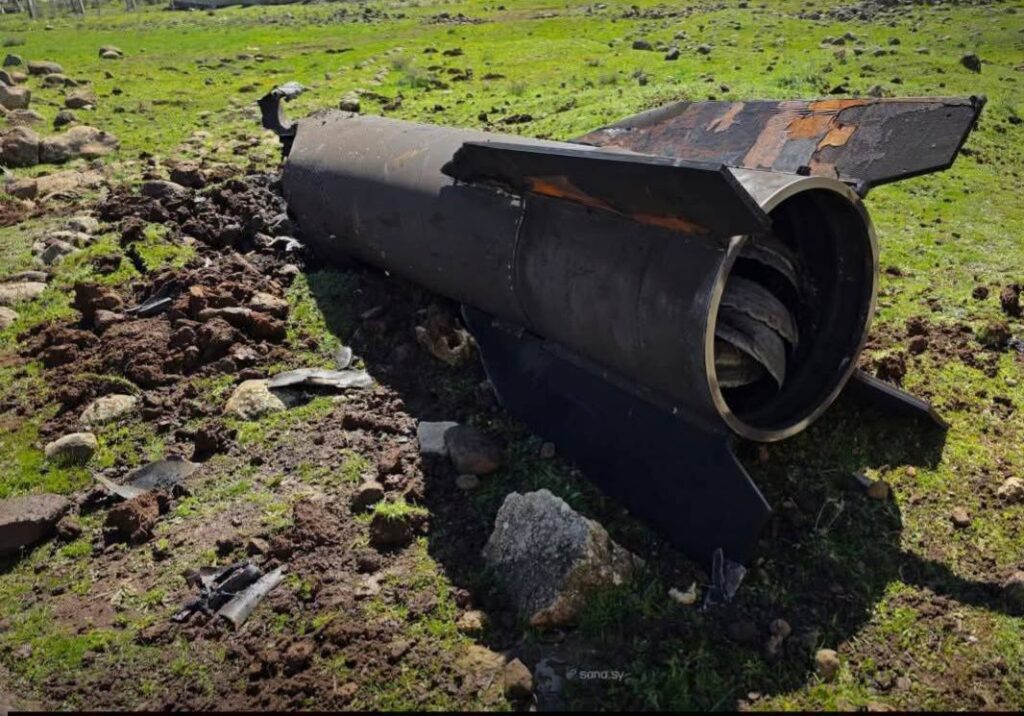
For its part, Iran launched missiles that crossed Syrian airspace on their way to targets inside Israel, resulting in debris falling on civilian areas, either when those missiles were intercepted or malfunctioned.
Both operations are illegal and effectively transform Syrian territory into an imposed battlefield. The difference between them lies in the operational method, not the legal consequences, as each warring party violates Article 1 of the Hague Convention, and simultaneously violates Article 1 of the 1944 Chicago Convention on International Civil Aviation, which enshrines the principle of the complete and exclusive sovereignty of the state over its national airspace.
The conflict between the US-Israeli alliance and Iran is classified as an international armed conflict, which necessitates the full application of the rules of international humanitarian law. In this context, three key principles stand out as directly relevant to the harm inflicted on Syria: the principle of distinction, the principle of proportionality, and the obligation to take precautions during an attack.
According to reports, some missiles were intercepted overpopulated areas, meaning that falling debris could harm civilians—a clear violation of the principles I mentioned. Intercepting missiles over Syrian territory, rather than over open seas or the territories of the directly involved parties, effectively shifts the risk of collateral damage to neutral Syrian civilians who have no connection to the conflict.
This transfer of risk constitutes a military decision with legal consequences under international humanitarian law and the law of state responsibility. Article 57 of Additional Protocol I, along with the rules of customary international humanitarian law, affirms the obligation of parties to take all feasible precautions to avoid or minimize incidental harm to civilians. Therefore, the failure to avoid conducting combat operations over Syrian population centers may constitute a breach of the duty of precautions, depending on the circumstances of each case and the availability of alternatives.
Under the provisions on the responsibility of states for internationally wrongful acts, as well as the rules of customary international law, potential international responsibilities arise for the warring parties: Iran for launching missiles across Syrian territory and the resulting debris that caused damage to Syrian civilian areas; and Israel for intercepting missiles over Syrian territory and the associated prior destruction of Syrian air defense capabilities.
This underscores the importance of the diplomatic track, despite its often overlooked legal role. According to customary international law, the Syrian state’s silence regarding violations of its sovereignty could be interpreted as tacit acceptance or tolerance, which could later be used as a basis for further action. Therefore, official condemnation of Iranian attacks on Syria, along with associated diplomatic protests, are essential tools for preserving the right to seek redress and preventing any inference of tacit consent. However, the effectiveness of these protests hinges on their official documentation with relevant international organizations and their clarity, consistency, and continuity.
We must not overlook the economic dimension in light of a fragile Syrian economy; the repeated closure of Syrian airspace represents a form of economic strangulation, as international airlines have suspended their flights, insurance costs have made regional operations unprofitable, the ability of time-sensitive exports to reach global markets has declined, and supply chains for medicines and medical supplies have been severely disrupted.
Ultimately, Syria’s ongoing diplomatic protests, its systematic documentation of violations, and its pursuit of institutional remedies through the International Court of Justice and the International Civil Aviation Organization represent the most viable, though not ideal, path toward legal accountability. The international community’s response to this situation will also set a precedent not only for Syria but also for the protection of neutral states in an era of increasingly globalized armed conflict, where sovereignty is either defended as a universal principle or relinquished as a dispensable formality.