In this article, I show that the Euphrates River floods that struck the governorates of Raqqa and Deir Ez-Zour in late May 2026, which resulted from rising water levels and the opening of the gates of the Euphrates Dam at Tabqa for the first time in more than three decades, are not at their root a natural disaster, but rather a crisis of compound legal and institutional origin. The core issue the article addresses lies in the regulatory vacuum governing international water management in the Euphrates and Tigris basins, where the 1987 protocol between Turkey and Syria remains the sole principal legal instrument, an instrument that lacks any mechanism for allocating surplus flows, any binding timetables for prior notification, and any framework for dispute resolution.
The article reveals three intertwined failures: the first is the deficiency of the existing bilateral arrangements and the absence of any binding trilateral agreement among Turkey, Syria, and Iraq; the second is the Turkish position rejecting the multilateral framework embodied in the 1997 United Nations Convention, on the basis of a controversial legal distinction that describes the rivers as “transboundary” rather than “international,” at a time where the core principles of this Convention are widely regarded as reflective of customary international law binding on all states; and the third is the weak absorptive capacity of the Syrian state emerging from a devastating war, as its infrastructure proved unable to contain a hydrological shock that could have been managed under different circumstances.
The article concludes that urgent movement toward a trilateral agreement encompassing the entire basin, and a renegotiation of the 1987 protocol so as to include dynamic flow guarantees and binding notification mechanisms, have become a demand whose fulfillment the communities on the banks of the Euphrates cannot afford to see delayed.
Fadel Abdulghany
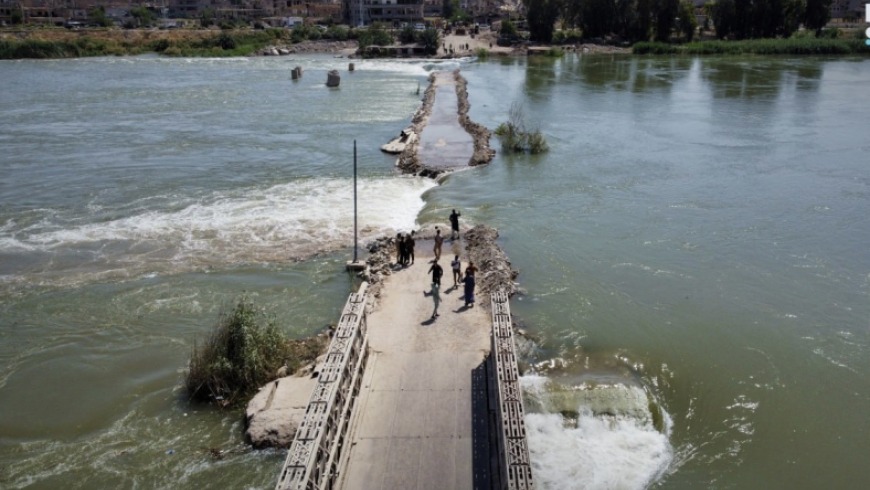
In late May 2026, the Syrian authorities warned local communities along the Euphrates River in Raqqa and Deir Ez-Zour of severe flooding following a sharp rise in water levels. The spillway of the Syrian Euphrates Dam at Tabqa opened its gates for the first time in more than thirty years, releasing between 1,500 and 1,800 cubic meters per second, after the reservoir’s storage had exceeded 97 percent of its capacity.
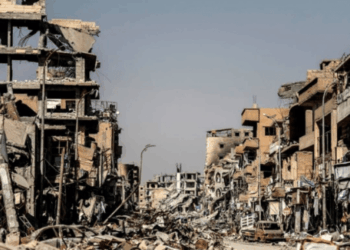
This crisis is not a natural disaster; it is the product of the convergence of three compounding failures: a flawed bilateral treaty regime between Turkey and Syria, a Turkish rejection of the binding multilateral framework in the international law of international watercourses, and a Syrian state emerging from war whose infrastructure has become so dilapidated that it is incapable of absorbing a sudden hydrological shock. If we look at each factor on its own, we find that it carries grave danger; as for them combined, they form a legal vacuum that turns containable hydrological events into humanitarian emergencies.
The principal bilateral instrument governing the flow of the Euphrates waters is the 1987 protocol between Turkey and Syria, under which Ankara committed to maintaining a minimum average flow of 500 cubic meters per second at the Turkish-Syrian border. The protocol also established joint technical committees for the exchange of hydrological data, a mechanism that had some operational utility during the filling of the Atatürk Dam reservoir in 1990, when Turkey notified Syria and Iraq months before the operation began. Nevertheless, the protocol remains technically limited; it sets a minimum quantity, but it does not specify any formula for allocating surplus flows, nor does it include a mechanism for setting a ceiling that prevents dangerous excess discharge, nor a binding notification timetable commensurate with the capacity of the downstream states to respond, nor a mechanism for dispute resolution through a third party. It also does not take into account climate change, nor the cumulative effects of the Turkish Southeastern Anatolia Project (GAP), which comprises 22 dams and 19 hydroelectric power stations on the Euphrates and Tigris systems, nor post-conflict scenarios, where the absorptive capacity of the downstream states approaches zero. A supplementary 1990 Syrian-Iraqi agreement allocates 42 percent of the Euphrates waters entering Syria to Damascus and 58 percent to Baghdad, but it too operates without an enforceable mechanism for dispute resolution. The persistence of a bilateral agreement concluded in 1987 as the principal legal instrument governing a river system on which tens of millions depend is in itself a measure of the political failure in the basin.
The absence of a basin-wide trilateral agreement was, and remains, the most consequential gap; for there is no binding trilateral instrument among Turkey, Syria, and Iraq concerning the Euphrates-Tigris system. Dam construction, the expansion of irrigation networks, and water management have all been carried out unilaterally, which gave rise to a dynamic based on a zero-sum calculus, where development in the upstream states undermines the rights of the downstream states without sufficient legal constraints. The alternatives that Turkey itself proposed, such as the “Three-Stage Plan for the Optimal, Equitable, and Reasonable Use,” never won the acceptance of Syria and Iraq, because they merged the two river systems in a manner that would have allowed Ankara to balance its surplus in one against its deficit in the other, a formula that places the downstream states at a permanent disadvantage.
Turkey’s legal authority rests on a distinction it has maintained across decades and successive administrations, namely that the Euphrates and the Tigris are “transboundary” rivers and not “international” rivers. And here lies a legal distinction; for Turkey argues that, so long as these rivers cross borders and do not form them, they remain subject primarily to territorial sovereignty, with obligations confined to “equitable and reasonable use,” rather than the more protective “no significant harm” framework that the downstream states demand. This position recalls the “Harmon Doctrine,” an American principle dating back to the nineteenth century that is built on absolute territorial sovereignty over shared watercourses, and that affirms the unrestricted right of the state to use the waters within its territory regardless of the consequences for the downstream states. The former Turkish Prime Minister Suleyman Demirel formulated this logic in 1992, when he declared that water resources belong to Turkey just as oil resources belong to its neighbors in the south, and that no party has the right to demand the sharing of the other party’s resources. This formula finds no advocate in contemporary international water law, but it has played the role of the practical logic governing Turkey’s decisions in the upstream states.
Turkey voted against the United Nations Convention on the Law of the Non-Navigational Uses of International Watercourses of 1997 (UNWC) when it was adopted in the General Assembly, and it did not ratify it. By contrast, Syria and Iraq are parties to this Convention, which creates an asymmetric legal environment: the downstream states are formally bound by an instrument that the upstream state has expressly rejected.
Nevertheless, Turkey’s non-ratification does not exempt it from all obligations; for the fundamental principles of the Convention, in particular the duty of equitable and reasonable use (Article 5) and the obligation not to cause significant harm (Article 7), are widely regarded as reflective of customary international law binding on all states, regardless of their treaty status. The International Court of Justice affirmed the foundational standing of equitable and reasonable use in the Gabčíkovo-Nagymaros Project case (Hungary v. Slovakia) in 1997, recognizing it as a standard for shared resources rooted in the practice of states. The principle of not causing significant harm carries considerable legal weight in contexts where the harm is foreseeable on the basis of available knowledge. The sudden increase in discharge from the upstream states into a river system that serves communities operating with infrastructure destroyed by war, communities that in prior years suffered from drought conditions and flows of less than 200 cubic meters per second, meets any reasonable standard of foreseeability. Many legal scholars also hold that Article 27 of the United Nations Convention (UNWC), which requires watercourse states to take all appropriate measures to prevent or mitigate harmful conditions, including floods, likewise reflects a customary obligation. So it follows that even if Turkey were to contest the applicability of the Convention as a treaty, the operational duty of issuing timely warnings before releasing quantities that lead to tangible flood risks in the downstream states falls within this customary framework.
The question of notification is analytically distinct from the question of causing harm, and therefore I will address it separately. The 2026 floods had a dual origin: an exceptional seasonal rainfall, and Turkey’s release of accumulated quantities of water from the upstream states. It remains unclear, according to the available reports, whether Turkey provided sufficient prior notification of the releases; however, what is clear is that the framework of the joint
technical committee of the 1987 protocol was designed to enable the prior and contemporaneous exchange of information, and that this framework does not include a binding notification timetable of the kind that a graduated and coordinated response requires. The precedent of 1990, when Turkey notified Syria and Iraq months before the filling operations of the Atatürk Dam reservoir began, shows that effective early warning is operationally possible whenever the political will is available. In a context where the emergency-response infrastructure in the downstream state has been severely depleted by a conflict that lasted more than a decade, formal notification without a sufficient time margin does not constitute effective notification, in both legal and humanitarian terms alike.
This crisis likewise cannot be assessed in isolation from the broader pattern of Turkey’s management in the upstream states. Over time, the Turkish dam infrastructure has reduced the flow of the Euphrates River into Syria to levels far below the threshold of 500 cubic meters per second stipulated in the protocol, as the observed flows in the productive agricultural areas fell to around 300 cubic meters per second during periods of drought. The Turkish dams were also used to restrict water supplies to the Alouk pumping station in northeastern Syria, a source that serves hundreds of thousands of people, and this conduct has been described by many analysts as a politicization of water and its instrumentalization as a tool of political pressure. Whether the 2026 discharge incident falls within this pattern or represents a response to a genuine hydrological emergency, the matter remains formally unresolved, and Turkey must disclose, transparently and responsibly, the details of this issue, and provide aid and assistance.
The legal and institutional deficit that the 2026 floods exposed points to a minimum set of principal requirements. The trilateral basin agreement, covering both the Euphrates and the Tigris, is the foundational reform; for it must establish binding allocation quotas calibrated against contemporaneous flow data and climate projections, set mandatory timetables for notification of all discharges that exceed defined thresholds, and create an independent technical secretariat capable of sharing data in real time. The 1987 protocol must be renegotiated to include a dynamic minimum-flow guarantee adjusted in accordance with climate change, mandatory prior notification calibrated against the capacity of the downstream states to respond, joint monitoring with independent access to telemetry, and a binding dispute-resolution clause. The question of Turkey’s accession to the United Nations Convention (UNWC) remains a standing demand for both Syria and Iraq. The post-Assad period, and the renewed Turkish-Syrian diplomatic engagement, may provide the most favorable political conditions in decades for achieving this demand. The local communities along the Euphrates River in Raqqa and Deir Ez-Zour need a binding and enforceable legal framework that guarantees their water rights and protects them from the transformation of every new hydrological shock into a renewed humanitarian crisis.