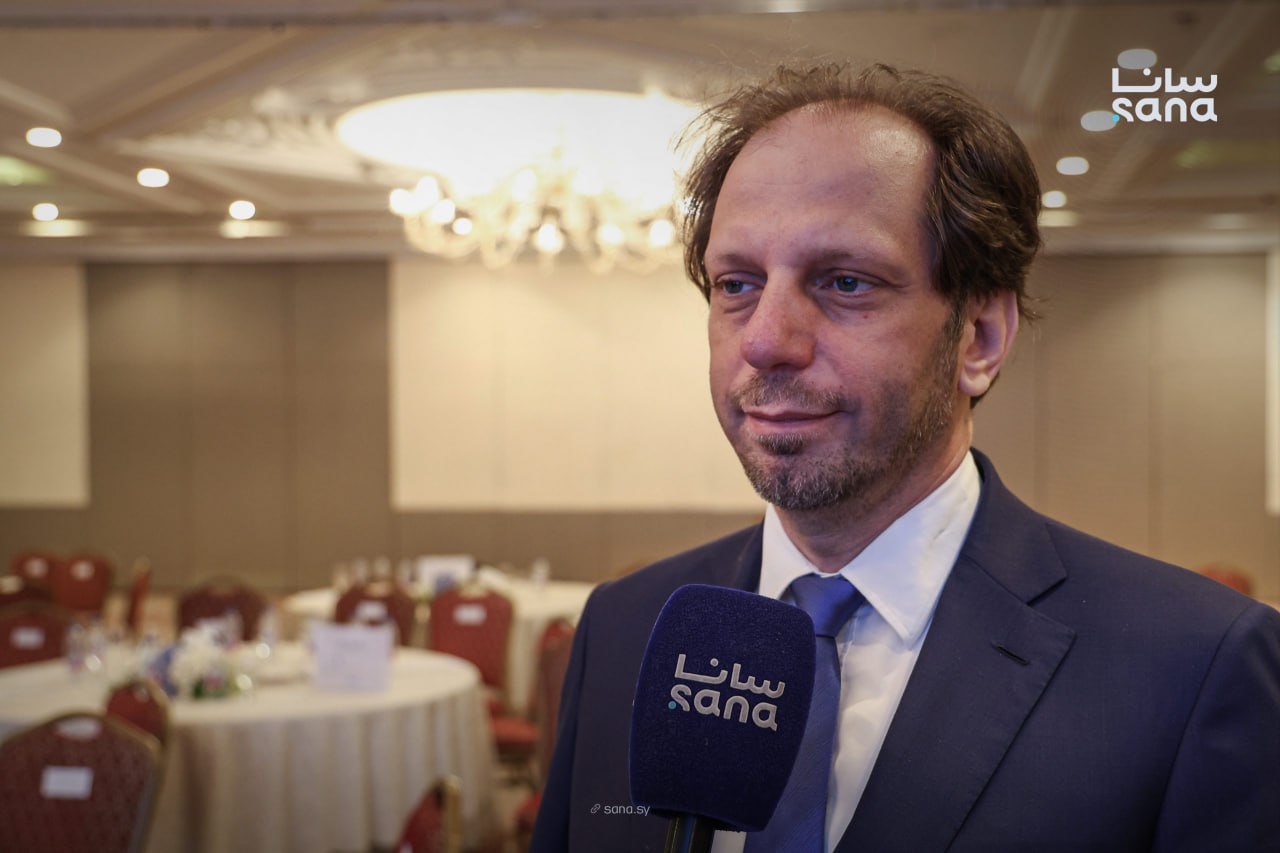
Damascus, August 25 (SANA) Director of the Syrian Network for Human Rights Fadel Abdulghany said Tuesday that the United States’ removal of Syria from its list of state sponsors of terrorism represents a significant legal and political development that removes one of the key obstacles that had affected Syria’s economic and financial relations with international institutions and global markets for decades.
Mitigating legal and reputational risks
In an exclusive statement to SANA, Abdulghany said the decision means Syria is no longer subject to U.S. restrictions specifically linked to the designation, including those contained in the U.S. State Sponsors of Terrorism regulations.
He explained that the move could reduce significant legal and reputational risks that had prompted banks, insurance companies and investors to avoid dealing with Syria, including in legitimate areas of activity.
Abdulghany stressed, however, that the significance of the decision should be understood realistically and precisely. It does not mean that all financial and commercial transactions are automatically available or that international institutions will immediately return to the Syrian market.
Banks and major companies generally apply compliance standards that go beyond minimum legal requirements and will continue to verify counterparties, beneficial owners, ownership and control structures, and risks related to money laundering, corruption and terrorist financing. They will also need to ensure that transactions do not involve individuals or entities that remain subject to sanctions.
Economic recovery
Abdulghany said greater access to economic recovery and financial reintegration could serve the interests of Syrians if directed toward rebuilding public services, revitalizing productive sectors, improving living conditions and supporting the communities and areas most affected.
He stressed the need to distinguish the removal of the terrorism designation from U.S. sanctions against Syria more broadly. The decision does not constitute a comprehensive and sudden lifting of all restrictions, but rather complements an earlier process of easing broad economic sanctions.
Targeted sanctions against specific individuals and entities remain in place, particularly those linked to serious crimes and violations, terrorism, corruption or drug trafficking, he noted.
Potential to restore banking services
Abdulghany said the decision is expected to gradually improve prospects for restoring correspondent banking services, trade finance, insurance and financial transfers, while attracting investment to services and infrastructure sectors.
He cautioned that achieving these outcomes depends not only on removing legal restrictions but also on key domestic factors, including transparency in the financial system, combating corruption, protecting property rights, ensuring contract enforcement, judicial independence and clear investment regulations.
No impact on investigations or criminal proceedings
Abdulghany stressed that the decision should not be interpreted as an international judgment on Syria’s record of violations or as absolving individuals and institutions of responsibility for crimes committed during the former regime’s rule.
He explained that the decision concerns the U.S. sanctions framework and the political and legal relationship between the United States and Syria. It does not affect investigations or judicial proceedings related to war crimes, crimes against humanity, torture, enforced disappearance or other serious violations, nor does it restrict the exercise of universal jurisdiction.