• عربي
Fadel Abdulghany
No Result
View All Result
  • Home
  • BIO
  • Articles
  • Researches
  • Books
  • Quotes to the Media
  • Transitional Justice
  • Interviews
    • Talks and Lectures
    • Videos
  • Home
  • BIO
  • Articles
  • Researches
  • Books
  • Quotes to the Media
  • Transitional Justice
  • Interviews
    • Talks and Lectures
    • Videos
No Result
View All Result
Fadel Abdulghany
No Result
View All Result
Home Quotes to the Media

Syrian Network for Human Rights welcomes abolition of Terrorism Court

17 September 2026
SNHR director: Athar paves way for unified national missing persons registry

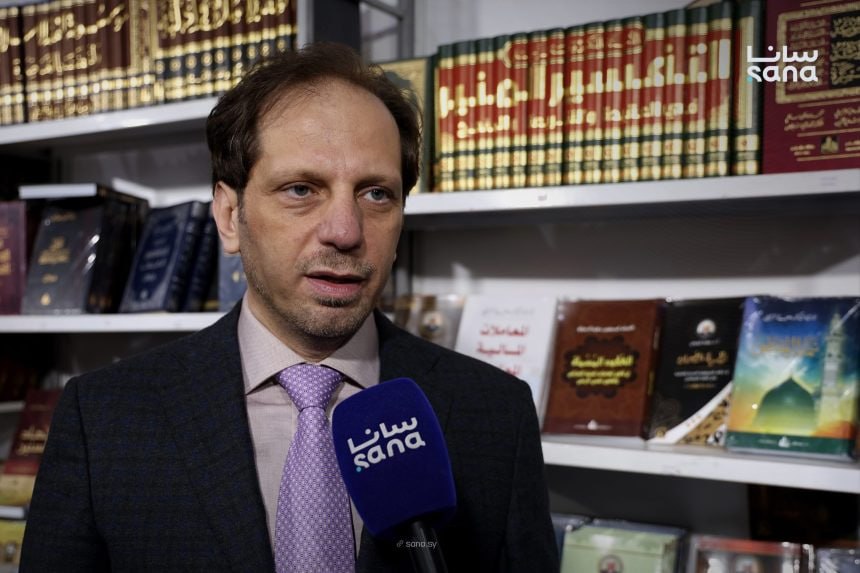
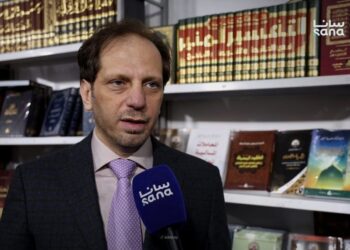
Syrian Network for Human Rights Director Fadel Abdul Ghany

Director of the Syrian Network for Human Rights Fadel Abdul Ghany said Wednesday that the People’s Assembly’s approval of a bill repealing Law No. 22 of 2012, which established the Terrorism Court, represents a necessary constitutional and rights-related step toward addressing the legacy of one of the ousted regime’s most prominent exceptional judicial institutions used to prosecute opponents and participants in the Syrian revolution.

Addressing the legacy of exceptional judicial institutions

In a statement to SANA, Abdul Ghany said the Terrorism Court was not an ordinary court whose proceedings were merely marred by procedural shortcomings, but rather an institution established under exceptional legislation that undermined fair-trial guarantees.

He noted that abolishing the court marks the beginning of a legal and institutional process that must translate into concrete measures addressing the rights of those affected.

Abdul Ghany explained that Article 7 of the repealed law allowed the court to disregard procedural rules stipulated in applicable legislation during prosecution and trial proceedings.

He added that the network had documented the court’s reliance on security reports and confessions allegedly extracted through torture, restrictions on the right to defense, and a lack of transparency in publishing rulings and the standards applied in issuing them.

The scale of the cases was extensive, Abdul Ghany said, noting that the network had documented at least 10,767 people brought before the court and around 90,560 cases as of October 2020.

It also documented 3,970 cases involving the seizure of property, as well as at least 40,602 seizure and confiscation orders affecting nearly 320,000 citizens between 2012 and 2024, as part of what he described as the broader system of dispossession established by the former regime.

Abolishing the court and removing the effects of its rulings

Abdul Ghany stressed that there is an important legal distinction between abolishing the court and removing the effects of its rulings. Repealing the law ends the court’s jurisdiction going forward, but does not automatically erase the consequences of previous rulings unless a clear implementation mechanism is established.
Source: Syrian Arab News Agency
ShareTweetShareSend

Related Posts

The homes Syria’s women lost: A fight for property, justice and a future
Quotes to the Media

The homes Syria’s women lost: A fight for property, justice and a future

14 September 2026
SNHR director: Athar paves way for unified national missing persons registry
Quotes to the Media

SNHR director: Athar paves way for unified national missing persons registry

1 September 2026
SNHR: Removing Syria from US terrorism list eases legal barriers
Quotes to the Media

SNHR: Removing Syria from US terrorism list eases legal barriers

25 August 2026
US removes Syria from ‘state sponsor of terrorism’ list in ‘historic’ step
Quotes to the Media

US removes Syria from ‘state sponsor of terrorism’ list in ‘historic’ step

25 August 2026
Was Israel’s strike on a Syrian airbase meant as a warning to Turkiye?
Quotes to the Media

Was Israel’s strike on a Syrian airbase meant as a warning to Turkiye?

21 August 2026
Who is Mohammad Ghamira and why has his death, alleged abuse ignited outcry in Syria?
Quotes to the Media

Who is Mohammad Ghamira and why has his death, alleged abuse ignited outcry in Syria?

19 August 2026
Tweets by Fadel
Fadel Abdul Ghany

Fadel Abdulghany

Founder and Head of the Syrian Network for Human Rights from June 2011 to date.

Master’s in International Law (LLM)/ De Montfort University/ Leicester, UK (March 2020).

Bachelorette in Civil Engineering /Projects Management / Damascus University.

Recent Posts

  • Syrian Network for Human Rights welcomes abolition of Terrorism Court
  • SNHR Participates in a Symposium on the Path of Transitional Justice in Syria: Reality and Challenges
  • The homes Syria’s women lost: A fight for property, justice and a future

Quick links

  • Home
  • BIO
  • Articles
  • Researches
  • Books
  • Quotes to the Media
  • Transitional Justice
  • Interviews
    • Talks and Lectures
    • Videos

© 2023 SNHR - Fadel Abdul Ghany.

No Result
View All Result
  • Home
  • BIO
  • Articles
  • Researches
  • Books
  • Quotes to the Media
  • Transitional Justice
  • Interviews
    • Talks and Lectures
    • Videos

© 2023 SNHR - Fadel Abdul Ghany.