Fadel Abdulghany
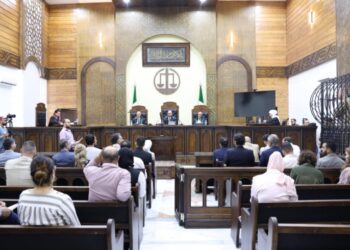
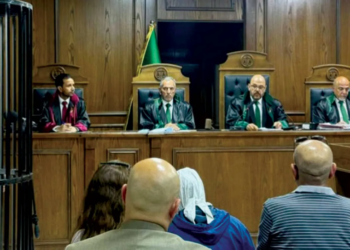
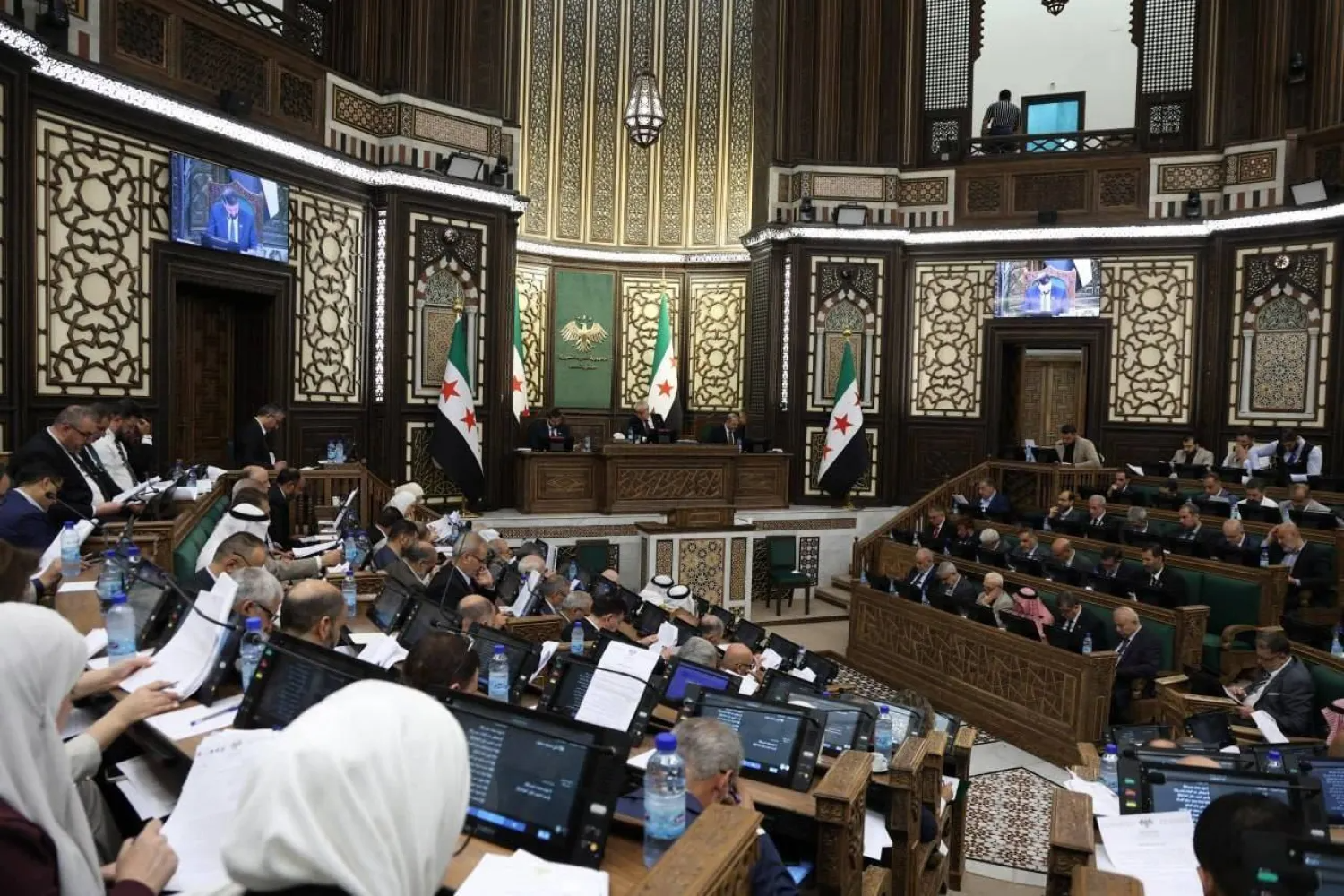
On 16 September 2026, the People’s Assembly approved the repeal of Law No. 22 of 2012, under which the Counter-Terrorism Court was established, along with the nullification of the legal effects arising from its rulings. According to the information available on the draft law, the Supreme Judicial Council will be tasked with addressing these effects, including past rulings, the cases pending before the Court, and confiscated funds. The vote settles the fate of the institution; however, it doesn’t, in itself, settle the fate of what the institution left behind.
The text of the law, once published in the Official Gazette, will settle the matters of its promulgation, publication, and entry into force. After that, implementation will depend on the issuance of instructions that specify how rulings are to be nullified, records corrected, properties returned, and outstanding files disposed of.
The argument for removing the legal effects of the Court’s rulings collectively, rather than obliging each person to litigate individually, is built on the nature of the institution itself. Exceptional jurisdiction in Syria didn’t begin in 2012; the Supreme State Security Court, established under Legislative Decree No. 47 of 1968, operated outside the framework of the ordinary judiciary until it was abolished by Legislative Decree No. 53 of 2011.
Then, less than a year later, the Counter-Terrorism Court was established under Law No. 22 of 2012, following the issuance of the Counter-Terrorism Law No. 19 of 2012. The name changed, while the political and security function remained. Article 7 of Law No. 22 preserved the right to defense in form; however, it stipulated that the Court isn’t bound by the rules and procedures set out in the legislation in force, at any stage of the prosecution and trial.
Only an aggregate estimate is available of the scale of the effects that need to be reversed. The October 2020 report of the Syrian Network for Human Rights (SNHR) recorded that at least 10,767 people were still subject to proceedings before the Court, estimated the number of cases it had heard since its establishment at about 90,560, and documented 3,970 cases of property seizure. This is in addition to tens of thousands of cases of confiscation of assets and funds, and of precautionary seizure orders.
The repeal ends the Court’s jurisdiction as of the date on which the repealing law enters into force. As for the removal of the effects that had already arisen, it rests on the additional provision adopted by the legislature, and on Article 48 of the Constitutional Declaration, which requires the repeal of exceptional laws that violate human rights and the nullification of the effects of the unjust rulings issued by the Counter-Terrorism Court, including the return of confiscated properties and the cancellation of the exceptional security measures affecting civil registry and property records.
Therefore, the removal of the legal effects must include expunging the conviction itself from the criminal record, along with the penalties, the arrest and search warrants, the travel bans and security restrictions, the employment and civil consequences, the confiscation arising from the ruling, and the loss of the pension entitlements resulting from it.
As for the pending cases, they should be subjected to a screening process, not to an automatic referral. If the conduct attributed to the person didn’t constitute a criminal offense punishable by law in the first place, as in cases of peaceful expression and protest, of journalistic, human rights, humanitarian, or medical work, or of accusations based on kinship or presumed affiliation, then the proceedings should be terminated and their effects removed.
As for the cases involving allegations of murder, bombings, or attacks on civilians (and the vast majority of these allegations, if not all of them, were fabricated), investigation before the ordinary judiciary remains available, provided that it’s based on independent evidence obtained lawfully. The security file can’t be transferred as it is, with the statements extracted by the security agencies treated as evidence.
The same legal discipline applies to the gravest outcomes the Court produced. A death sentence shouldn’t be characterized as an extrajudicial killing without verifying whether the sentence was carried out, and without examining the facts of the case. Rather, since the proceedings of this Court were systematically marred by serious violations of fair trial guarantees, the carrying out of any death sentence it issued amounts to an arbitrary deprivation of life under Article 6 of the International Covenant on Civil and Political Rights (that is, the execution of the Court’s sentences was an arbitrary deprivation of life, not an extrajudicial killing).