Fadel Abdulghany
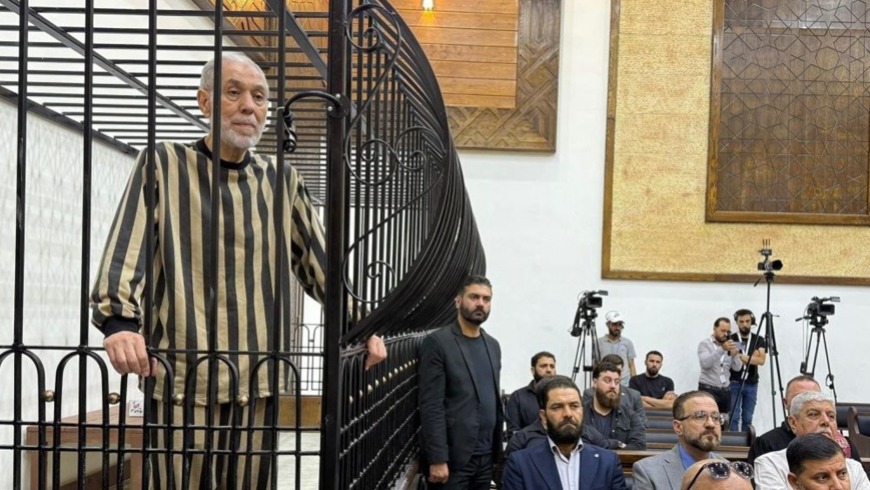
The Syrian Public Prosecution’s request, on 6 August 2026, that the maximum penalty be imposed on Ahmed Badreddin Hassoun, the former Grand Mufti of the ousted regime, and the decision of the Fourth Criminal Court, issued on 24 August, imposing life imprisonment instead of the death penalty, form a single episode whose analytical significance can easily be misunderstood, and this question was raised with me by several journalists, hence this article. For the distance between the request for the death penalty and the sentence of life imprisonment has been read within two mistaken frameworks: the first, as an expression of judicial restraint in the face of the prosecution’s severity, and the second, as a step towards a de facto moratorium on the death penalty in the Syrian path of accountability. Neither of these two interpretations is sustainable on the basis of the evidence currently available. So the real significance of the case lies elsewhere, in the court’s attempt to combine crimes already provided for in Syrian criminal law with a characterization of the acts as international crimes, and in the doctrinal questions this hybrid structure raises, questions that touch on the principle of legality, the modes of liability, and the shape of Syrian transitional justice.
The operative part of the judgment establishes five convictions on the basis of existing provisions of the Penal Code. Thus Hassoun was convicted, under Articles 298 and 216, of an act aimed at provoking civil war and sectarian strife, and was sentenced to life imprisonment for the term of his natural life; under Articles 533 and 216, of incitement to intentional homicide, and was sentenced to twenty years’ imprisonment; under Article 533 and paragraphs (b) and (d) of Article 218, of principal complicity in intentional homicide, and was sentenced to ten years’ imprisonment; under Article 342, of abuse of public office, and was sentenced to three years’ imprisonment and a fine of 195,000 US dollars, equivalent to three times the sums he received in return for the release of detainees; and under Article 307, with the consequences provided for in Article 65, of incitement to sectarian and racial hatred. The custodial sentences were merged pursuant to Article 204, with an order that the sentence of life imprisonment alone be executed. The court also awarded compensation to the civil claimants whose claims were admitted, ordered the confiscation of property, and preserved the right of appeal before the Court of Cassation.
As for the question of the death penalty, it turns in the first place on Article 298. According to the text Syria itself submitted in its reports to the United Nations treaty body system, this article punishes with life imprisonment an act aimed at provoking civil war or internecine fighting between groups, but it permits a sentence of death if the act achieves its purpose. Therefore, the death penalty was legally available in respect of at least one of the crimes of which the judgment ultimately convicted him. Even so, the court didn’t impose it. However, the public record doesn’t reveal why, since the reasoned written judgment hasn’t been made available to the public, and the oral delivery of the judgment doesn’t contain an article-by-article analysis of sentencing. Hence the defensible formulation is that the prosecution requested the death penalty, and that the court imposed life imprisonment. As for the claim that the court exercised a defined judicial discretion that could, in principle, be transferred to other cases, that can’t be established as yet.
As for the most consequential feature of the case, it is a structural one. For the convictions rest on crimes long established in Syrian law, enacted well before 2011, which is consistent with the position of the Deputy Minister of Justice, who stated publicly on 18 August that the ongoing trials are being conducted under the laws currently in force pending the enactment of a comprehensive transitional justice law. And yet the court described the established conduct as constituting, or contributing to, war crimes and crimes against humanity, applied the theory of aiding, abetting and moral support, and placed the acts within the context of a non-international armed conflict and of a widespread and systematic attack directed against the civilian population. It then attached legal consequences to this characterization, so it refused to allow discretionary mitigating circumstances, excluded statutory limitation and general amnesty, and barred conditional release. This two-track structure, national in the basis of criminalization and international in the characterization and in the consequences that follow from it, represents the most salient aspect of doctrinal innovation in the case.
Important theoretical implications follow from this. For the case against Hassoun wasn’t built primarily on his being a physical perpetrator; rather, the court gave legal weight to public discourse, to institutional legitimation, to the financial support of Liwa al-Quds, and to the payments he is alleged to have received in return for the release of detainees. Comparative international jurisprudence does permit accessory liability to arise on the basis of aiding, abetting and moral support, but under strict conditions. So the jurisprudence of the International Criminal Tribunal for the former Yugoslavia (ICTY) and of the International Residual Mechanism for Criminal Tribunals (IRMCT) requires that such conduct have a substantial effect on the commission of a specific crime, coupled with the person’s knowledge that he is facilitating its commission. Speech itself can likewise, in the appropriate circumstances, ground individual criminal responsibility, as the Appeals Chamber recognized in Šešelj, when it convicted the accused of instigating deportation, persecution and forcible transfer as crimes against humanity. However, political endorsement of a regime, or inciting rhetoric, or praise for military actors, doesn’t automatically satisfy the elements of participation in an international crime. The oral judgment sets out findings on each of these questions; yet, in the absence of full reasoning, it doesn’t allow an independent assessment of each element as regards the nature of the contribution, its effect, and the mental element.
As for the harder question, it is whether the consequences flowing from the characterization of the acts as international crimes, in particular the exclusion of statutory limitation and amnesty, meet the requirements of foreseeability and non-retroactivity. Answering this question requires identifying the basis in national law for the incorporation of the relevant customary rules, and determining the law applicable in time, and these are two matters that can’t be drawn from the oral delivery of the judgment. The point isn’t to say that the court’s approach is unsound; it is that the extent of its soundness can’t, as yet, be assessed judicially on the basis of the record available to the public.
As for the dimension relating to Article 6, it is no less important, and its relevance remains in place despite the absence of a death sentence. For General Comment No. 36 of the Human Rights Committee interprets the phrase “the most serious crimes” in Article 6(2) narrowly, so that it is confined to crimes of extreme gravity involving intentional killing, and it states expressly that a limited degree of participation or complicity can’t justify the death penalty.
Therefore, the Hassoun judgment can’t be read as an indicator of a broader Syrian shift on the death penalty. For three days after it was issued, the same Fourth Criminal Court handed down a death sentence against Abdul Nasser Baraqi, and during August further death sentences were recorded against Wassim al-Assad and Atef Najib. The Special Rapporteur on the promotion of truth, justice, reparation and guarantees of non-recurrence likewise urged, in his communication dated 6 July 2026, the deletion of the death penalty from the draft transitional justice law. So the systemic question of the death penalty remains unresolved. What the outcome of the Hassoun case establishes is only that this question didn’t crystallize, in his first-instance case specifically, in the form of a death sentence, and it establishes nothing more than that.
In this sense, the move from a request for the death penalty to life imprisonment isn’t the principal conclusion of the case. The more important conclusion is that the Syrian judiciary has actually begun to shape a practical relationship between national law and international criminal law, before the rules of that relationship have settled either legislatively or judicially. And the success of this path will be measured by its capacity to translate the demands of accountability for grave crimes into judgments that rest on prior criminalization, that define individual responsibility precisely, that are built on testable evidence, and that rest on reasoning capable of review before a higher court. So it follows that accountability in transitional periods derives its legitimacy from the capacity of the law to establish responsibility without abandoning, in the course of doing so, the guarantees that distinguish justice from revenge.