Fadel Abdulghany
The ongoing trials in Germany and Sweden concerning war crimes and crimes against humanity committed during the siege of Yarmouk camp represent a valuable opportunity to advance transitional justice in Syria. These proceedings, which address the policy of deliberately starving civilians and the systematic patterns of violence perpetrated between 2012 and 2014, offer practical lessons for Syria in strengthening accountability mechanisms and establishing robust legal precedents.
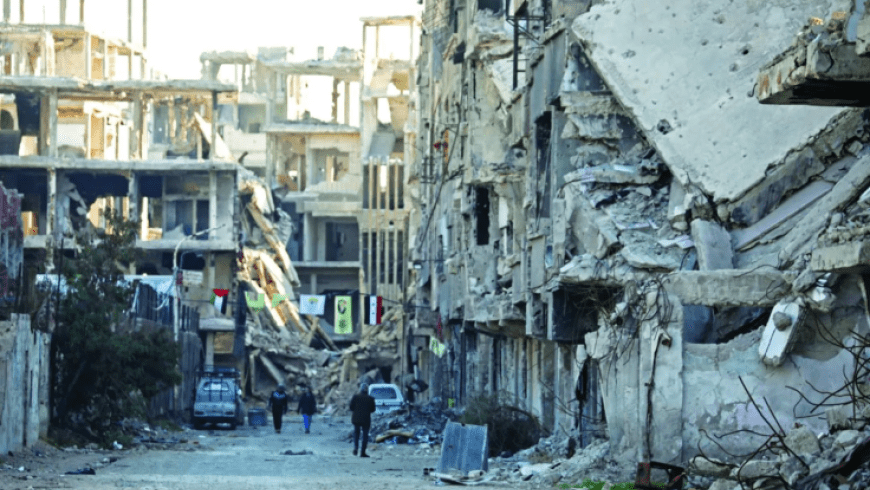
Yarmouk camp was established in 1957 as a Palestinian refugee camp and later developed into what Palestinians call the “capital of the Palestinian diaspora.” It housed between 160,000 and 180,000 Palestinian refugees, along with hundreds of thousands of Syrians, before the outbreak of the conflict. When Syrian government forces imposed a siege in July 2013, cutting off access to food, water, medical supplies, and humanitarian aid, at least 194 people died between July 2013 and February 2014, 128 of whom died directly from starvation, according to the Syrian Network for Human Rights.
The German proceedings before the Koblenz Higher Regional Court, scheduled to take place from November 19, 2025, to June 25, 2026, and expected to include more than forty days of hearings, along with the Swedish trial before the Solna District Court, which began on October 20, 2024, and is expected to continue until March 2026, demonstrate how universal jurisdiction can bridge the current impunity and future domestic accountability mechanisms. By documenting systematic crimes, identifying command responsibility, and verifying victim testimonies, these trials are essential pillars for building a transitional justice system in Syria.
Legal Precedents and Jurisprudential Development
The Koblenz trial represents the first prosecution at the universal jurisdiction level investigating the deliberate starvation of Syrian civilians as a war crime, based on the amended German Act on Crimes Against International Law, specifically Article 11(1)(5) of the German Penal Code, which criminalized starvation in non-international armed conflicts after Germany ratified the 2019 amendment to the Rome Statute in 2021.
Based on this significant legal development, the case of Mahmoud A. stands out. He is accused of participating in the systematic isolation of civilians living in the Yarmouk area, thereby deliberately depriving them of essential supplies such as food, water, and medical care. This case could potentially provide a legal framework that Syrian courts could adopt when prosecuting war crimes related to sieges, which have characterized much of the Syrian conflict.
On the other hand, the trial in Germany of five defendants – Jihad A., Mahmoud A., Samir S., and Wael S. (all stateless Palestinian-Syrian), and Mazhar J. (a Syrian citizen and member of Syrian Military Intelligence Branch 235), along with the Swedish citizen of Palestinian-Syrian origin being tried in Solna – establishes a legal basis for multiple forms of international crimes.
The German indictments include crimes against humanity through murder, attempted murder, torture, and deprivation of liberty resulting in death, as well as war crimes through murder, attempted murder, and torture. These diverse charges provide transitional justice mechanisms in Syria with tried-and-tested legal theories and evidentiary standards that can be used to prosecute various violations committed during the conflict.
In addition to individual criminal responsibility, these proceedings identify the command structures and organizational responsibility of both state actors and pro-regime militias, addressing the complex networks of perpetrators that characterized the pattern of violations in Syria. The prosecution demonstrates how the Free Palestine Movement and the Popular Front for the Liberation of Palestine – General Command operated as pro-regime militias that controlled Yarmouk Camp on behalf of the Syrian government, working closely with Syrian Military Intelligence Branches 227 and 235. This comprehensive view of command responsibility, including the role of Mazhar J. as an active member of Branch 235, provides Syrian transitional justice mechanisms with proven methodologies for attributing criminal responsibility across complex networks of state and non-state actors that worked in close coordination to implement systematic repressive policies.
The conviction of Muwafaq D. by a German court on February 23, 2023, and his sentencing to aggravated life imprisonment for firing a rocket at a crowd of civilians waiting for UNRWA humanitarian aid on March 23, 2014, establishes an important legal precedent regarding the prosecution of perpetrators of attacks on humanitarian operations. The court’s conclusion that Muwafaq D. committed the crime with “malicious intent,” and its decision that he is ineligible for parole before serving at least fifteen years due to the exceptional gravity of his crimes, create a legal precedent in sentencing standards that Syrian courts can draw upon when determining appropriate penalties for similar violations.
Documentation Infrastructure and Evidence Preservation Mechanisms
The systematic documentation resulting from these trials forms a valuable evidentiary foundation that extends beyond individual cases to contribute to the establishment of reference records for Syrian transitional justice processes. Through meticulous judicial proceedings spanning many years and involving extensive witness testimony, European courts are producing documented records of crimes that might otherwise have remained disputed or denied in post-conflict narratives. These trials lead to detailed judicial outcomes on specific incidents, transforming disputed events into established legal facts, such as the violent suppression of peaceful anti-government protests in Yarmouk camp on July 13, 2012, where the accused are believed to have targeted civilian demonstrators with firearms, resulting in the deaths of at least six people, including a 14-year-old child, and serious injuries to others.
The cooperation between European national courts, Syrian civil society organizations, and the UN International, Impartial and Independent Mechanism (IIIM) demonstrates the existence of sophisticated evidence management systems that Syria can utilize and adapt. The IIIM’s mandate to collect, consolidate, and preserve evidence relating to violations of international humanitarian law and human rights in Syria since March 2011, along with its powers to prepare investigative files to facilitate fair and independent criminal proceedings, establishes a central repository for evidence that might otherwise be lost or destroyed. The Mechanism’s ability to share information and evidence with national, regional, and international courts ensures that this documentation remains available for Syrian transitional justice processes, regardless of political circumstances that might delay or restrict the launch of comprehensive domestic accountability efforts.
Coordination and Cooperation between German and Swedish Authorities
The comprehensive international cooperation frameworks developed through these trials provide Syria with proven models of multilateral judicial cooperation, essential for addressing transnational crimes. Syrian civil society organizations involved in this case played a crucial coordinating role between German and Swedish authorities, facilitating simultaneous raids on July 3, 2024, resulting in arrests in Berlin, Frankenthal, and near Boisenberg in Germany, as well as coordinated arrests in Sweden. This operational coordination, supported by Eurojust’s technical expertise and Europol’s intelligence-sharing capabilities, offers Syria practical models for engaging international partners in complex investigations that require cross-border evidence collection, witness protection, and the arrest of suspects across multiple jurisdictions.
The involvement of several European countries in supporting these prosecutions creates networks of expertise that Syria can draw upon in its efforts to achieve transitional justice. The extensive cooperation described by Prosecutor Ulrika Bentelius Egelrod, which included interviews with individuals in Sweden and other countries, demonstrates how to systematically gather witness testimony from diaspora communities while maintaining the evidentiary standards necessary for criminal prosecution. The Franco-German Joint Investigative Team on Syria, established in 2018 with support from Eurojust, offers additional models of bilateral cooperation that Syria can emulate with willing partner countries hosting large numbers of Syrian refugees who may be witnesses or possess relevant documentation.
These trials demonstrate how universal jurisdiction can complement, rather than replace, domestic accountability mechanisms, preserving Syrian prosecution options while simultaneously laying the groundwork for them. The broad application of universal jurisdiction in Germany under the People’s Criminal Procedure Act, which allows for the prosecution of genocide, crimes against humanity, war crimes, and crimes of aggression without requiring any territorial or personal connection to Germany, establishes legal precedents that justify Syria’s right to prosecute these crimes domestically. Sweden’s approach, which requires suspects to be present in Sweden or hold Swedish citizenship during structured evidence-preservation investigations, demonstrates how states can balance sovereignty considerations with the imperative of accountability, offering Syria models for engaging international partners while maintaining full sovereign control over the transitional justice process. Capacity building through these trials extends beyond legal expertise to encompass the essential technical competencies required for complex prosecutions. German and Swedish investigators have developed specialized skills in interpreting Syrian military and intelligence structures, understanding the operational relationships between state security branches and their affiliated militias, and navigating the linguistic and cultural complexities of witness testimonies.
The participation of Syrian lawyers and Syrian civil society organizations in these cases contributes to creating a cadre of legally trained Syrians with direct experience in international criminal law procedures, who can lead local prosecutions in the future.
Conclusion
The Yarmouk Camp trials in Germany and Sweden represent pivotal contributions to the future architecture of transitional justice in Syria, extending far beyond individual accountability for specific crimes. Capacity building through these trials, particularly the development of Syrian legal expertise through direct participation in complex international criminal proceedings, and the strengthening of civil society’s documentation capabilities through the forensic documentation of evidence, ensures the preservation and development of essential knowledge and skills.