Fadel Abdulghany
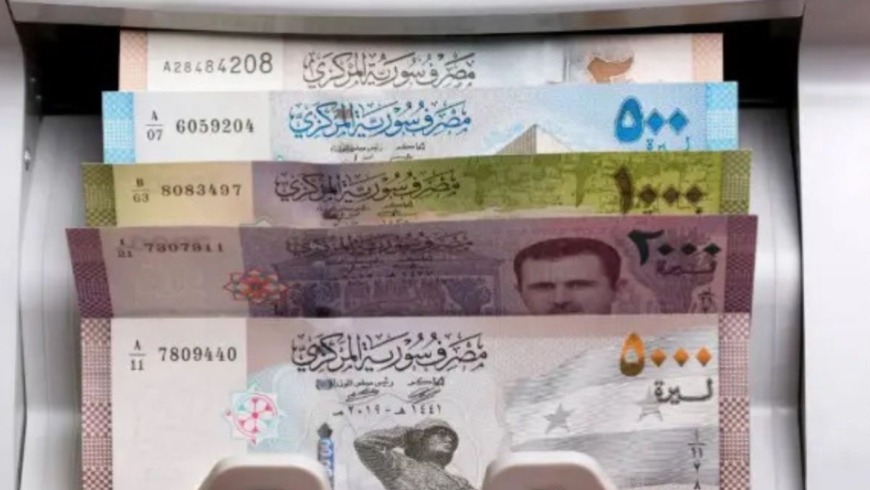
The transition from authoritarian rule to a pluralistic political system is incomplete without rebuilding the symbolic foundations upon which the legitimacy of the state is based. In the context of transitional justice, currency occupies a special place as a sovereign visual contract, and perhaps the most present symbol in the daily lives of citizens. Therefore, removing the symbols of the former regime from the national currency, as announced in the “post-Assad” phase in Syria, represents a very important opportunity that goes far beyond the technical aspects of monetary policy.
The participatory currency reform framework prioritizes procedural legitimacy over speed, and treats redesign not as a purely administrative task, but as a symbolic compensation and a mechanism for national dialogue. In this sense, this approach transforms monetary reform into a pillar of the transitional justice process, reflecting that the emerging state values the voices of its citizens as much as it values its resources.
This article will focus on these legal and transitional implications, apart from the economic repercussions which are not within my area of expertise in international law and transitional justice.
Institutional Structure and Governance Requirements
The governance structure supporting participatory currency reform requires a careful calibration that balances protecting the process from political exploitation with maintaining technical efficiency. The central bank cannot act alone on a matter of such symbolic intensity. Rather, it must establish an independent temporary body to oversee the symbolic and advisory dimensions of the reform, while keeping the technical competencies related to monetary policy within its mandate.
Establishing a currency reform committee achieves this dual objective. This body should operate under a multilateral charter involving diverse stakeholders, with a specific mandate to select currency images that reflect a pluralistic national identity in the post-authoritarian era.
This institutional design is similar to approaches applied in other contexts, such as the Eurozone’s adoption of an independent advisory group tasked with proposing objective frameworks that avoid favoring any single national perspective.
The governing principle is that the committee should include expertise beyond the economic field, by drawing on representatives of civil society, historians, and cultural specialists capable of approaching the complexities of collective memory and symbolic representation.
The Participatory Mechanism from Decision to Dialogue
The fundamental failure of the authoritarian era was the imposition of symbols without the consent of society. Participatory currency reform requires reversing this logic through an organized cycle of consultation, design, and verification. The proposed process establishes three interconnected stages that consolidate procedural safeguards that enhance legitimacy through inclusion, not coercion.
The first phase is dedicated to foundational national consultations that define thematic frameworks before the designs are produced. Instead of directly requesting specific images, this phase invites nominations of general themes such as national landmarks, landscapes, and historical cultural symbols.
This approach reduces early polarization around specific names or images, and allows for broad participation in defining the values that the currency should embody. It is essential that this consultation be geographically inclusive, reaching all governorates regardless of control locations during the conflict.
The second stage of identifying the themes moves to producing the designs through an organized competition. Anonymous submission procedures, in which the identity of the participants is concealed, are a necessary condition to ensure integrity and reduce favoritism, allowing works to be evaluated on the basis of merit.
The committee selects a shortlist based on two interrelated criteria: technical feasibility and artistic quality. The designs are then presented to the public through survey mechanisms and community dialogue.
Public participation here should be understood as an assessment and detection tool for potential shortcomings, not a binding referendum decided by majority vote. This distinction protects the process from waves of populism, while preserving the function of participation as an early warning mechanism that reveals unexpected controversy or abusive interpretations.
The third stage is a review of the visual illustration, in which the chosen symbols are examined from a rights-based, legal, and social perspective to ensure that they do not contribute, even unintentionally, to reproducing the division. This requires excluding any historical figure who may be received as a heroic symbol by one group, while being read by another group as a symbol of aggression or exclusion.
The governing principle here is to avoid harm, so that when division is proven, neutral images such as nature, architecture and abstract geometric shapes are adopted, thus reducing the chances of turning the currency into an arena of identity conflict.
Semiotics of Transformation and Selection Criteria
Removing the image of the Assad dictator from the currency is a visual break with the authoritarian past, but it alone does not resolve the question of meaning; choosing an alternative may produce new risks if it is not governed by clear principles, and the alternative image must refer to the state that the nation aspires to build, not to the reproduction of the past or the recycling of its conflicts.
The prohibition of depicting living figures is the most important safeguard against the emergence of a new personality cult; this principle should be codified in the Committee’s charter as a non-exceptional governing rule, since living political figures, no matter how legitimate their current representation may be, always carry the risk of turning currency into a tool for consolidating political influence rather than promoting national unity.
In addition, the principle of multi-center representation should be adopted in the distribution of images across currency denominations, and the sequence of banknotes should be understood as a single visual tableau on which the whole country is symbolically represented. If one denomination carries a landmark from the north, another denomination should carry a landmark from the south, and if urban heritage dominates some denominations, they should be countered by symbols that reflect the countryside and landscapes.
This visual geography performs a unifying function, as it links the regions fragmented by conflict within a shared national narrative, so that the currency becomes a daily reminder of territorial integrity and national cohesion instead of becoming a mirror of the center’s dominance over the peripheries.
Activating Currency Replacement as a Tool for Building Trust
The logistical process of replacing the old currency with the new one involves high risks if it is mis-designed or poorly implemented, as it may be interpreted socially as a confiscation of wealth or a mechanism for discrimination, which undermines the trust that the reform seeks to build. Therefore, the operational framework must include safeguards that protect the most vulnerable groups and allow for the gradual adoption of the new currency.
The most important guarantee is a parallel circulation period in which the old and new currencies remain legal tender for an extended period of six to twelve months. This approach serves the function of transitional justice in addition to its economic justifications: citizens can “vote with their money” and voluntarily adopt the new symbols as a daily act of restoring their sovereignty.
The gradual elimination of the old currency respects the practical reality of cash-based economies, while allowing the new currency to gain acceptance naturally.
Likewise, a mechanism for protecting smallholdings should be included that addresses the reality of the informal economy and the fact that many citizens keep cash savings outside the banking system as a result of loss of confidence or lack of services.
Setting exchange limits that do not require documentation, even for modest amounts equivalent to a few hundred US dollars, prevents currency exchange from disproportionately harming the poor or those without official identification. This is a crucial human rights consideration: monetary reform should not become a mechanism for excluding already marginalized groups from economic participation.
Finally, the launch process must be accompanied by a public awareness campaign with two complementary dimensions: technical and civic. It is necessary to explain the security features such as watermarks and security threads to combat counterfeiting, but at the same time the reason for changing the symbols should be explained and linked to the values of transparency, accountability and breaking with the logic of coercion.
This integration transforms technical awareness into civic education, helping to understand the currency redesign as part of a comprehensive national transition.
Conclusion
Participatory currency reform in a post-conflict context represents more than just a technical exercise in monetary management, as currency, as the most visible symbol of state authority, carries profound implications for legitimacy, identity, and national cohesion.
This framework shifts the reform from being an administrative task to a transitional tool that contributes to symbolic compensation and confidence-building. By establishing an independent multi-disciplinary committee, adopting a three-stage participatory mechanism that begins with substantive consultations, then a design competition, then a rights-based review for visual clarity, ensuring multi-center representation, and designing a gradual replacement process protected by social guarantees, the emerging state demonstrates a commitment to procedural legitimacy and citizen participation. In this way, the currency becomes a daily, tangible proof of the logic of dialogue and participation.