Fadel Abdulghany
The fall of the Assad regime on December 8, 2014, marked the end of a long chapter of authoritarian rule in Syria and simultaneously opened a window for historical reckoning. Among the most horrific mass atrocities committed during more than five decades of authoritarian rule, the Hama massacre of February 1982 occupies a special place in the Syrian collective memory and in the structure of repression that underpinned the regime’s power.
For forty-three years, this massacre remained one of the most strictly taboo subjects in Syrian society. In the post-Assad era, reopening this case is a crucial step toward building a state based on justice and the rule of law, and confronting both the immediate horror of the massacre and the culture of impunity entrenched by the regime.
In February 1982, Syrian military and security forces, under the command of Hafez al-Assad, launched a systematic attack on the city of Hama that lasted for nearly a month. Multiple military units participated in the operation, including the Defense Brigades commanded by Rifaat al-Assad, special forces, the 47th Brigade, and various intelligence agencies. These forces imposed a complete siege on the city, cutting off water, electricity, and communications before beginning widespread violence against the civilian population.
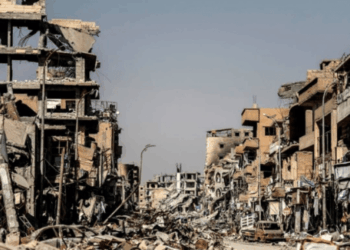
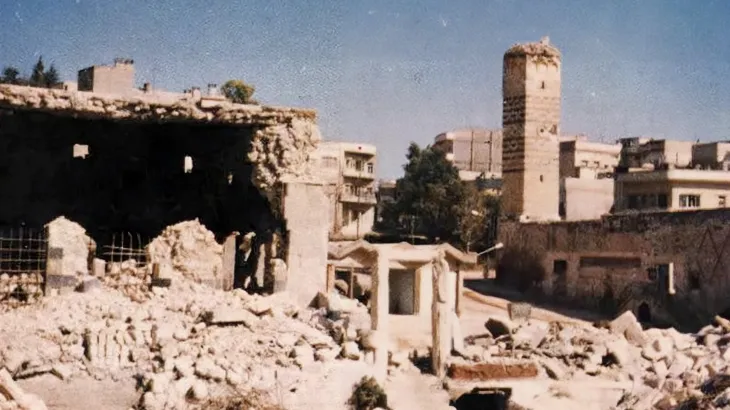
The methods employed followed a comprehensive pattern of destruction. Indiscriminate artillery and aerial bombardment targeted residential areas, while ground forces carried out summary executions and arbitrary mass arrests. Torture was systematic, and entire historic neighborhoods, including al-Kilaniyya, al-Sharqiyya, and al-Zanbaqi, were razed to the ground. Property was confiscated, and subsequent construction was erected directly on top of the rubble, and in some cases, on sites believed to contain the remains of victims in unmarked mass graves.
The Syrian Network for Human Rights estimates that between 30,000 and 40,000 civilians were killed during the offensive, while some 17,000 people were subjected to enforced disappearance, and their fate remains unknown to this day. Although the figures we have documented are far lower due to decades of enforced concealment and the deliberate destruction of evidence, they nonetheless reveal the systematic nature of the violence.
Under established principles of international law, these acts constitute crimes against humanity, as they represent a widespread and systematic attack directed against the civilian population, including murder, torture, enforced disappearance, and persecution. Crucially, these crimes are not subject to any statute of limitations; the passage of forty-three years does not absolve those who ordered, planned, or carried them out of legal responsibility.
The Assad regime’s response to the massacre relied on a logic that combined outright denial with opportunistic exploitation. The official narrative reduced the atrocities to mere “incidents” or security operations targeting “terrorists,” ignoring civilian victims from official history and simultaneously portraying the state as the protector of the regime. This denial helped shield the Assad regime from accountability both domestically and internationally.
Ironically, the regime transformed Hama into a symbol of absolute state violence and a determination to retain power at any cost. The message to Syrian society was clear: this is the fate of those who challenge the ruling authority. Fear became ingrained in the social fabric, forms of opposition diminished, and a generation was raised that was predisposed to submission. Thus, the massacre simultaneously served as a denial in public discourse and a constant threat in the collective consciousness.
The international community’s response was a resounding failure; no UN body officially documented the massacre, no Security Council resolution was passed, no international investigation was launched, and the scale of the atrocities was conspicuously absent from statements by senior international officials. This silence reinforced the regime’s conviction that it could commit crimes with impunity and entrenched a culture of impunity that subsequently enabled further violations, including the widespread crimes committed after 2011.
The massacre brought about a radical transformation in Hama, both physically and psychologically. The urban landscape became a testament to state violence, with entire neighborhoods demolished and rebuilt according to designs imposed by the regime. Government buildings were erected on land that had housed homes, and in some cases, on sites that may still contain the remains of victims.
The human cost was even greater; virtually every family in Hama was directly affected. Thousands lost relatives in the killings, while thousands more lost family members to enforced disappearance. This type of victimization imposed a unique form of suffering, condemning families to decades of uncertainty about the fate of their loved ones. This ambiguity hampered the processes of mourning and recovery, and contributed to the transmission of trauma across generations.
Despite the ban on public discourse, the memory of the massacre remained alive through informal oral traditions. Families passed on stories and information in private conversations, and testimonies were preserved despite the inherent dangers. Literature also emerged as a space for preserving memory, with several writers from Hama documenting the experience in their works. This resilience in memory, despite systematic repression, forms a necessary foundation for any serious endeavor toward truth and reconciliation.
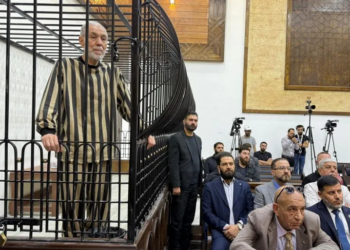
The fall of the Assad regime has opened up opportunities that were unavailable for over four decades. Survivors and families of victims can now speak publicly about their experiences, seek information about their missing relatives, and pursue accountability through official channels. This moment presents the new Syrian government with a critical choice regarding its relationship with the past.
Addressing the Hama massacre is essential, firstly as a historical acknowledgment, and secondly as a prerequisite for genuine national reconciliation and the establishment of a state based on the rule of law. The culture of impunity fostered by the massacre and reinforced by international silence has created conditions that have allowed for even greater violations in subsequent years; addressing this grave crime cannot be separated from addressing its consequences.
For the victims who have waited more than four decades for recognition, for those who did not survive to witness this moment, and for the survivors who still await news of their loved ones, justice remains both a duty and a possibility. Syria’s ability to build a stable future depends, fundamentally, on its willingness to confront its past.