Fadel Abdulghany
The New York Times investigative report, “Inside Assad’s Conspiracy to Cover Up Crimes,” is one of the most prominent investigations into Syria in 2025. This article is based primarily on its findings and corroborated by information and data held by the Syrian Network for Human Rights. The systematic cover-up of mass atrocities represents one of the most dangerous endeavors a state apparatus can undertake, as it entails long-term societal destruction and the erosion of the foundations of justice and public trust.
Under Bashar al-Assad’s rule, more than 100,000 people disappeared in Syria, according to the tally used in the investigation—an older figure previously shared with the United Nations by the Syrian Network for Human Rights. The number has now risen to nearly 160,000 forcibly disappeared by the Assad regime alone. This staggering scale of enforced disappearances places Syria among the largest waves of enforced disappearances perpetrated by a political regime in modern times. However, responsibility does not end with the commission of the crime itself, but extends to an equally dangerous dimension: the coordinated bureaucratic effort to conceal evidence during and after the atrocities.
The Assad regime did not merely engage in widespread repression, but also allocated significant institutional resources to conceal evidence, manipulate criminal indicators, and formulate legal pretexts to protect senior officials from judicial accountability, thus transforming concealment from a separate criminal act into a fully-fledged state policy.
From meticulous documentation to strategic accountability
The Syrian security apparatus did not always operate in secrecy. In the early stages of the conflict that followed the popular uprising of 2011, the authorities kept meticulous records of their activities: interrogations were recorded, deaths were documented, and corpses were photographed. Russian and Tunisian allies (it was shocking to me that the documents used in this investigation identified the Tunisian regime as a key repressive advisor to the Assad regime) had advised Assad to adopt this approach, arguing that prisoner confessions and documented procedures could provide legal cover for the regime’s actions.
The equation changed dramatically in January 2014, when photographs of more than 6,000 bodies from secret prisons in Syria, many bearing clear signs of torture, were smuggled out by a military photographer known by the pseudonym “Caesar.” These photographs constituted the most detailed evidence of torture and extrajudicial killings perpetrated by the Assad regime since the beginning of the conflict. When France presented these photographs to the UN Security Council months later, the documents, which had previously been considered a preventative measure, became a direct threat to the system of impunity.
The security apparatus responded by assembling a coordinated defense. In August 2014, senior military, political, and intelligence officials met with Syrian lawyers to devise a counter-strategy. According to a memo describing the deliberations at the National Security Bureau, the participants conspired to discredit the leaked photographs by claiming that only a small number of them depicted political prisoners, while others showed rebels killed in action or criminals. The deliberations also recommended “avoiding getting into details and avoiding attempts to prove or disprove any facts,” focusing instead on “undermining the credibility” of Caesar, whose true identity they had already verified.
Bureaucratic manipulation and forged documents
By 2018, the balance of power in the conflict had shifted in favor of Assad’s forces, who had regained control of major cities. Under pressure from their Russian allies to reintegrate Syria into the international community after years of isolation, Assad regime officials remained wary that diplomatic engagement would lead to the arrival of international investigators capable of uncovering evidence of atrocities. Meanwhile, human rights organizations continued to publish reports detailing horrific state violence, increasing the pressure on victims’ families seeking information about the fate of their missing relatives.
In the fall of 2018, the heads of the security services arrived at the presidential palace to discuss the growing leaks about mass graves and torture centers. During the meeting, Kamal Hassan, who headed the notorious Palestine Branch of the security services, proposed erasing the identities of Syrians who had died in secret prisons from official records, thus removing any traceable documentation. Ali Mamlouk, the top security official, agreed to consider the proposal.
The following months saw systematic tampering with evidence records. Some security officials falsified documents to prevent the attribution of deaths to specific security branches, while others deleted identifying information such as branch numbers or detainee identification codes. Prior to 2019, bodies transferred from security agencies in Damascus to military hospitals typically bore two numbers inscribed on the front: one identifying the security agency and the prisoner’s identification number. Beginning in 2019, at least two agencies, Branch 248 and the Palestine Branch, began omitting some or all of this information.
Perhaps the most audacious element of the cover-up strategy was the widespread forgery of legal documents. Mamlouk ordered the security services to fabricate confessions from individuals who died in custody, even going so far as to fabricate dates for these confessions to lend them an appearance of judicial legitimacy. Some of these forged confessions included admissions of membership in international terrorist organizations, thus providing a semblance of legal justification for deaths resulting from torture or summary executions.
As for the technical problem related to the signatures, it was dealt with in a way that reveals the extent of bureaucratic coldness in crime management: the original confessions were signed with fingerprints in very light ink, then copies were made in which the marks could barely be seen, the original copies were destroyed, and only the photocopies were kept in the archive.
Internal deliberations clearly reveal the regime’s calculations. When officers in the Air Force Intelligence Directorate suggested registering the deaths of detainees with the civil registry to appease their families and alleviate public pressure, the proposal was rejected. The head of the Military Judiciary responded that sharing such details “might be unsafe,” while officials in the Ministry of Defense expressed concern that lists of names could be leaked and used as a tool for international pressure.
Mass graves operations and their concealment
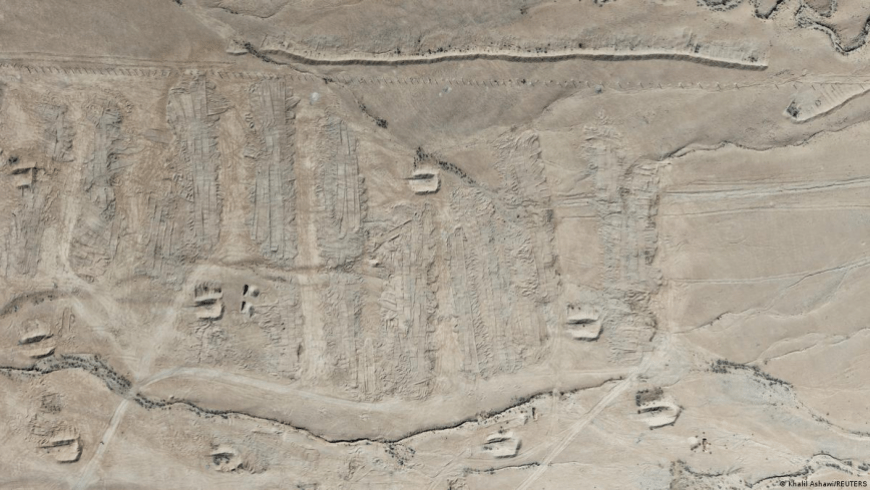
In addition to manipulating documents, the regime made significant efforts to conceal evidence of mass atrocities. In Damascus, Colonel Mazen Ismail oversaw the burial of bodies in mass graves, organizing teams to collect corpses from military hospitals and bury them in various locations around the capital. When opposition activists and journalists obtained information about a mass grave in Qatifa, north of Damascus, in early 2019, Ismail received orders to move the bodies to a new site.
The reburial process, which lasted nearly two years, exemplified the regime’s commitment to destroying evidence. Excavators were used to unearth the remains, which were then loaded onto dump trucks and transported to a site in the al-Dumayr desert northeast of Damascus. Fears of civilian witnesses prompted further concealment measures, including covering the truck beds and layering soil over the remains to hide their presence during transport. According to eyewitnesses, the remains included civilians, individuals in military uniforms, the elderly, and naked bodies, reflecting the widespread and indiscriminate nature of state violence.
The paradox of sanctions and the path to accountability
The United States’ passage of the Caesar Syria Civilian Protection Act in late 2019 was considered a significant step toward accountability, as it targeted individuals and entities involved in the Assad regime’s atrocities. However, available data suggests a limited deterrent effect on the ground. Investigators in several security agencies reported that they and their colleagues became more brutal with prisoners after the sanctions were imposed, driven in part by resentment over declining wages as the economy collapsed. None of the security officials interviewed indicated that they had received instructions to halt or reduce torture in response to the sanctions.
Even more worrying is that the penal system has created a negative incentive to release detainees; officials have expressed concerns that those released might later testify about their experiences, potentially leading to harsher international measures. The investigation quoted an investigator who worked at Branch 248 until 2020 as saying that some prison officials preferred indefinite detention until the prisoners died rather than risk releasing potential witnesses.
By 2023, international legal proceedings were tightening the noose around key figures in the regime. French criminal investigating judges issued arrest warrants for three senior officials, including Ali Mamlouk, on charges of torture, enforced disappearance, and the murder of French-Syrian citizens. Subsequent warrants targeted Bashar al-Assad, his brother Maher al-Assad, and other officials in connection with the use of chemical weapons against civilians in 2013. Internal documents released in October 2023 acknowledged that the traditional approach of dismissing these accusations as “politically motivated” was no longer sufficient or convincing.
Conclusion
The cover-up apparatus employed by the Assad regime ultimately failed to prevent its downfall. In December 2024, a coalition of rebels swept into Damascus, forcing Assad, Mamlouk, Hassan, and other senior officials into exile in Russia. Colonel Mazen Ismail fled the night the rebels entered, reportedly distributing the identity cards of deceased individuals to his men in a desperate attempt to facilitate their escape.
However, the legacy of cover-ups persists; the deliberate tampering with forensic evidence and the falsification of documents complicate efforts to hold senior officials accountable, particularly for crimes committed in the final years of the conflict. The destruction of identifying information on bodies, the fabrication of confessions, and the relocation of mass graves have also contributed to creating an evidentiary environment that obstructs judicial proceedings and thwarts the fundamental human need for truth.
For the families of the forcibly disappeared, the cover-up represents a second wound: not only the loss of loved ones, but also the deliberate erasure of any means of discovering their fate and restoring their dignity through the truth. The questions posed by a Syrian man whose brother disappeared in 2013 continue to haunt them: “Where was he taken? How was he killed?” The mechanism of cover-up is specifically designed to ensure these questions remain unanswered, transforming enforced disappearance from an act of violence into a permanent state of uncertainty that torments the families of the disappeared for the rest of their lives.