Fadel Abdulghany
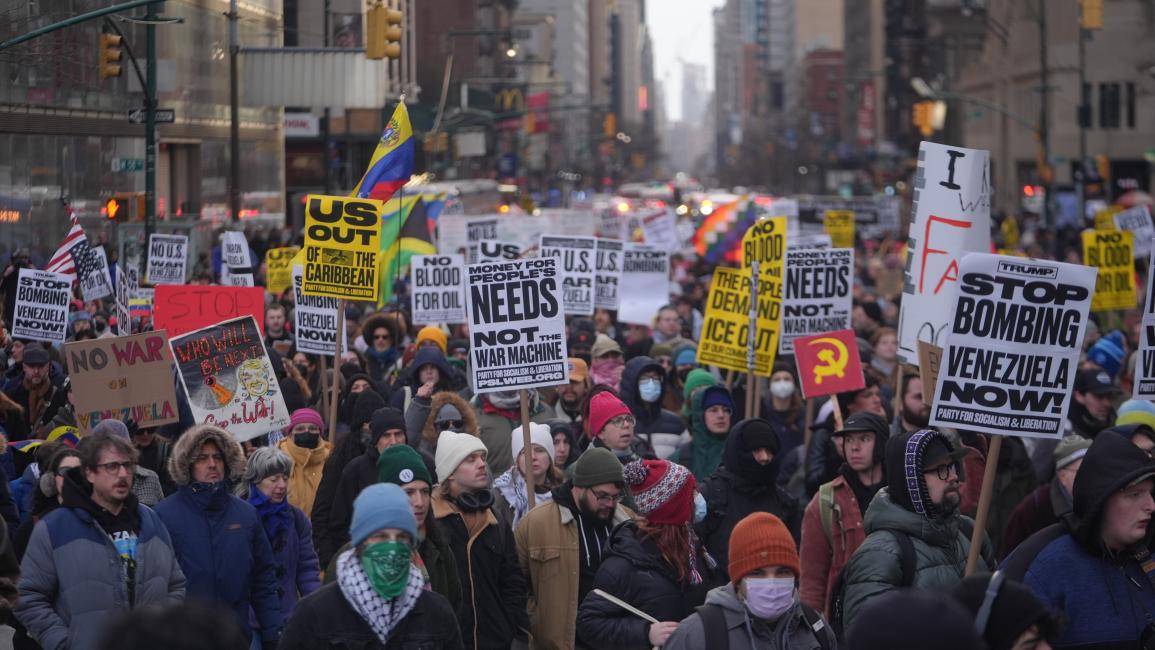
The military operation carried out by US forces on January 3, 2026, which included airstrikes inside Venezuelan territory, followed by a ground operation that ended with the arrest of President Nicolas Maduro, constitutes one of the most problematic events from the perspective of the international legal system established after World War II. The combination of airstrikes, the landing of ground forces, and the arrest of a head of state by force puts at the heart of the debate fundamental issues relating to the legitimate use of force, sovereign immunity, territorial integrity, and the principle of the peaceful settlement of disputes.
According to the context provided by the Trump administration to explain this operation, these developments were not isolated incidents but part of a broader pattern of escalating pressure, including a 2020 federal indictment accusing Maduro of narco-terrorism, the deployment of approximately 15,000 US troops to the Caribbean by 2025, and a naval blockade of Venezuelan oil tankers. A legal examination of the relevant international frameworks suggests that the operation, as declared, contravenes fundamental principles of international law, most notably the prohibition on the use of force enshrined in Article 2(4) of the UN Charter, customary international law rules concerning the immunity of heads of state, and relevant regional obligations, including the Charter of the Organization of American States.
The Prohibition of the Use of Force and the Inadequacy of Legal Justifications
Article 2(4) of the UN Charter is a cornerstone of contemporary international relations, obligating states to refrain from the threat or use of force against the territorial integrity or political independence of any state. This prohibition is not limited to its source in the Charter; international jurisprudence has affirmed its status as a customary rule of high normative weight in the international system. Therefore, the military strikes inside Venezuela, in general terms, fall within the scope of what is prohibited by Article 2(4), especially since they resulted (as has been reported) in explosions at military installations, widespread power outages affecting civilian infrastructure, and injuries and damage in populated areas across several Venezuelan states.
International law, in principle, recognizes only two main exceptions to this prohibition: a Security Council resolution authorizing the use of force under Chapter VII, or the exercise of the right of individual or collective self-defense under Article 51. According to the Trump administration’s plan, neither of these exceptions appears to apply. The Security Council has not passed a resolution authorizing the use of force against Venezuela, nor have there been any (reported) serious efforts to obtain such an authorization. Furthermore, the reference to emergency Security Council meetings in late 2025 does not alter the fundamental issue unless they result in a binding resolution authorizing the use of force.
The claim of self-defense attributed to US officials appears inadequate in several respects. Article 51 permits self-defense only in the event of an armed attack. Drug trafficking (even when committed on a large scale and causing significant social and economic damage) falls far short of the standard of “armed attack” as defined in international law. Furthermore, the requirements of necessity and proportionality, inherent constraints of self-defense, are not typically met in scenarios where large-scale military intervention replaces law enforcement and judicial cooperation. If the justification pertains to transnational criminal acts, the natural framework for addressing them lies in police and judicial cooperation, extradition requests, and mutual legal assistance mechanisms, not in the use of armed force within the territory of a sovereign state.
Even assuming that organized criminal acts could theoretically be linked to threats to national security, the requirement of attribution remains a fundamental obstacle: accusing officials or entities within a state of committing crimes does not automatically transform those acts into actions attributed to the state in the legal sense, nor does it in itself create a case of self-defense against the state as an entity. Furthermore, the scope of an operation involving extensive airstrikes, a ground invasion, and the arrest of the head of state—which is understood as an attempt at regime change—exceeds the logic of a necessary and proportionate response, even within the broadest interpretations of the right of self-defense.
Other justifications also falter. Humanitarian intervention remains deeply contested, particularly regarding its recognition as an exception independent of a Security Council mandate. Even within the arguments supporting it, it is usually confined to contexts of current, extreme mass atrocities where Security Council mechanisms are completely ineffective—conditions not clearly met in the Venezuelan context as presented in the narrative accompanying the operation. Furthermore, the protection of citizens abroad, sometimes offered as a limited justification, presupposes an imminent and specific threat, the absence of reasonable alternatives, and that the use of force remains as narrow as possible—all of which are difficult to reconcile with a military operation that inflicts significant human and material losses. Most importantly, law enforcement, however broad its prosecuting jurisdiction, is not equivalent to the use of armed force within the territory of another state outside the framework of international cooperation or a collective mandate.
Immunity of the Head of State
The immunity of the head of state is a well-established principle linked to the principle of sovereign equality and the practical necessity of enabling the highest representatives of the state to perform their duties without foreign judicial or coercive interference. International jurisprudence and practice distinguish between personal immunity related to the office during its tenure and substantive immunity related to official acts after the end of the term. In this context, the general trend is that the current head of state enjoys personal immunity and inviolability that prevents them from being subjected to the national criminal jurisdiction of a foreign state throughout their term. This immunity (according to the traditional view) covers both official and private acts during that period.
Accordingly, the arrest of a sitting head of state for prosecution before a foreign national court directly contradicts this rule, unless recognized exceptional circumstances exist. The exceptions in this regard are limited and restricted; the explicit waiver of immunity by the state concerned remains a crucial condition, which is not present in the described context; indeed, the stated indications suggest otherwise. Furthermore, immunity is not usually invoked before international criminal courts or special tribunals of an international nature. However, the procedure referred to here concerns a trial before a US federal court, a national body inherently subject to the rules of international immunity. In the absence of an international procedure with accepted and specialized jurisdiction, the circumvention of immunity within a foreign national framework remains a fundamental legal issue.
The problem becomes even more complex when the argument of non-recognition is used to justify the removal of immunity. Personal immunity, by its very nature, is a legal function linked to an individual’s official capacity and their actual exercise of the duties of a head of state, not a political privilege contingent upon a particular state’s recognition of the government’s legitimacy. A position of non-recognition (whatever its motivations) does not absolve the non-recognizing state of its fundamental obligations under international law towards the other state or its official representatives, as long as they are effectively carrying out the functions of the state. Furthermore, the standard of immunity is not based on an assessment of the legitimacy of a political system by a foreign state, but rather on the functional nature and continuity of that system. Therefore, the arrest of Maduro, as presented, constitutes a violation of the inviolability and immunity enjoyed by a head of state under customary international law, and it also deepens a troubling conflation of political disputes with internationally legitimate mechanisms of criminal accountability.
Violation of Sovereignty and Territorial Legal Frameworks
Territorial sovereignty is a cornerstone of the international legal order, embodied in the prohibition of the use of force and non-interference in internal affairs. Therefore, the entry of military forces into the airspace or land territory of a state without its consent, the launching of attacks on its facilities, and the forcible removal of its president from its territory constitute (in principle) a clear violation of territorial integrity and political independence. The reported use of weapons and the firing of missiles from helicopter platforms within Venezuelan territory further reinforces the characterization of this act as a coercive action directed against the sovereignty of the state.
These events take on an additional dimension within the American regional context. The Charter of the Organization of American States (OAS) stipulates the protection of territorial integrity and prohibits military occupation or other coercive measures by force by another state for any reason. It also establishes a commitment not to resort to the use of force except in self-defense, as defined by the Charter. Given that justifications such as combating drugs or supporting democracy do not, in themselves, fall under the legal definition of self-defense, relying on them to legitimize a large-scale military intervention remains incompatible with the essence of regional obligations. Furthermore, the positions of previous regional alliances that addressed the Venezuelan crisis through political and diplomatic means, ruling out military intervention, reinforce the notion that a peaceful approach was the most likely regional framework for resolving disputes.
Conclusion
The legal and political implications of this type of operation extend far beyond the Venezuelan case itself. It sets a troubling precedent, demonstrating the potential for military force to be used to achieve law enforcement or political change outside the framework of international law. This weakens the normative restraint on the use of force, undermines the concept of collective security, and blurs the distinction between combating transnational organized crime and armed conflicts governed by different rules. Furthermore, opening the door to justifying the invasion of a state under the pretext of combating drug trafficking could tempt other powers to adopt similar justifications for settling their regional disputes by force, thereby threatening stability, human rights, and further destabilizing the international legal order.