Fadel Abdulghany
The recruitment of children in armed conflicts is considered one of the most serious violations under international humanitarian law and international human rights law, as it directly undermines the very essence of child protection and jeopardizes their physical, psychological, and social well-being. In the Syrian context, the phenomenon of child recruitment by parties to the Syrian conflict has emerged as a complex issue involving intertwined legal, humanitarian, and documentary considerations.
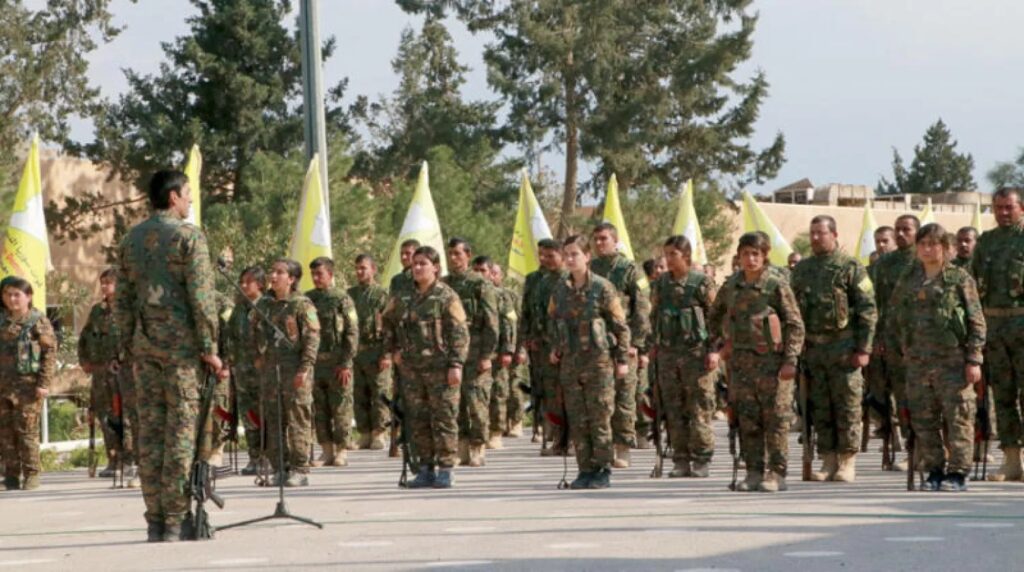
The Syrian Democratic Forces are among the most prominent parties that have been documented to have engaged in child recruitment practices that, in many cases, have been characterized by recurring organizational features, which necessitates a thorough legal examination in light of the relevant international normative frameworks for the protection of children in armed conflict.
From the perspective of child rights law, the recruitment of any person under the age of eighteen by a non-state armed group is categorically prohibited, particularly under the Optional Protocol to the Convention on the Rights of the Child on the involvement of children in armed conflict. This prohibition entails an obligation to prevent and adopt effective measures for criminalization and accountability, as recruitment is a conduct that strikes at the very heart of the special protection afforded to children in the context of conflict.
Under international criminal law, the recruitment, incorporation, or use of children under the age of fifteen for active participation in hostilities is classified as a war crime under the Rome Statute of the International Criminal Court.
Documented evidence from international and local bodies, including the Independent International Commission of Inquiry and the Syrian Network for Human Rights, shows that the recruitment of minors in areas controlled by the Syrian Democratic Forces has, in most cases, followed a recurring pattern of enticement or abduction, followed by the child’s separation from their family and the severing of all ties with them. This context is linked, in numerous accounts, to the existence of training facilities and camps used to instill discipline and re-educate the child.
This pattern raises serious legal concerns related to unlawful deprivation of liberty, which may amount to enforced disappearance, violation of family protection guarantees, and undermining of the right to complain and seek redress.
Regarding recruitment methods, attempts to persuade and encourage children to join through material or moral incentives were documented. These incentives were used to influence minors and push them to join. The exploitation of some local institutions, including schools under the authority of the Autonomous Administration, was also noted as potential environments for support or facilitation, raising further issues related to protecting the educational space from militarization and the obligation to keep schools neutral from recruitment and indoctrination activities.
Regarding the abduction or kidnapping from public spaces, a recurring pattern emerges: children are taken from schools, streets, or neighborhoods for the purpose of recruitment. In these cases, the violation is not limited to the act of recruitment itself, but extends to preparatory acts that fall under the category of arbitrary deprivation of liberty and the targeting of children in spaces that are supposed to be safe, thereby undermining their personal security and weakening the protective environment surrounding them.
Regarding isolation following recruitment and the severing of family ties, several local and international human rights organizations have documented the transfer of children to training camps located far from their home regions, making them even more difficult to reach and deepening their isolation. Frequent restrictions on communication and visits have also been noted, with children being prevented from contacting their families, families being denied visits, or facing obstacles and humiliating procedures when attempting to reach their children. This pattern constitutes a compounded violation that not only affects the child but also extends to the family’s rights to know their fate, to communicate, and to access information, thus exacerbating the psychological and social impact of forced recruitment or abduction.
On the other hand, it was documented that families of child soldiers or abductees were subjected to threats and intimidation aimed at preventing them from reporting to international bodies or human rights organizations, directly impacting their right to access justice and seek redress. It was also noted that some families resorted to demonstrations or sit-ins to demand the return of their children, and that some participants were subjected to threats, attacks, or warnings against repeating the protests.
These facts indicate that the violation of children’s rights in areas controlled by the Syrian Democratic Forces, as described in this article, is not limited to the act of recruitment itself, but rather takes the form of a system of social and security pressure aimed at silencing families and neutralizing their ability to demand accountability. In all cases, these children face a long road to recovery from the psychological, educational, and social effects of forced recruitment, which necessitates practical guarantees for their safe return to their natural environment, primarily school, and the restoration of the protection and care guaranteed to them by law.