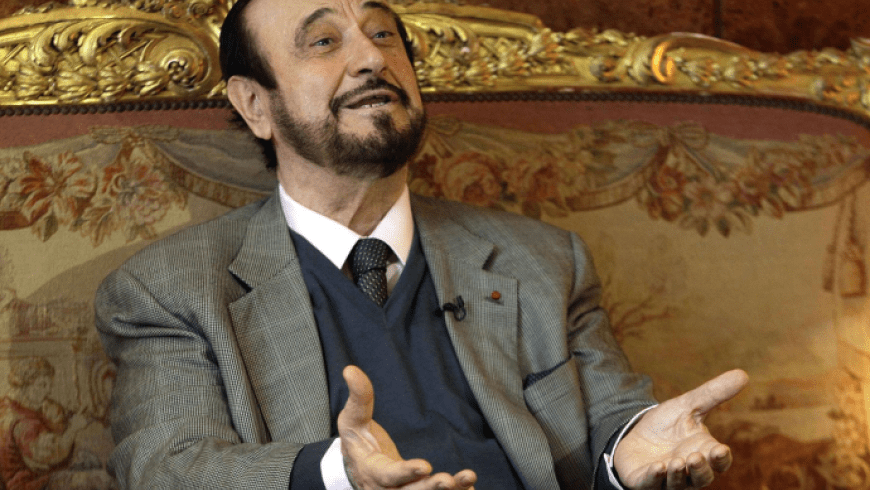
Fadel Abdulghany
The death of Rifaat al-Assad on January 21, 2026, in the United Arab Emirates at the age of 88, marks a pivotal moment in the pursuit of accountability for those responsible for one of the most horrific mass atrocities in modern Middle Eastern history. As the former Syrian vice president and one of the key architects of the 1982 Hama massacre, his death before facing Syrian justice exemplifies the complete entrenchment of impunity at the national level. This is not a biological accident, but rather the result of a systematic policy pursued by Hafez al-Assad’s regime to protect the pillars of institutionalized violence, including Rifaat himself, by providing political and security cover for operations carried out with direct coordination and under the supervision of the highest levels of power, over a period of more than a month. While death closes the door to the direct criminal prosecution of the deceased, it does not preclude broader forms of accountability that operate independently of the accused’s continued existence, nor does it eliminate the possibility of asset recovery or holding accountable the networks that facilitated the crime or profited from its proceeds.
Limits of Prosecution and Universal Jurisdiction
Rifaat al-Assad faced charges in three major jurisdictions, but none resulted in a full trial in the procedural sense.
Switzerland’s move to apply the principle of universal jurisdiction, which allows for the prosecution of perpetrators of the most serious international crimes regardless of where they were committed or the nationality of the perpetrator or victims, marked a significant development when the Swiss Attorney General’s Office indicted Rifaat in March 2024 for war crimes and crimes against humanity related to the events in Hama. The indictment included allegations of his responsibility for ordering killings, torture, cruel treatment, and arbitrary detention, placing him among the highest-ranking officials accused of such crimes who have been prosecuted under the principle of universal jurisdiction.
However, Swiss law, like most criminal systems, does not allow the continuation of criminal prosecution against a deceased person, which makes the indictment a legal and historical document of evidentiary and symbolic value, not a basis for a subsequent trial.
In contrast, the French legal proceedings against Rifaat reached a new milestone before his death. In 2020, a Paris court convicted him of misappropriating millions of euros worth of real estate in France through the embezzlement of public funds, sentencing him to four years in prison. This sentence was upheld by the Court of Cassation in September 2022. The ruling remains legally binding and serves as a central basis for ongoing asset seizure and recovery proceedings. Meanwhile, in Spain, investigations began in 2017, with the prosecution charging Rifaat and fourteen others with money laundering. They identified 503 properties across the country with an estimated value of €691 million. The Spanish case is unique in that it targets a broader network of individuals and entities, allowing it to continue independently of Rifaat’s death and potentially leading to prosecutions of family members or those who acted as fronts for managing and concealing the assets.
Thus, the criminal accountability dimension presents a fragmented picture: a completed conviction in France, proceedings halted by death in Switzerland, and an ongoing multi-defendant investigation in Spain. This underscores that the expansion of the principle of universal jurisdiction, despite its growing importance, remains constrained by structural limitations, most notably those related to the political and biological timeline of perpetrators, and the disparity in judicial will between different legal systems.
Asset Recovery as an Alternative Accountability Mechanism
A fundamental distinction exists between criminal prosecution as a form of personal punitive accountability and financial accountability as a legal response focused on stripping perpetrators and their networks of the proceeds of crime and returning them to their rightful owners. Within the framework of international anti-corruption law, particularly the United Nations Convention against Corruption, non-conviction-based confiscation stands out as a mechanism that allows for the seizure and return of assets when criminal proceedings cannot be initiated or completed due to death, flight, or absence. This mechanism relies on a civil standard of proof that leans more towards the preponderance of evidence than the stringent criminal standard of proof, thus reducing the procedural burden and making asset recovery possible even when personal criminal liability is extinguished by death.
In this context, France announced an unusual approach to recovering confiscated assets, initially transferring €32 million of confiscated assets to the new Syrian transitional government, with plans to increase the recovered amount to €80 million or more. This approach is based on the French law of July 2021 on development and combating global inequality, which allows for the return of illicitly seized assets to affected populations through development channels within the framework of French law. The conviction by the Paris court in 2020, and its confirmation in 2022, established that the wealth in question resulted from the misappropriation of public funds, and that confiscation orders are not contingent on the individual’s continued life, nor do they require further punitive measures for their execution.
Furthermore, the frozen assets and identified properties in Spain, including an estimated €691 million in real estate and 76 frozen bank accounts, remain subject to proceedings that can be completed independently of Rifat’s trial. These proceedings can be conducted either through in absentia trials, as permitted by national law, or through civil forfeiture targeting the same suspected assets. In this way, asset recovery becomes a tangible form of restorative justice, distinct in its aims and rationale from criminal justice. It is based on international rules that prioritize the return of confiscated proceeds to the requesting state or to the original rightful owners, and, as a practical priority, to the victims of crimes.
Family Accountability and Secondary Liability
The dimension of post-mortem accountability becomes more complex when it relates to family networks that facilitated the concealment of assets, contributed to their management, or benefited from their proceeds. The inclusion of fifteen family members in the official investigations in Spain reflects a practical legal trend: knowingly benefiting from the proceeds of crime, or participating in their concealment and laundering, can lead to civil, and potentially criminal, liabilities, particularly in money laundering cases. The judicial investigation revealed a pattern of asset concealment through the use of family members as legal fronts, with Rifaat’s wives and eldest son becoming registered owners and directors of companies and investment vehicles linked to the acquisition and management of real estate.
Under Spanish law, anyone found to have knowingly participated in money laundering can be prosecuted as a principal, an accomplice, an instigator, or a conspiracy, depending on the legal classification of the acts and facts. Similarly, legal frameworks in the United Kingdom and the European Union provide pathways for the confiscation of assets derived from illicit conduct, including assets held in the names of individuals who have benefited from illicit gains, even if they are not the principal offenders. Targeted sanctions regimes also allow for the identification of individuals within the inner circles who have financially benefited from crimes or provided cover for their continued economic impact. The legal conclusion here is clear: financial benefit from the proceeds of crime does not grant immunity, nor does it transform illicit gains into legitimate property through the passage of time or transfer of ownership within the family. Therefore, as long as Rifaat’s sons and family members possess, access to, or manage assets derived from the embezzlement of public funds, they remain subject to civil forfeiture proceedings, potential inclusion under sanctions regimes, and even criminal prosecution if direct complicity or knowledge of the illicit source of the funds is established.
At the same time, the collapse of the Assad regime in December 2014 created a new institutional space for launching transitional justice processes, even if their national structure remained incomplete in terms of legislation, administration, and enforcement capacity. While it is impossible to try or imprison Rifaat al-Assad, his death does not preclude the full documentation of the crimes, nor does it prevent the establishment of responsibility in judicial or quasi-judicial narratives, nor does it prevent the preservation of victims’ testimonies in an official archive that would guarantee the preservation of memory. The Syrian Network for Human Rights maintains detailed records of the victims of the 1982 Hama massacre and believes that the victims and their families are among those most entitled to benefit from any compensation funded by assets recovered from Rifaat al-Assad. The Network has also established databases that identify patterns of violations and link them to the command and control structure that governed the context of the massacre.
Conclusion
The death of Rifaat al-Assad exemplifies accountability outside the courtroom, testing the law’s ability to exert its influence even in the absence of the person who should have stood trial. Stolen wealth can be returned to Syria through asset recovery mechanisms that are not contingent on a criminal conviction or the perpetrator’s continued existence. His family members remain subject to investigations and prosecutions related to money laundering, asset concealment, and profiting from illicit gains. International legal outcomes, including the Swiss indictment, the French conviction, and the Spanish investigation, solidify his name in the legal and political record. At the national level, transitional justice mechanisms can create official records, establish platforms for testimony, and enshrine the victims’ right to truth and recognition, thus preserving public memory from erasure or politicization.