Fadel Abdulghany
Under Bashar al-Assad, the Syrian security apparatus formed one of the most extensive and complex systems of political control in the modern Middle East; and within this vast network of intelligence agencies, Branch (300), officially called the “Counter-Espionage” branch of the General Intelligence Directorate, occupied a position of great importance.
Despite its nominal mandate of monitoring external threats and countering espionage activities, Branch (300) has practically become a central tool for internal repression, systematically targeting civilians, political opponents, journalists, and civil activists.
The practices of this branch embody the broader transformation of the Syrian security apparatus, from institutions ostensibly designed to protect the state to comprehensive mechanisms of societal control and oppression; understanding Branch (300) requires addressing its institutional origins, organizational structure, operational practices, and the legal frameworks that govern leadership responsibility for the violations attributed to it.
Institutional Origins and Organizational Structure
The General Intelligence Directorate, known as “State Security,” was officially established by Legislative Decree No. “14” of 1969, but its operational features became clearly defined during the era of Hafez al-Assad after he assumed the presidency in 1970.
Within this broader institutional framework, Branch (300) likely emerged in the late 1970s or early 1980s, in the context of the regime’s efforts to enhance its capabilities to monitor political and social activities related to foreign entities.
A memorandum issued by the branch on March 2, 2011, based on Resolution No. “598” of 2002, indicates that Branch (300) circulated directives to establish counter-espionage teams affiliated with it in all Syrian governorates, which demonstrates the expansion of its operations at the national level.
According to the hierarchical structure, Branch (300) is under the management of the General Intelligence Directorate, which reports to the National Security Bureau, and then to the Presidency of the Republic; this chain of command has linked the work of the branch to the highest levels of decision-making in the regime.
As a central branch, it held a higher rank than the regional branches and exercised broad nationwide authority. Its internal structure comprised several main departments, including the Central Investigations Department, the External Follow-up Department, the Analysis and Correspondence Department, and the Arrest, Investigation, and Interrogation Department. Command was typically held by an officer with the rank of brigadier general or major general, assisted by department heads and security personnel.
The branch’s location in Damascus, within the security-rich Kafr Souseh district near the State Security headquarters complex, reflects its integration into the core security infrastructure.
The building was designed in the style of other State Security branches, characterized by its high level of secrecy, high concrete walls, and near-total absence of any identifying signs.
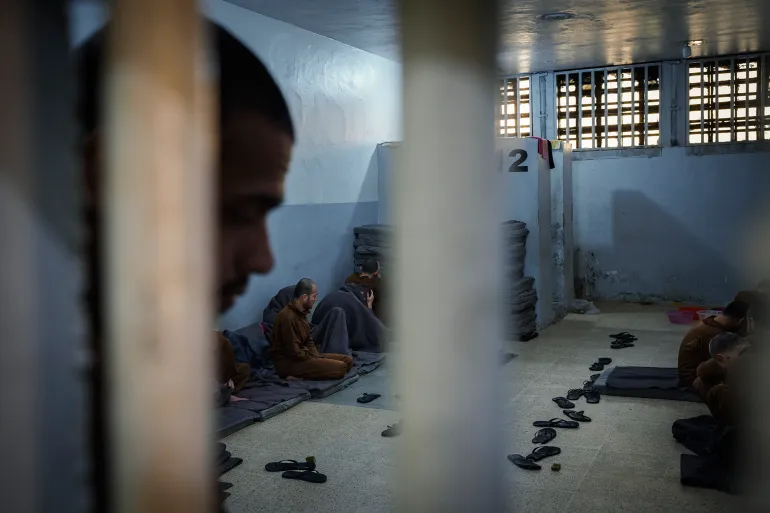
The ground floor houses individual and group cells, interrogation rooms, and torture chambers, while the upper floor contains the offices of officers and investigators, along with the archives and communications departments.
Operational Functions and Mechanisms of Repression
Although Branch (300) is officially classified as a preventive intelligence branch focused on counter-espionage, its actual tasks have gone far beyond monitoring external threats. Its operations have included monitoring the foreign relations of Syrians, pursuing political opponents, and accusing activists and civilians of espionage or dealing with foreign entities as a pretext for arbitrary arrest and torture.
This expanded interpretation of the mandate has transformed the branch into a key instrument for entrenching a climate of fear, combining internal and external surveillance, and participating in security coordination networks used to silence society rather than protect the state.
The monitoring activities undertaken by the branch were characterized by a comprehensive and wide-ranging nature; it monitored diplomats, employees of international organizations, and expatriates with foreign connections, regardless of their nature, within a policy based on constant suspicion.
It also tracked the entry and movements of non-Syrian and non-Arab foreigners into the country, monitored governmental and private institutions that deal with foreign entities, and followed the activities of political parties and figures with foreign ties.
Documents dated November 2011 confirm that Branch (300) monitored the activities of Lebanese parties, including the Lebanese Communist Party, and followed up on meetings held with figures from the Syrian opposition in Beirut, indicating a practical extension of its powers to cross-border surveillance.
One of the most prominent aspects of his activity is targeting Syrians who communicate with foreign media or human rights organizations, by accusing them of receiving foreign funding or cooperating with hostile entities.
These vague accusations were used to justify arbitrary arrests without substantial evidence. A document issued in March 2014 shows that Branch 300 closely monitored the activities of international and human rights organizations, including meetings of international criminal commissions in Gaziantep, and proposed punitive measures against some participants, reflecting continued targeting even outside Syrian territory.
Branch (300) operated as part of an interconnected security network for the exchange of information and instructions and the coordination of surveillance and arrest operations; the management structure ensured a continuous flow of data between local and central branches, which allowed for broad control over individuals and society.
The branch coordinated extensively with the Information Branch (255), the External Branch (279), the Internal Branch (251), and the Investigation Branches, highlighting its role as a link between the internal and external dimensions of the agency’s work.
The documents from the period between 2011 and 2014 also show the intensity of correspondence between branch (300) and branches (251), (325) and (331), which illustrates the integrated network nature of the operations of this system.
Documented Patterns of Violations and Abuses
The violations attributed to Branch 300 followed patterns consistent with the broader systematic violations committed by Syrian security forces after 2011. The branch actively participated in field repression operations that included arbitrary arrest, interrogation under torture, and enforced disappearance of civilians, including activists, journalists, and government employees. The branch was also part of a wider network of State Security detention centers that shared recurring patterns of torture, ill-treatment, and enforced disappearance.
The branch’s practices were characterized by two main elements:
- First, the broad nature of suspicion, whereby the concept of dealing with foreign entities was expanded to include anyone believed to be involved in opposition activity or linked to foreign entities, without requiring concrete evidence.
- Second, the vertical security coordination between leadership and operational levels led to the transfer of large numbers of detainees to other detention centers after initial interrogations within the branch (300), without any judicial proceedings.
The documents referred to by the Syrian Network for Human Rights show that Branch (300) issued direct instructions and proposals to other branches to carry out arrests or follow up on specific cases. It confirmed that it had documented at least 17,438 cases of arbitrary arrest and 2,463 deaths as a result of torture attributed to this branch alone, and that officers focused on questions related to foreign funding and relations with foreign journalists, and that interrogation sessions were frequently accompanied by physical torture to force detainees to sign pre-prepared confessions.
The documented violations also include depriving detainees of health care, denying them fair trial guarantees as most of them are not brought before a judge, in addition to financial extortion by demanding large sums of money from their families in exchange for information about their relatives or in exchange for promises of release, as well as monitoring communications without adhering to judicial procedures.
Legal Responsibility and Command Accountability
The principle of command responsibility in international humanitarian law and human rights law imposes criminal responsibility on commanders and officers for the orders they issue, as well as for violations committed by their subordinates if they were aware of them or should have been aware of them and did not take the necessary measures to prevent them or punish the perpetrators.
Analysis of the documents reveals that Branch 300 is administratively and organizationally subordinate to the Director of the General Intelligence Directorate, and thus falls under the authority of the National Security Bureau and the Presidency. This hierarchical relationship entails responsibility at these levels for policies and practices involving arbitrary arrest, torture, and enforced disappearance within the branch’s jurisdiction.
During the fourteen years from 2011 until the fall of the regime, only three individuals assumed leadership of the General Intelligence Directorate: Major General Zuhair Hamad from 2011 to 2012, Major General Muhammad Dib Zaitoun from 2013 to 2019, and Major General Hussam Muhammad Luqa from 2020 to 2024.
This limited number of leaders, and the long tenure of each—particularly General Zeitoun, who held the position for seven consecutive years—reflects the regime’s reliance on stable leadership to ensure the implementation of overarching security policies. This concentration of power within a narrow circle also casts doubt on these leaders’ direct accountability for security decisions and policies, as well as for the agency’s violations during their terms.
The accountability of perpetrators of violations of Branch (300) is linked to several legal principles; crimes such as murder, torture and enforced disappearance do not lapse with time, especially when committed within the framework of a widespread or systematic attack directed against the civilian population, which falls under the description of crimes against humanity according to Article “7” of the Rome Statute of the International Criminal Court.
Enforced disappearance is a continuing crime as long as the fate of the victim is unknown or the place of their detention is not disclosed, and therefore no time limits begin to run until the truth is revealed.
Orders from superiors or security pretexts are not accepted as justification for gross violations, and any confessions or information obtained under torture or cruel treatment lack credibility and are not admissible as evidence in court.
Conclusion
Branch 300 of the General Intelligence Directorate serves as a revealing example of how security institutions have transformed from their nominal protective functions into instruments of systematic repression. Established to monitor external threats and counter espionage, it evolved into a pivotal center within the Syrian security apparatus, deeply involved in arbitrary arrests, torture, and enforced disappearances. Its practices were part of a coordinated, state-wide policy of repression implemented through an interconnected network of security agencies under centralized command.
The documented violations attributed to Branch 300, including more than 17,000 arbitrary arrests and approximately 2,500 deaths resulting from torture, highlight the scale of human suffering inflicted by this system.
In the context of Syria’s transitional phase, the documentation of Branch 300’s role acquires a dual significance: as a historical record and as a basis for legal accountability.
The principles of transitional justice require enabling victims and their families to access the truth, prosecuting perpetrators at all levels, and adopting structural reforms to ensure that violations are not repeated. The experience of Branch 300 thus offers practical lessons for restructuring security institutions within an effective legal and institutional framework based on the rule of law and respect for human rights.