Fadel Abdulghany
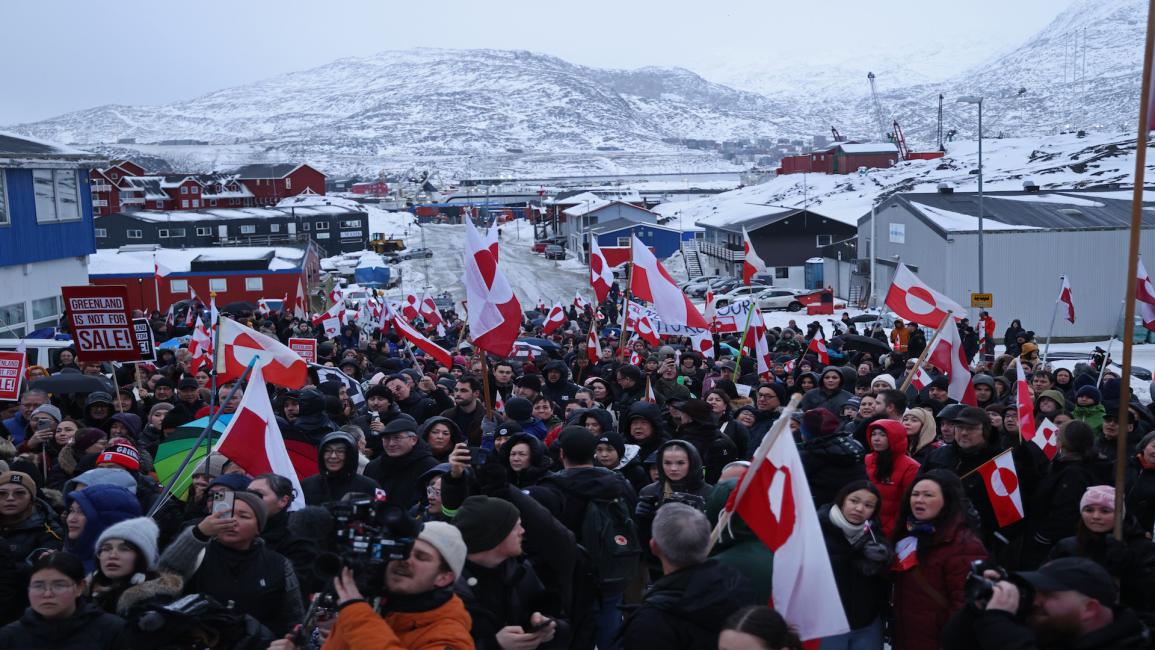
The modern international legal system is based on a set of fundamental principles designed to prevent a recurrence of the territorial aggression that characterized the first half of the twentieth century; at the heart of this system stands the prohibition of the use of force or the threat of force against the territorial integrity of states as an indispensable foundational rule. However, the value of this rule is not only evident in its theoretical formulation, but also in its ability to withstand when it is called upon in the arena of political practice and tested against discourses of influence and coercion. In this context, when President Trump repeatedly refused to rule out resorting to military action to seize Greenland, and those statements were followed by official statements hinting that military options remained available to the Commander-in-Chief of the Armed Forces, this raised serious questions about the strength of this prohibition and its practical effectiveness in the face of coercive political rhetoric. Assessing such claims requires a multi-level normative approach, including: the prohibition of the threat or use of force under Article 2(4) of the Charter of the United Nations, the explicit prohibition of the acquisition of territory by force as set out in the Declaration on Friendly Relations of 1970, and the comprehensive obligations that arise from violating peremptory norms, which extend beyond the parties to the immediate conflict.
This article assesses the legal status of coercive territorial claims in light of the provisions of the Charter and customary international law, based on the doctrinal frameworks established by the International Court of Justice and on contemporary jurisprudential interpretation of these foundational standards.
The Prohibition of the Use of Force and the Threat of Force as a Peremptory Norm
Article 2(4) of the Charter of the United Nations establishes a fundamental obligation for all states to refrain in their international relations from the threat or use of force against the territorial integrity or political independence of any state. This prohibition is not only a binding treaty obligation for members of the United Nations, but it has also acquired the status of a customary rule, and its significance has been established as a peremptory rule that cannot be violated. Both the International Court of Justice and the International Law Commission have affirmed the peremptory nature of this prohibition. In the Nicaragua v. United States case of 1986, it was acknowledged that the principle of prohibiting the use of force contained in Article 2(4) had become recognized as a peremptory norm, and the International Law Commission decided that the Charter law relating to the prohibition of the use of force is a prime example of rules of the highest binding nature in the international legal system.
As a peremptory norm, this prohibition is binding on all states, regardless of any conflicting agreements, and cannot be circumvented by treaty, consent, or political settlement. Consequently, any treaty that violates it is null and void from its inception, according to Article 53 of the Vienna Convention on the Law of Treaties. This legal status reflects the international community’s recognition that the prohibition on the use of force is a structural condition for the protection of international peace and security, and that it must remain absolute and universal in its essence.
Article 2(4) encompasses not only the actual use of force but also the threat of its use. The International Court of Justice addressed this issue directly in its 1996 advisory opinion on the legality of the threat or use of nuclear weapons, establishing a governing interpretative principle that the threat of force is unlawful if the contemplated use of force is, under the same circumstances, unlawful. In other words, the concepts of threat and use are normatively interconnected: the illegality of use produces the illegality of the threat thereof. This leads to a two-stage analytical test: first, would the threatened use of force, if it were to occur, be contrary to international law? Second, if the answer is yes, then the threat thereof is also illegal.
When this framework is applied to claims of territorial seizure by military force, a result emerges that is almost self-evident in contemporary international law. Any use of force to seize the territory of a sovereign state is a direct violation of the protection of territorial integrity, which is the essence of Article 2(4), and it lacks any legal basis within the two exceptions recognized by the Charter: the authorization of the United Nations Security Council under Chapter VII, or the exercise of individual or collective self-defense under Article 51 in response to an armed attack. As for pretexts based on strategic necessity, or repelling hypothetical future threats, or securing resources and corridors, they do not constitute, in international law, a basis that justifies the use of force or the threat of force to seize the territory of others.
Prohibition of the Acquisition of Territory by Force or Coercion
In addition to prohibiting the threat or use of force, international law enshrines a closely related principle: the inadmissibility of acquiring territory by force or the threat thereof. This principle has historical roots dating back to the emergence of the idea of non-recognition of illegal territorial gains during the 20th century. A notable indication in this context is that the United States contributed early on to establishing this logic through the Stimson Doctrine, formulated by Secretary of State Henry Stimson in response to Japan’s invasion of Manchuria. The doctrine stipulated the non-recognition, by law, of territorial situations arising from force. This approach became one of the pillars of the international order after World War II.
The international system after 1945 was founded on a normative assumption: that the prohibition on the use of force applies to all states, thus constraining both the strong and the weak and preventing the transformation of force into a source of regional legitimacy.
The 1970 Declaration on Principles of International Law concerning Friendly Relations and Cooperation among States, unanimously adopted by the United Nations General Assembly, represents the most comprehensive formulation of this principle; the Declaration affirms that no state may acquire the territory of another state by the threat or use of force, and that no such acquisition may be recognized as legal. The International Court of Justice has described the illegality of territorial acquisitions resulting from the threat or use of force as a natural consequence of the Charter principles relating to the use of force.
This prohibition extends beyond direct military invasion to include all forms of coercion that result in a nominal territorial transfer through non-military means or a combination of pressure tactics. Even if formal consent is obtained for the transfer of territory, such consent, if obtained under military threats or coercive pressure that infringes upon the essence of free will, is rendered legally invalid. Article 52 of the Vienna Convention on the Law of Treaties stipulates that a treaty is void if obtained by the threat or use of force in violation of the principles of international law enshrined in the Charter of the United Nations. Contemporary analyses of territorial concessions under duress confirm that transfers made under political or military coercion do not create a valid legal right to the transferred territory. Rather, they are treated as seizures of territory by force, a practice prohibited under international law. Therefore, whether the seizure is through an outright military act or an agreement concluded under duress, the legal outcome is the same: nullity and lack of effect.
Universal Obligations and Systemic Consequences of Violating Peremptory Norms
Because the prohibition against the acquisition of territory by force stems from peremptory norms, violating it creates obligations towards the entire international community, not just the affected state. The International Court of Justice confirmed this trend in its advisory opinion on the wall in the occupied Palestinian territories, explaining that when a grave violation of a peremptory norm occurs, all states have specific obligations, namely: not to recognize any situation arising from this violation, to cooperate in order to end it, and to refrain from providing any aid or assistance that contributes to maintaining the illegal situation.
Every threat to use force to achieve territorial gains undermines the very foundation of international law and produces a contagious effect in international relations, opening the door to the repetition of the same logic in multiple contexts, thus reviving an international order in which rights are measured by military might rather than legal standards. The international system after 1945 was founded on a normative assumption: that the prohibition of the use of force applies to all states, thus restricting both the strong and the weak and preventing the transformation of force into a source of regional legitimacy.
Herein lies a significant paradox: a state that participated in designing the rules-based international order, and has long defended it, may at a certain political moment appear to be challenging its foundations. On the one hand, the Stimson Doctrine constituted an American contribution to establishing the principle of non-recognition of territorial gains achieved through force. On the other hand, the UN Charter was drafted in San Francisco within a legal framework that aimed to make force the exception, not the rule. When the balance between the rhetoric of power and the requirements of compliance is disrupted, the legitimacy of the international legal system is undermined, particularly its foundational principle of the universality of rules and the equality of states before them.
Conclusion
A legal assessment of forced territorial claims, in light of the UN Charter and customary international law, leads to clear conclusions. The threat of using military force to seize territory constitutes a violation of Article 2(4), which prohibits the threat or use of force against the territorial integrity of states. Furthermore, the stated aim—the acquisition of territory by force or coercion—is incompatible with the prohibition set forth in the 1970 Declaration on Friendly Relations. Even assuming a formal concession exists, its occurrence under duress renders it invalid according to the Vienna Convention on the Law of Treaties. Furthermore, given that these prohibitions have the status of peremptory norms, their violation is no longer a bilateral matter, but rather creates obligations for the entire international community to refrain from recognition, refuse to grant attribution, and cooperate in ending the illegal situation.
The effectiveness of international legal rules rests not only on their formal soundness but also on their consistent application and a willingness to hold all parties accountable without selectivity. Whether coercive territorial claims weaken the international legal order or stimulate a renewed commitment to its principles remains contingent on the international community’s ability to uphold the rules designed to prevent the re-emergence of territorial aggression as a legitimate means of redrawing borders.