Fadel Abdulghany
The question of whether it is possible to reach a settlement with economic entities linked to the former regime, and to define its conditions and limits, in the context of post-authoritarian transformations, is one of the most controversial topics of transitional justice.
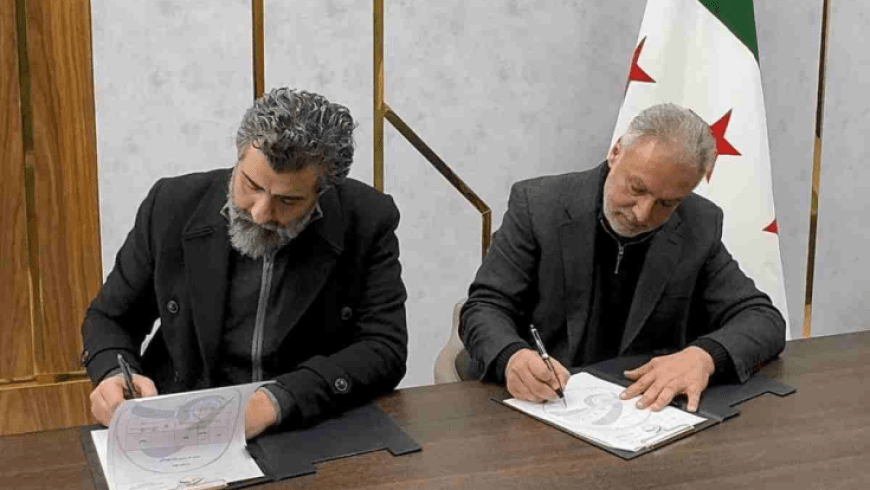
The case of Mohammad Hamsho, a Syrian businessman sanctioned by the US Treasury Department for his role in supporting the Assad regime economically, exemplifies the deep tensions between negotiating pragmatism on the one hand, and the requirements of legal accountability and normative legitimacy on the other. Analysis of this case shows that, although settlements with financiers linked to authoritarian regimes are not uncommon in various transitional experiences, their legitimacy remains entirely conditional on strict restrictions, high transparency, and the explicit exclusion of any cover-up of international crimes. This requires a careful examination of the nature of the allegations, the conceptual limits of the “grand crime” standard in transitional justice, the conditions that might make settlements defensible, and the red lines that would make any such arrangement legally and normatively unacceptable.
The Nature of the Allegations and the Implications of Economic Collusion
Assessing the potential for any legal settlement requires a precise definition of the nature of the allegations against the individual in question. In this context, the US Treasury Department is among the most prominent international bodies that have imposed sanctions on him, having placed him on its sanctions lists since August 2011 based on information indicating his direct support for Bashar al-Assad and Maher al-Assad. The ministry also described him as an influential businessman active in multiple sectors of the Syrian economy, effectively serving as an economic front for Maher al-Assad.
She also noted that Hamsho exploited his position and forged relationships with senior officials to facilitate legitimate and illegitimate transactions for the benefit of influential figures, including allegations of corruption related to parliamentary elections, by paying sums of money to secure a seat in the Legislative Council.
These allegations place Hamsho in the category of “economic facilitators” whose roles formed a structural element in supporting the financial base of an authoritarian regime. His role as an intermediary and facilitator for criminal figures at the top of the power structure suggests a degree of complicity that goes beyond ordinary business activity. However, the available accusations and documentation do not directly attribute to him the ordering or commission of international crimes. This distinction is important when discussing the possibility of settlement, because the dividing line between “economic empowerment” and “direct criminal responsibility” directly affects the nature of the tools that transitional justice mechanisms may activate, and the limits of what can be settled without compromising the requirements of accountability.
The Concept of “Major Crime” in Transitional Justice Frameworks
Determining whether an individual qualifies as a “dangerous offender” within transitional justice frameworks involves conceptual distinctions that are often overlooked in public discourse. According to practices in this field, as understood in a number of relevant guidance documents, the description usually refers to those who bear the greatest responsibility for international crimes, in particular those who planned, ordered, led, or substantially contributed to war crimes or crimes against humanity. This classification shifts the center of gravity from mere profit or benefit gained under an oppressive regime to active and dangerous participation in the most serious violations.
Applying this logic to the publicly available record on Hamsho reveals him as a key economic backer and pillar of patronage networks. However, the available documentation alone does not prove that he ordered or directly committed international crimes. This distinction is not merely technical; it has fundamental implications for determining the scope of legitimate accountability: economic actors who provide support, however important their roles in sustaining the regime, occupy a different position on the transitional justice ladder than those who played leadership roles in the violence or directly participated in atrocities. This does not lessen the moral seriousness of economic collusion, but it does clarify the most effective institutional tools and the conditions under which, in principle, negotiated arrangements can be considered.
Legitimate Settlement Conditions
If a settlement is proposed with a person in Hamsho’s situation, its legitimacy depends on a strict conditional framework that distinguishes between acceptable arrangements and disguised impunity. A settlement becomes more defensible when it is structured as an economic accountability mechanism that includes asset recovery, truth-telling, and cooperation, without impeding investigation or prosecution of serious international crimes. Furthermore, in terms of general normative logic, a strict distinction must be made between unlawful blanket amnesties and conditional arrangements that uphold truth, reparations and accountability, taking into account States’ obligations regarding serious crimes under international law.
As for the practical conditions expected in a similar case, they must be broad, precise and non-negotiable.
First, full disclosure of assets, including properties inside and outside the country, based on documented and audited declarations, and linking this to recovery or confiscation procedures aimed at compensation and the return of public funds.
Second, full disclosure of the commercial structures used as fronts, identification of the true beneficial owners, a description of the methods used to circumvent sanctions, and a detailed mapping of economic relationships with security agencies, including channels connected to Maher al-Assad.
Third, requiring effective and verifiable cooperation against high-level perpetrators and networks, including financial facilitators, supply chains and militia financing structures, with enforceable breach clauses ensuring that non-cooperation or the provision of misleading information nullifies any protection provided.
Above all, the process must be conducted transparently and with a perspective that considers the interests of the victims, by publishing the terms of the settlement, subjecting it to independent oversight, and providing a clear justification for its basis and rationale. Secrecy in this context undermines legitimacy, deepens the trust deficit among victims, and weakens the transitional justice project, even if the agreement itself contains objective benefits.
Fundamental Restrictions and Unacceptable Arrangements
However broad the scope of theoretically conditional settlements may be, certain arrangements render any agreement legally and politically unacceptable. A settlement that grants blanket immunity or opens the door to “buying immunity” from accountability closes the door to the very objectives it claims to serve, especially if the evidence relates to the financing or support of atrocities. The emergence of credible evidence proving that an individual was not merely a profiteering businessman or economic facilitator, but a conscious and significant contributor to specific crimes, would fundamentally reshape the assessment. Such evidence might include financing entities involved in mass atrocities, laundering the proceeds of looting, or directly facilitating acts of systematic persecution.
If such evidence emerges regarding Hamsho, he will move from the category of “facilitator/economic beneficiary” to the category of those who bear greater responsibility for serious crimes, and the space for settlement will shrink considerably. International criminal law, in terms of its structure and functions, establishes external boundaries that no transitional arrangements may exceed. Serious international crimes may not be settled in a way that disrupts the duty of investigation and prosecution, or grants immunity to their perpetrators or substantial contributors, regardless of the political or economic justifications.
Conclusion
The settlement issue in the case of Mohamed Hamsho highlights broader tensions within transitional justice between the logic of pragmatic compromise and the logic of principled accountability. While some transitional experiences have involved arrangements for asset restitution and cooperation with economic actors linked to the former regime, these arrangements only acquire legitimacy if they are strictly and transparently conditional and unequivocally exclude international crimes. The public record shows Hamsho as a key economic enabler rather than a direct perpetrator of crimes, which, in principle, opens the door to considering conditional arrangements if they meet the conditions of disclosure, asset recovery, and verifiable cooperation. However, the legal framework does not accommodate any arrangement that leads to impunity or covers up conduct amounting to international crimes. Therefore, the dividing line between these two categories, determined by the nature of the evidence and its connection to serious crimes, remains the ultimate determinant of whether a settlement is a legitimate tool of transitional justice or an unacceptable concession that infringes upon the rights of victims and undermines the very purpose it is meant to serve.