Fadel Abdulghany
The closure of an international strait by a neighboring state during an armed conflict raises a question about the legitimacy and legality of this act within the framework of the international system, and international law has answered this question with a great deal of consistency, through treaty law, customary rules, international judicial precedent, and rules governing armed conflicts at sea.
The Iranian announcement in early March 2026, following the US and Israeli strikes of February 28, threatening navigation and preventing ships from crossing the Strait of Hormuz, constitutes a practical test of this consistency.
Legal analysis, despite the varying legal frameworks that can be invoked, leads to one conclusion: there is no applicable international legal framework that permits the complete closure of the strait.
The issue stems from the treaty regime governing navigation through straits used for international shipping. Part III of the United Nations Convention on the Law of the Sea establishes the right of transit passage through these straits; Article 38 stipulates that all ships and aircraft enjoy this right for the purpose of continuous and expeditious transit, while Article 44 affirms that transit passage may not be suspended.
Article 42 also permits coastal states to adopt specific regulations concerning navigational safety, maritime traffic management, pollution prevention, and certain matters related to fishing, customs control, and health, without this regulatory authority becoming a power of obstruction or prohibition.
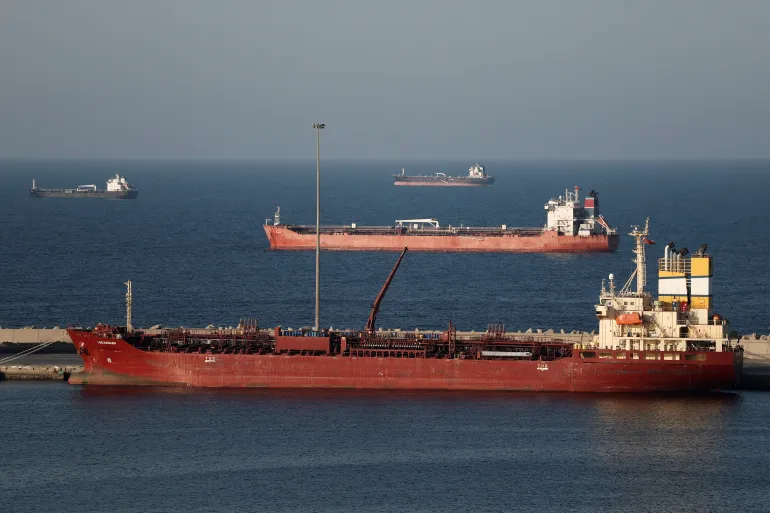
The Strait of Hormuz falls within this framework as a strait used for international navigation connecting the Arabian Gulf to the Gulf of Oman and the Arabian Sea.
Therefore, a complete closure cannot be considered merely a regulation of navigation; rather, it is a direct contradiction of the legal framework governed by the Convention.
Iran has not ratified the United Nations Convention on the Law of the Sea; it signed it on December 10, 1982, but did not deposit its instrument of ratification.
Similarly, it has not deposited its ratification of the 1958 Geneva Convention on the Territorial Sea and the Contiguous Zone, although it signed it on May 28, 1958.
Iran, in its declared position at the signing of the 1982 Convention, as reflected in subsequent legal literature, maintained that the transit passage system only benefits the States Parties to the Convention, while the older system, namely innocent passage (i.e., the continuous and rapid passage of the ship through the territorial sea), is invoked against non-Parties, without this passage affecting the peace, order, or security of the coastal State.
However, this transition from transit passage to innocent passage does not change the practical outcome in international straits; Article (16/4) of the 1958 Geneva Convention stipulates that innocent passage through straits used for international navigation between one part of the high seas and another part of it, or the territorial sea of a foreign state, shall not be suspended.
Therefore, even if a dispute arises concerning the legal regime applicable to certain vessels based on whether or not certain states are parties to the Convention, the outcome remains unchanged: a complete closure is incompatible with both regimes.
The same principle holds true under customary international law, which is binding on all states regardless of their treaty status. The 1949 Corfu Channel case remains the primary case law in this area; the International Court of Justice ruled that the United Kingdom enjoyed the right of innocent passage through an international strait in peacetime, and that a coastal state, in the absence of a specific treaty provision, could not absolutely prohibit such passage through international straits.
While the case did not establish the complete, modern formulation of the transit passage regime, as later incorporated in the 1982 Convention, it clearly enshrined the customary right of passage through international straits. This renders the idea of a complete, unilateral closure as far removed from the logic of international custom as it is from the logic of treaties.
This understanding is further reinforced by the historical and practical context of the Strait. During the Iran-Iraq War, particularly during the Tanker War of the 1980s, shipping in the Gulf was subjected to serious and repeated attacks, yet the Strait was never completely closed.
The significance of this precedent lies in its demonstration that a large-scale armed conflict, including the targeting of merchant ships, did not, in practice, establish a precedent for closing the Strait of Hormuz to international navigation entirely.
This not only definitively resolves the precise customary nature of each element of the legal system, but it clearly undermines any claim that a complete closure represents a natural extension of established practice.
The 1994 San Remo Manual on International Law Applicable to Armed Conflicts at Sea addresses this issue and confirms the same conclusion. While not a legally binding treaty in itself, this manual is a key interpretative reference in this field.
It establishes that the right of innocent passage through international straits remains valid during armed conflict, that neutral states may not suspend or impede such passage, and that the inalienable right of innocent passage through certain international straits is not suspended during armed conflict.
He adds that transit should only be obstructed if a safe and suitable alternative route is available. In the case of the Strait of Hormuz, through which approximately one-fifth of the world’s daily oil consumption passes, and where alternatives are extremely limited, it is difficult to imagine a safe and suitable maritime alternative that would serve the same purpose.
Iran might invoke the right of self-defense under Article 51 of the UN Charter. However, the issue here is not simply the invocation of self-defense, but rather the limits of its exercise. The International Court of Justice, in the Nicaragua case, affirmed that the legitimacy of any defensive response depends on observing the criteria of necessity and proportionality.
Even if the right of self-defense were established, closing the Strait to all shipping, including vessels of neutral nations and commercial ships not engaged in military operations, presents a significant legal challenge under these two criteria. A Japanese-flagged liquefied natural gas tanker or a German-flagged oil tanker does not, in itself, pose a military threat to Iran.
Such an action makes no distinction between vessels belonging to belligerent parties and neutral ships, nor between military and commercial shipping, and its effects extend to a large number of countries, populations, and markets that have no direct connection to the original attack.
Therefore, a complete closure appears more like a general measure with broad, collective effects than a limited defensive action justified by immediate military necessity.
The closure of the Strait also raises a separate issue concerning the Sultanate of Oman. The Strait is not solely within the legal domain of Iran, but also borders Omani territorial waters, and Oman is a State Party to the United Nations Convention on the Law of the Sea.
Therefore, if Iranian threats or any practical enforcement actions are directed at vessels within Omani territorial waters or the waterways within them, this raises the additional issue of whether Iran can exercise enforcement authority or impose navigation orders within the territorial waters of another state without legal basis.
The issue then extends beyond freedom of navigation to include respect for territorial sovereignty.
The legal position on this matter is clear and consistent across the various relevant frameworks. The United Nations Convention on the Law of the Sea prohibits the suspension of transit passage, and the older system of innocent passage, which cannot be suspended, in international straits leads to the same conclusion. The Corfu Channel case supports the existence of a customary right of passage through international straits, and the San Remo Manual confirms the continuity of these rights during armed conflict. Furthermore, historical practice does not support the idea of a complete closure.
Therefore, whether viewed from the perspective of treaty law, international custom, international jurisprudence, or the law of armed conflict at sea, a complete closure of the Strait of Hormuz has no valid legal basis and constitutes a flagrant violation of international law.