Fadel Abdulghany
In one of the most turbulent regional moments, political and military issues cannot be separated from legal questions. When sovereign states are subjected to a large-scale armed attack, examining the legal basis for their right to self-defense, both individually and collectively, becomes a central issue. From this perspective, the Iranian attacks targeting (and continuing to target) the Gulf Cooperation Council states and Jordan, following the US-Israeli aggression against Iran since late last month (February), acquire a significance that transcends their immediate military dimension. They open a clear legal debate regarding the legitimacy of requesting foreign military assistance, its limits, and the frameworks that govern this matter in public international law.
The Inherent Right to Self-Defense
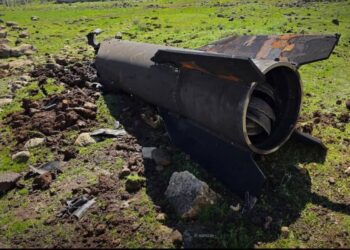
On February 28, Iran launched a coordinated attack using ballistic missiles, cruise missiles, and armed drones against all six Gulf Cooperation Council (GCC) states, as well as Jordan. Tehran claimed this was in retaliation for joint US-Israeli strikes targeting Iranian territory. These attacks resulted in the deaths of at least nine people, injured more than two hundred, and caused significant damage to civilian infrastructure across the Arabian Peninsula. What distinguishes this incident from previous regional tensions is not only its scale but also its legal nature. It constituted a simultaneous armed aggression against six sovereign states that had explicitly declared their neutrality and actively sought to facilitate diplomatic channels to avoid confrontation.
Iranian Attacks Constituted a Simultaneous Armed Aggression against Six Countries that Had Sought Neutrality and Pursued Diplomacy
Article 51 of the UN Charter stipulates what it describes as the “inherent right” of individual and collective self-defense if an armed attack is launched against a member state, until the Security Council takes the necessary measures to maintain international peace and security. The phrase “inherent right” is of particular legal significance because it indicates that this right predates the Charter, being a rule of customary international law, and not merely a right established by treaty. Collective self-defense, as a branch of this right, authorizes a third state to intervene militarily in support of the state under armed attack, provided that a set of specific conditions are met.
The most prominent judicial clarification of these conditions was given in the 1986 International Court of Justice ruling in the case of Military and Paramilitary Activities in and against Nicaragua, when the Court set forth strict and sequential requirements that constitute the operational threshold for any legal basis for collective self-defense.
The Court stipulated, firstly, that an armed attack of a high degree of gravity must have occurred, distinguishing between the “most serious use of force” and less serious uses, such as the supply of weapons or logistical support. Secondly, the victim state must declare itself to have been the target of an armed attack. Thirdly, that state must formally request military assistance from the intervening state or states. Fourthly, any response must meet the conditions of necessity and proportionality. Fifthly, the Security Council must be notified. Although the Nicaraguan framework has been subject to academic criticism for imposing, in the view of some legal scholars, excessive formal restrictions on a fundamental right, it remains the benchmark judicial standard and continues to directly influence the legal analysis of contemporary conflicts.
Attacks that Meet the Criteria
The Iranian strikes carried out last February and this March clearly meet the criteria set by the International Court of Justice. From the perspective of the threshold for armed attack, these strikes constituted a highly serious act of armed aggression, as they involved the simultaneous launch of hundreds of ballistic and cruise missiles, and more than a thousand drones, against six sovereign states, targeting airports, seaports, oil facilities, residential areas, hotels, and diplomatic missions. This is a highly serious act of armed aggression.
This is not a case of ambiguous or indirect use of force, nor of border skirmishes, nor of covert arms transfers of the kind that the International Court of Justice in the Nicaragua case distinguished from a legitimate armed attack. The UAE alone has been targeted, as of March 4, by 189 ballistic missiles, 941 drone attacks, and three cruise missiles. The joint statement by the Gulf Cooperation Council and the European Union condemned these attacks, describing them as “indiscriminate” and emphasizing that they did not target legitimate military objectives.
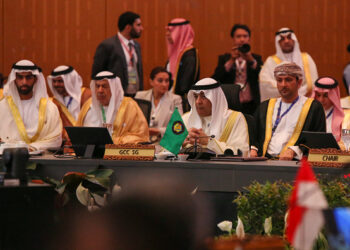
The requirement for victim states to declare themselves and submit a formal request was met both collectively and individually. The Ministerial Council of the Gulf Cooperation Council (GCC), convened in an extraordinary session, condemned the attacks as a grave violation of state sovereignty and a clear breach of international law and the UN Charter. In an emergency session of the Security Council, the Bahraini ambassador, speaking on behalf of the six GCC member states, as well as Syria and Jordan, held the Iranian government fully responsible. This was followed by separate national statements from the affected countries confirming that the attacks had occurred on their territories. Saudi Arabia announced that it had been struck and that it would take the necessary measures to defend itself. Qatar confirmed casualties and that it had intercepted Iranian aircraft. Most importantly, the GCC Ministerial Council explicitly affirmed the member states’ legal right to respond, under Article 51, individually and collectively. The joint statement between the GCC and the European Union also clearly affirmed the inherent right of GCC states to defend themselves in accordance with this article.
The Security Council was notified on the day the attacks began, February 28, and convened an emergency session at the request of Bahrain, France, Russia, China, and Colombia. The Secretary-General addressed the Council, calling for restraint, and the Gulf Cooperation Council (GCC) states presented their position to the assembled members.
Article 2 of the GCC Joint Defense Agreement stipulates that an attack on one member state is considered an attack on all of them.
With regard to the requirements of necessity and proportionality, the continuation of intermittent Iranian attacks until at least March 6 reinforces the conclusion that the threat remained and had not disappeared. The Gulf Cooperation Council (GCC) states have repeatedly affirmed their preference for dialogue and diplomacy, while simultaneously maintaining their right to take all necessary measures to defend their security.
Collective Commitment and the Concept of Sovereignty
In addition to the UN Charter, the Gulf Cooperation Council (GCC) possesses a treaty-based collective defense mechanism, structurally similar to Article 5 of the North Atlantic Treaty (NATO). Article 2 of the GCC Joint Defense Agreement stipulates that an attack on one member state is considered an attack on all, and any threat to one is considered a threat to all. Article 3 activates this principle by obligating member states to take immediate action to assist any member subjected to aggression, including the use of military force. In this sense, the agreement also embodies the collective commitment contained in Article 51 of the Charter, integrating the regional framework into the broader international legal system. This agreement was activated in an unprecedented manner in September 2015 following the Israeli strike on Doha, when the GCC declared the principle of indivisible security among its members. Recent Iranian attacks have further reinforced and significantly expanded this activation. The Ministerial Council reaffirmed its full solidarity and unified stance, emphasizing that the security of any member state is inseparable from the security of all member states. Since then, joint air defense systems have been activated, and reconnaissance operations and security coordination have been intensified. While the agreement primarily regulates the mutual obligations among the members of the Gulf Cooperation Council, its explicit reliance on Article 51 also provides a clear legal framework for requesting and coordinating external assistance.
The third legal basis, independent of the previous two, is the principle of intervention by invitation, a well-established principle in customary international law. This principle allows a legitimate government to consent to the presence of foreign forces and for those forces to conduct military operations on its territory. This basis rests on the very concept of sovereignty, since the use of force with the consent of the state possessing the territory does not, in principle, fall under the prohibition contained in Article 2(4) of the Charter, because it does not target the territorial integrity or political independence of that state. The International Court of Justice addressed this principle in the 2005 cases concerning Nicaragua and the armed activities in the territory of the Congo, affirming that a valid invitation must come from a legitimate government exercising effective control, not from non-state actors or rebel groups.
The Legal Framework for the Gulf Cooperation Council (GCC) States to Request Military Assistance when Deemed Necessary is Readily Available.
All six GCC member states are internationally recognized sovereign governments exercising effective control over their territories. Therefore, any invitation extended by them to external partners constitutes a legitimate basis for the presence of foreign military forces and related operations.
Accordingly, the legal basis for the GCC states to request and receive military assistance rests on three complementary and mutually reinforcing frameworks. Article 51 provides the primary foundation through the right of collective self-defense, while also fulfilling the conditions clearly defined by the International Court of Justice in Nicaragua. The GCC Joint Defense Agreement provides a regional treaty-based commitment, modeled on NATO’s collective security framework, which has been activated and reaffirmed during the current crisis. The principle of customary international law authorizes intervention at the invitation of each GCC state, as a legitimate sovereign government, to consent to the presence and operations of foreign military forces on its territory. What lends this legal framework its particular strength is the unprecedented nature of the Iranian aggression itself, as a simultaneous attack against six states that had sought neutrality and pursued diplomacy. Therefore, the convergence of these frameworks provides a disciplined and structured legal path for its implementation, should the GCC states and their partners conclude that military assistance becomes necessary to restore security and deter any future aggression.
Conclusion
The request for military assistance by the Gulf states attacked by Iran is not a mere political choice or an exceptional measure lacking legal basis. It is justified by international law, the Gulf states’ regional obligations, and the principle of sovereignty itself. The Iranian attacks, in their scale, scope, and simultaneous nature, have presented the Gulf states with a security challenge and a legal test, intersecting with three frameworks: collective self-defense, regional joint defense, and intervention at the invitation of the state. These frameworks form a coherent and interconnected basis. In this sense, the legitimacy of the request for assistance is not understood as an exceptional expansion of the use of force, but rather as a disciplined legal response to a clear armed aggression that has met the conditions recognized under international law.