Fadel Abdulghany and Ruti Teitel
Introduction
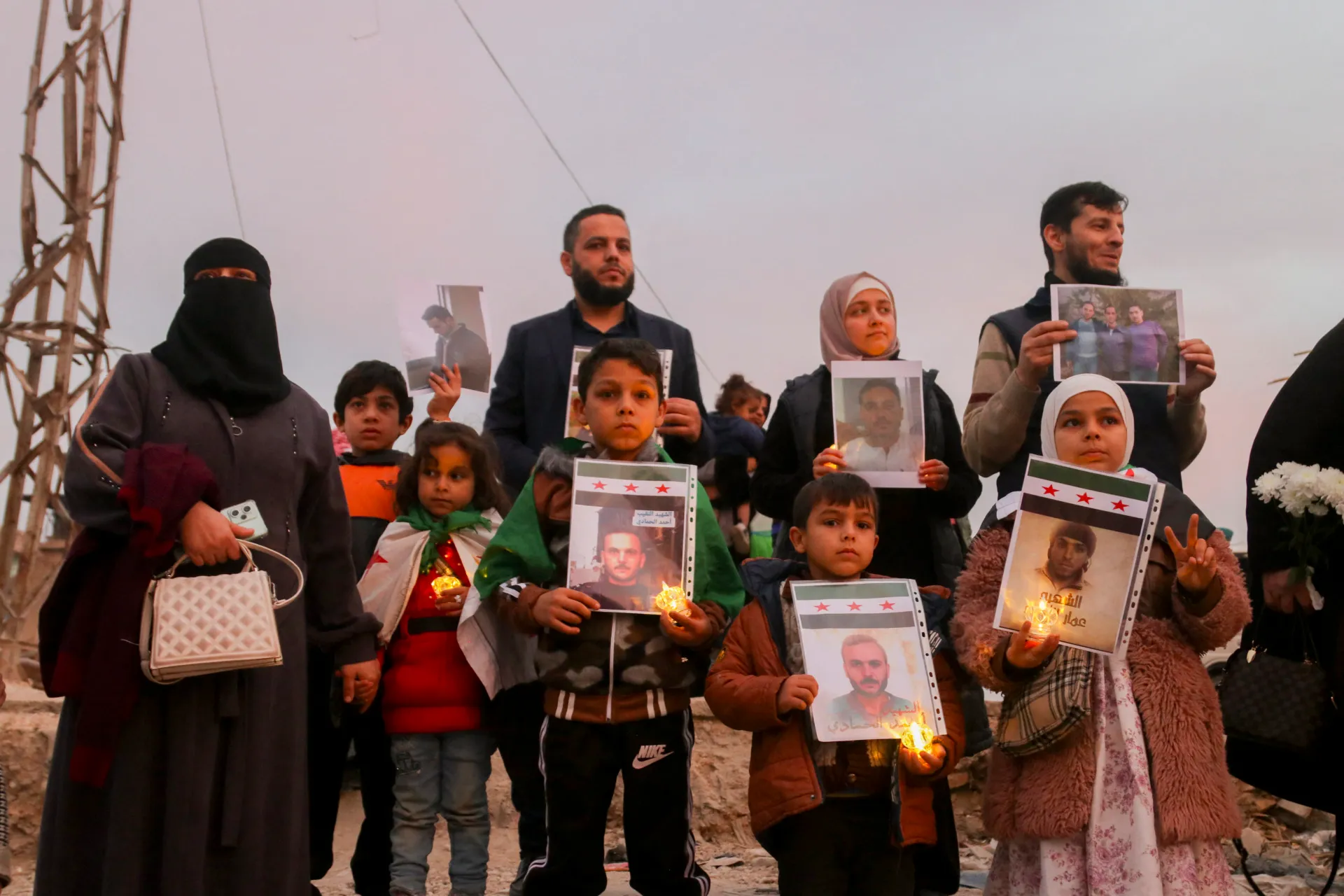
On Dec. 8, 2024, Syria crossed a historical threshold when the fall of President Bashar al-Assad marked the end of five decades of tyrannical rule characterized by unprecedented levels of methodical state violence. For a country that suffered one of the most destructive armed conflicts of the twenty-first century, this transition marked an exceptional opportunity and simultaneously a monumental challenge: How to address the legacy of grave human rights violations in Syria, while simultaneously supporting permanent peace, democratic rule, and societal reconciliation?
The enormity of the task is clear when considering the documented scope of atrocities: The killing of at least 234,805 civilians (202,000 by the Assad regime forces and/or allies); 181,312 cases of arbitrary arrest and enforced disappearances; 45,339 cases of death due to torture; 217 attacks using chemical weapons by the Assad regime; and tens of thousands of barrel-bombs dropped on civilian neighborhoods causing what scholars described as “urban genocide” (the intentional destruction of inhabited areas to make them uninhabitable in order to effectuate mass displacement). Syria also faces severe economic devastation (with the World Bank estimating reconstruction costs at around $216 billion), extensive destruction of the country’s infrastructure, and the displacement of nearly half of its population.
These large-scale atrocities have caused an exponentially complex reality for Syrian victims, extending beyond the suffering of individuals to include multigenerational harm and widespread societal damage.
The Syrian case presents a challenge for traditional modes of transitional justice, as the country faces “fragmented sovereignty” and deep societal divisions abetted by 14 years of conflict. To complicate things further, both political disintegration and social polarization in Syria have generated intersecting divisions that complicate transitional justice and produce what can be described as “competing suffering.” Managing the sectarian tensions present in Syria requires non-sectarian justice that focuses on individual responsibility and prevents collective stigmatization (for instance, of Alawites). Transitional measures must be designed to reduce existential fears rather than unintentionally embedding them.
In designing an effective transitional justice framework, policymakers must also take into account risks such as executive overreach, institutional fragmentation, politicized justice, and sectarian tensions; mitigating these risks requires careful sequencing, transparency, and broad participation in both design and implementation.
Transitional Justice as a Transformative Framework
Transitional justice is a conception of justice in periods of radical change that is often associated with a collection of measures implemented in response to systemic or widespread violations, that are designed to facilitate the recognition of victims and strengthen the conditions for sustainable peace, reconciliation, and democratic rule. This framework offers a variety of tools, which work best when deployed in combination with one another rather than individually.
The core pillars of transitional justice are accountability, truth-seeking, reparations, and institutional reform. Each of these components aims to remedy a specific kind of damage. For example, judicial prosecution responds individual and collective harms by pursuing individual criminal responsibility; truth-seeking processes rebuild collective knowledge and establish a record of the types of violation committed; reparations acknowledge harm in both a symbolic and material manner, which may help to facilitate healing; and institutional reforms address the pre-existing conditions that permitted or even perpetuated systematic violations.
Partial implementation (i.e. implementing only one or a few of these components) is often insufficient. Truth without accountability risks normalizing impunity, while prosecution without institutional reform runs the danger of producing selective or merely symbolic justice. Reparations without truth may lead to the problematic erosion of memory to the detriment of broader societal healing, and institutional reform without sufficient participation from victims may reproduce technocratic habits that were a hallmark feature of the prior regime.
It is our firm recommendation that the Syrian transitional justice process incorporate all four of these integral components.
Legitimacy that is Centered Around Victims and National Sovereignty
A victim-centered approach to transitional justice is a fundamental condition for legitimacy. This is integral to ensuring that a transitional justice framework responds to the actual needs of the victims, and does not become a tool for political manipulation.
Accordingly, victims must be empowered to contribute to the design of the transitional justice framework in Syria, including setting out its priorities and its implementation. This is essential for building legitimacy in a post-authoritarian context: while the previous regime was fueled by fear and coercion, legitimacy in post-Assad Syria must be built on comprehensive measures that embody a procedural break with authoritarianism.
In addition, the transitional justice framework must be Syrian-led, rather than internationally driven. But, this need not be a zero-sum equation; there is also a role for international inclusion in instances where the domestic institutions in Syria lack requisite qualifications, independence, or public trust. Our recommendations below provide a template that is built on the principle that international experience and standards can complement domestic frameworks without replacing them. This balance is broadly aligned with the principles underlying the concept of complementarity in the Rome Statute, which gives deference to domestic accountability processes while maintaining the possibility of international participation when a domestic system proves its inadequacy or unwillingness to achieve real justice.
Early Institutional Flaws in the Syrian Transition
Transitional justice should be part of the foundational legal framework of Syria’s transition, but in order to avoid repeating the failures of the previous Syrian state, this should be done in a manner that appropriately utilizes legislative authority and does not unduly expand executive authority.
It is not all bad news. The March 2025 constitutional declaration issued by the transitional Syrian government called for the creation of an “effective, consultative, victim-centered” transitional justice commission. Constitutionalizing transitional justice can help to protect it from future political change (although ideally in a manner that preserves consultative or participatory processes), create a basis for its financial and administrative independence, and contribute towards guaranteeing enforceable individual rights regarding truth-seeking, justice, and reparations.
This approach is not only symbolic; in the absence of constitutional protections, these mechanisms would be more vulnerable to unofficial coercion, budgetary manipulation, and interference from executive authorities. Accordingly, we recommend that core transitional justice protections along these lines be reflected in an eventual new permanent constitution.
The use of a constitutional mechanism, even if an interim one, to establish the foundations for transitional justice in Syria is therefore a step in the right direction. However, the use of presidential decrees to subsequently establish the transitional justice institutions called for by the constitutional decree, without added democratic input or processes, created an avoidable legitimacy problem. Specifically, two foundational transitional justice committees in Syria were established by executive decrees in May 2025: Decree No. 19 created the National Committee for Missing Persons, and Decree No. 20 created the Transitional Justice Committee (“TJ committee”). While these bodies ostensibly address the core transitional justice pillars of truth and accountability, their creation by executive decree is an undesirable step towards executive unilateralism. This reflects a common tendency in transitional states for the executive branch to consolidate control over transitional policy, without effective participation from other branches of government or civil society during the transition period (a topic on which one of us has previously written).
Instead, these mechanisms should have been established through legislative authority. Unlike a unilateral executive decree, legislation has a distinct legitimacy derived from (at least theoretically) rigorous and collaborative processes that inherently require compromise and reflect a more representative process, all of which enhances legitimacy.
In the Syrian transitional context ensuring essential checks on executive power and greater representative governance via the legislature is essential, especially in light of the Assad regime’s highly concentrated (and abused) executive powers.
In this context, the issuance of Decree No. 19 and 20 are early indicators of institutional risks in Syria. This may negatively impact Syrians’ trust in the transitional process, the effectiveness of the framework ultimately produced, and sustainability in the long run. A durable and accepted transitional justice process in Syria must come as a result of a representative legislative process that does not replicate the centralization of executive authority that was so characteristic of the Assad regime.
Institutional Dissociation: The Missing Persons Issue in Syria Should Not be Splintered into a Separate Committee
Additionally, the decision to create a missing persons committee that is separate from the TJ committee is problematic. Specifically, it risks introducing competing jurisdictions, creating a duality of investigation resources, producing conflicting findings and recommendations, and confusing victims as to where to go when seeking redress in Syria.
Enforced disappearances were part of a fundamental systematic policy of detention networks, torture systems, and killings implemented under the Assad regime; it is an issue that is intimately tied up with many of the other systemic violations suffered by Syrians. Therefore, the exclusion of the missing persons docket from the core TJ committee risks that certain structural patterns of violations may be missed in the transitional justice framework, and weakens the committee’s ability to adequately make the essential connections between truth, accountability, reparations, and institutional reform.
A separate missing persons committee is also likely to require a separate administrative structure, testimony collection, complaint filing mechanisms, and legal, psychological, and social support – all of which increases bureaucracy, cost, and unnecessary overlap with the TJ committee. This duplication could lead to contradictory standards, procedures, and the issuance of disjointed recommendations that do not benefit from a standardized, cohesive set of criteria for evidence and methodology. The missing persons issue should have been included as a specialized unit within the TJ committee, as one united body, and the transitional Syrian state’s failure to do so was an unfortunate early misstep.
Accountability: Domestic Legal Framework and a Special Court
To advance the accountability critical to a transitional justice framework, the transitional Syrian state should establish a hybrid “Special Tribunal for Syria,” and should also pass new criminal legislation to account for international crimes not currently criminalized in Syria’s domestic legal framework.
Amendments to Syria’s Domestic Criminal Law Framework
New domestic criminal legislation must be passed to enable effective prosecutions, because current domestic Syrian law does not presently recognize core international crimes, including war crimes and crimes against humanity. Any such laws should include both the international crimes themselves, and modes of participation and related responsibility for them. In regard to the latter, the law should establish a framework for both command responsibility and collective participation in widespread crimes; due to the widespread, structural nature of the violations in Syria, it is essential that any domestic criminal law does not narrowly focus only on direct perpetrators. The law should also cover crimes taking place in both international and non-international armed conflicts (IACs and NIACs, respectively), because the Syrian conflict involved a highly diverse range of participants, including a variety of state and non-state actors, both foreign and domestic, and the related violence which has at times been classified as both an IAC and a NIAC. Addressing crimes committed in both contexts will help advance accountability for all perpetrators of grave international crimes.
Establishing a Hybrid Court
Syria should also establish a “Special Tribunal for Syria” that takes the form of a hybrid court combining national ownership with international expertise. This is particularly well-suited to the transitional Syrian context because the previous judiciary lacked independence, competence, and public trust. A hybrid court model, specifically, can offer two simultaneous functions: ensuring international fair trial standards are met and ensuring that the Syrian state has the capacity to prosecute complex serious crimes in the near term, while at the same time building local professional competence through ongoing practice. A joint body with both local and international judges (rather than separating international and domestic judges into different components within the court) would particularly facilitate horizontal learning and capacity-building within the Syrian judiciary.
As with the establishment of the transitional justice committees discussed above, this court should be established via legislation rather than an executive decree to enhance democratic legitimacy, allowing for public debate (including from victims’ groups and legal professionals) over jurisdiction, structure, and procedures. This helps to safeguard against the risk of politicizing accountability, a particularly vulnerable issue when the executive branch dominates a transitional period. It can also render the court less susceptible to the perception that it is a vehicle for victor’s justice, utilized to indiscriminately punish communities or those with a general affiliation to the former regime rather than responsible individuals. To protect against these same risks, it is essential that the court incorporate fair trial guarantees, transparent criteria for case selection, and fundamental procedural safeguards.
It is also critical to integrate this court into the domestic judicial system in Syria (with the oversight of a higher domestic judicial body), as opposed to creating a wholly parallel court. Integrated courts can leverage existing infrastructure and increase the likelihood that innovations in areas such as witness protection, victim support, and case management are spread to regular courts as well, rather than remaining institutionally isolated in the hybrid mechanism. Of course, this integration presupposes that significant judicial reform, discussed further below, takes place in parallel with the establishment of the hybrid mechanism, as a special court cannot operate effectively within a system characterized by politicization, corruption, and dominance of executive authority.
Last, a wide range of perpetrators in Syria, including lower-level civil service or administrative officials, may fear prosecution, reprisal, or social exclusion – and thus resist cooperation or even seek to undermine reforms. To address this, the transitional Syrian state should consider balancing measured accountability processes that reflect degrees of responsibility, while maintaining a clear prohibition against blanket amnesty for serious crimes. Lower-level actors could potentially, on a case-by-case basis, be referred to truth-telling or compensation-related mechanisms, rather than criminal prosecution. In theory, this may avoid incentivizing obstruction without facilitating impunity or neglecting victims.
Truth-Seeking Mechanisms’ Role in Supporting Accountability
Accountability and truth-seeking mechanisms can be designed for compatibility. For instance, a referral mechanism can be used to form the link between fact-finding for truth-seeking purposes and prosecutions. Where applicable, fact-finding institutions can prepare structured evidence files that align with criminal evidentiary standards, and refer them to the hybrid court (which would retain independent discretion in selecting cases). This approach could enable the collection of testimony and documentary evidence that demonstrate systematic patterns of violence in Syria, while supporting criminal proceedings based on judicially admissible evidence and an independent indictment.
Institutional Reform, Reparations and Risk Indicators that Must be Monitored
Institutional reform is the cornerstone of non-repetition guarantees that are so important for a successful transition away from systemic violence, and essential for a successful transitional justice process – without this, the other pillars crumble. Multiple sectors in Syria require institutional reform, including both the judiciary and (perhaps especially) the security sector.
Judicial Reform
First, and foremost, judicial reform in Syria must include the comprehensive restructuring of the Supreme Judicial Council, which held enormous authority over the judicial branch under the Assad regime (including the appointment and removal of judges). The March 2025 constitutional declaration established a new Supreme Judicial Council. This entity should be further constitutionally strengthened to ensure its independence, and its professional competence should be rebuilt through a thorough evaluation, retraining of its personnel, and a significant change of culture (which was previously driven largely by loyalty to the president, and should instead be focused on adherence to the law, judicial independence, and respect for human rights). Personnel should be individually assessed based not on mere affiliation, but on their specific practices – with a careful review of compliance with new rules and the gradual imposition of penalties. Retraining should be focused on in-depth professional competency to protect rights, including a deep knowledge in international humanitarian law, international human rights law, and gender justice, as well as strong scientific knowledge of forensic evidence.
Security Sector Reform
The security sector in Syria, meanwhile, requires a radical transformation, not just a restructuring. The security sector under the Assad regime was responsible for systemic repression of fundamental rights, torture, direct implementation of state violence in violation of international law, and the exercise of harsh surveillance over the Syrian population.
The previous security apparatus was both fragmented and overlapping, which enabled abuses through competing duplications of intelligence and security functions, policing mandates, and counter-terrorism operations. This needs to change. Of course, reform should avoid a sudden and entire dismantling of the security sector that could create security vacuums, e.g. such as occurred with post Iraq debaathification, but rather should focus on functional differentiation, such as separating criminal investigations, counter-terrorism, foreign intelligence, and border security into independent agencies with non-overlapping jurisdictions. Priority reforms should also include establishing civilian and judicial oversight structures to prevent the reemergence of political surveillance, a hallmark problem under the prior regime.
There have already been problems with security sector reform under the transitional government. For instance, the hasty integration of armed groups into the transitional Syrian government’s security apparatus without sufficient scrutiny has most regrettably contributed to horrific abuses in the Coast and Suwayda. Bypassing vetting standards under the pretense of reaching short-term stability risks assimilating individuals with criminal records into the police and military. Instead, the transitional Syrian government must adopt a well-deliberated and properly paced integration that balances security effectiveness with legitimacy and effective human rights protections, and the exclusion of perpetrators of serious crimes in the security apparatus.
Reparations as Recognition, and “Rebuilding as Reparations”
Reparations include both material compensation and symbolic recognition. These two prongs can be integrated with reconstruction efforts. For instance, reconstruction in Syria can, in and of itself, constitute recognition if it is developed through participatory processes that empower affected communities to determine priorities. Community involvement along these lines can link physical rebuilding with the moral and legal recognition of harm.
It is likely that funding will be a constraint on reconstruction efforts. However, there are a number of potentially useful mobilization strategies, such as the freezing of assets for senior officials pending investigation, establishing a multi-actor driven fund dedicated to transitional justice in Syria, and a transparent and audited international trust fund (with careful oversight arrangements to combat corruption).
Linking reconstruction funding efforts with transitional justice may also help overcome certain limitations raised by international financial support. For instance, donors focused on transitional justice often prioritize public trials to demonstrate political accountability, while potentially neglecting other aspects that also have a direct impact on victims’ lives, such as financial reparations, societal reform, and support for reconstruction. All are needed for a successful transition, and linking reparations to reconstruction can help.
Societal repair is also essential for reflecting the narrative dimensions of violence in Syria. Commemorations, museums, curriculum reform, and memorial days are tools that can help build a credible historical record, prevent denial, and facilitate social reform. These measures must be ethical and victim-centered in order to avoid political exploitation and the commodification of suffering, while maintaining their function as a public recognition of systematic violations.
Conclusion
The post-Assad phase in Syria requires comprehensive and mutually-reinforcing transitional justice mechanisms. From here, the transitional Syrian state should do the following: establish a non-judicial national truth commission linked to criminal accountability through a straightforward referral mechanism; establish, by legislation, a hybrid court that both promotes standards and builds capacity; amend domestic criminal law to include international crimes and patterns of responsibility; and undertake deep institutional reform, especially in the judicial and security sectors. Interested donor states, meanwhile, should prioritize funding for reconstruction efforts that can be effectively linked to a reparations framework.
The transitional justice project in Syria remains, at its core, a gamble on society’s capacity for change. Justice and peace need not be opposing forces. To the contrary, they can, if purposefully linked, sustain one another and lay the foundation for renewal. This moment represents a historic opening, and the responsibility for seizing it rests on the shoulders of both Syrians and the international community.