Fadel Abdulghany
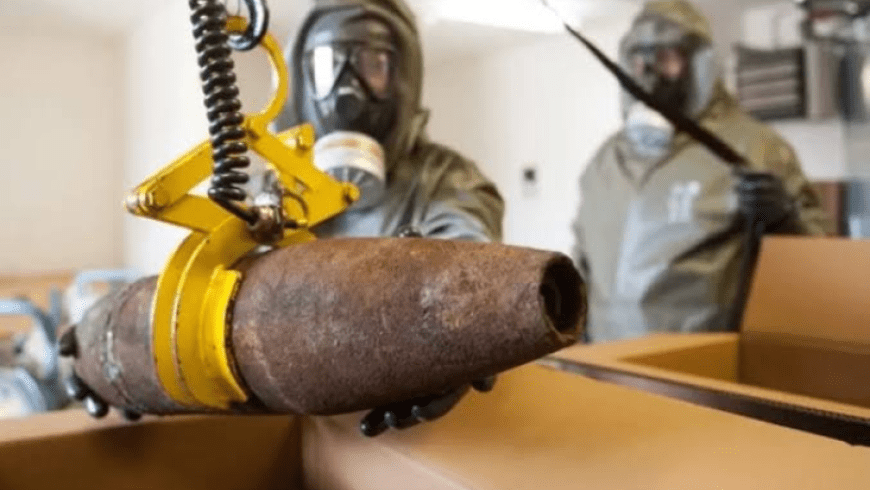
In August 2026, the Organisation for the Prohibition of Chemical Weapons (OPCW) verified the final destruction of forty-two Syrian aerial bombs, in the first destruction of Syrian chemical munitions verified by the OPCW since 2014. The Security Council was informed of this operation on 3 September, thus concluding an accelerated series of steps: the physical location of undeclared munitions in May, the submission of three formal amendments to the declaration of Syria in June, then the conclusion of agreements on the facilities and on the verification arrangements for the destruction in July. Taken together, these steps represent a qualitative shift in this file, from a prolonged concealment under the al-Assad regime to a cooperative identification and a verified destruction in the post-al-Assad phase.
It is necessary to go back a little in order to clarify the significance of what happened. After Syria acceded to the Chemical Weapons Convention (CWC) in the wake of the sarin attack on Ghouta in August 2013, it submitted a declaration on the basis of which the OPCW verified the destruction of about 1,040 tonnes of Category 1 chemicals by August 2014, before announcing in January 2016 the completion of the destruction of all declared chemical weapons. However, the OPCW isn’t bound by what a State chooses to disclose; its powers of inspection, clarification and investigation exposed the gaps in the declaration of Syria, and established that prohibited use had occurred after the accession to the Convention.
The current process isn’t limited to implementing a second destruction program; it is also a reconstruction of a more complete picture of the parts that remained hidden from the earlier program, and its precondition wasn’t only technical, but informational and institutional as well. The fall of the al-Assad regime in December 2024 changed the verification environment, as it opened access to sites, records and individuals whose absence external verification alone couldn’t compensate for. The OPCW recorded this access, along with the formation of a Syrian national team, and described this qualitative shift as a reset after eleven years of obstruction. However, this change in the level of cooperation shouldn’t be confused with a change in the legal obligation. The Convention binds the Syrian Arab Republic in its capacity as a State Party, regardless of the government in power; thus the transition changed the entity that implements the obligations of Syria and left these obligations as they are. As for the official references to “unprecedented efforts,” they point to the scale of the cooperation currently in place, not to a legal conclusion that the outstanding obligations have been fulfilled.
The sequence of steps in 2026 gives this cooperation an auditable form. The deployment in May, which was concentrated in the Hama–Homs–Latakia area, resulted in the identification of munitions that hadn’t been declared previously, among them aerial bombs of the type used in the 2017 attacks in Latamneh and Khan Shaykhun, thus providing a material confirmation of the concealment that the OPCW had long maintained. However, discovery alone doesn’t complete the cycle of declaration and destruction provided for in the Convention. Article IV(9) requires that chemical weapons discovered after the initial declaration be reported, secured and destroyed in accordance with the procedures of the Convention, and here lies the importance of the June amendments: they moved the recovered materials from a mere physical possession into an international chain of declaration, inventory and verification. The facility agreements in al-Qutayfah and Homs in July turned the political cooperation into a formal verification structure, then the destruction in August came to conclude this chain. As for the forty-two bombs themselves, they require a precise characterization. They are Category 3 chemical weapons, that is, unfilled munitions, and not materials proven to contain a chemical agent; hence their destruction isn’t a measure of the quantity of toxic agent that was eliminated. Their value lies in the procedural aspect; they show that materials omitted from the declaration can be found, disclosed, verified and destroyed in a final manner, and that this path can be repeated wherever conditions permit.
Despite this interim achievement, Syria still has a long and arduous road ahead to get rid of the chemical legacy of al-Assad. Of the twenty-six declaration issues identified since 2014, nineteen remain outstanding, and the OPCW says they include potentially large quantities of chemical agents and munitions that are undeclared or unverified; moreover, the remedial measures required in 2020 haven’t been implemented yet, and nearly one hundred sites have been identified as potentially relevant. Therefore, the proportion of the earlier program that has been removed can’t be calculated, because the full size of the hidden program (that is, the denominator against which any destruction should be measured) hasn’t been determined yet. The progress achieved is real and serious, at a time where the size of what remains of the program is still unknown.
The restoration of the suspended rights and privileges of Syria under the Convention in July 2026, by a decision adopted by consensus and co-sponsored by sixty-seven States Parties, should be read in light of the same standard. The decision acknowledged a tangible change in conduct and the existence of substantial cooperation. However, it didn’t certify that the declaration has become complete, or that all remaining weapons have been found, or that the 2020 measures have been completed; rather, the August assessment itself records the restoration of rights and the outstanding obligations side by side. Thus it is more accurately understood as a normalization conditional on the progress achieved, one that came at a time where substantive compliance obligations remain in force.
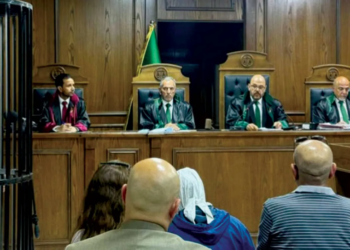
Two considerations govern accountability. The first is that attribution is one thing and adjudication is another; the Investigation and Identification Team (IIT) of the OPCW concluded that there are reasonable grounds to believe that al-Assad forces carried out the attacks in Kafr Zita, Latamneh, Saraqib and Douma, and that ISIS was responsible for the attack in Marea, but these are investigative findings that apply the “reasonable grounds” standard, not criminal judgments. Fact-finding, attribution and adjudication are separate functions, as the UN Sellström mission on the 2013 Ghouta attack shows, since it established the use of sarin on a large scale without being mandated to identify who used it. Syrian officials say that eighteen suspects have been detained in connection with the earlier program and that judicial proceedings are being prepared, and these proceedings will have to prove individual criminal responsibility, not infer it from institutional affiliation. As for the second consideration, it relates to a tension within the process itself; the necessity of destroying unstable or contaminated munitions may conflict with the need to preserve evidence of their origin and of the responsibility for them. The balance lies in sequencing the stages so that the materials are secured, documented and sampled, and their evidentiary value preserved, before they are verified and destroyed, rather than simply being located and then removed.
The wider stakes extend beyond Syria. After the OPCW verified in 2023 the destruction of the last declared chemical weapons stockpile in the world, the Convention now faces a harder test: can its verification regime recover from a long-standing situation of incomplete declaration, obstruction and established prohibited use? A cooperative government, an international verification body and supporting States may now be able to integrate functions that were previously fragmented or obstructed, by reconstructing the hidden program, bringing the recovered materials into the framework of the treaty regime, verifying their destruction in a final manner, and preserving the evidence on which accountability depends. Whether this integration will hold will be shown by the results, and its benchmark is complete disclosure, comprehensive access, verified destruction, preservation of evidence, and accountability wherever the evidence supports it.