In this article, I show that the discourse of historical unity and prior coexistence, which societies resort to in the aftermath phases of atrocities, is built on a faulty empirical premise; for coexistence doesn’t constitute a guarantee that prevents the occurrence of mass violence, but may at times provide the social material and the precise knowledge necessary to carry it out, at a time where political actors decide to mobilize identity for strategic purposes. The analytical approach in the article rests on two complementary theoretical frameworks: the theory of Rogers Brubaker, which views ethnicity as a discursive and institutional construct, not a fixed cultural property, and the theory of Stathis Kalyvas, which reveals that selective violence in civil wars results from the «privatization of political violence», not from sectarian inevitabilities. On this basis, the Bosnian and Syrian experiences are interpreted comparatively; for in Bosnia, religious pluralism and intermarriage didn’t prevent the outbreak of genocide at a time where the political elites re-mobilized identity. As for Syria, an additional problem emerges, reflected in the fact that the State itself was the chief architect of sectarian fragmentation, not its incidental victim, which renders the restoration of prior coexistence a futile endeavor unless the institutional structure that produced this fragmentation is reformed. The article concludes that reconciliation is built only on a documented acknowledgment of the crime and effective institutional redress mechanisms, and that the discourse of prior unity doesn’t compensate for the requirements of transitional justice, but rather defers addressing them, and keeps the institutional vacuum that produced the violence in place, with the possibility of its recurrence.
Fadel Abdulghany
Societies that suffer the effects of documented sectarian atrocities often resort to clinging to the narrative of historical unity. The structure of this discourse is familiar: violence is portrayed as incidental to the social fabric, the shared life among the sects is invoked as evidence of resilience, and reconciliation is presented as a restoration of a prior state, not a construction of new institutional guarantees. The sociology of conflict has long shown that this framing is built on a faulty empirical premise; for coexistence, in itself, doesn’t prevent sectarian violence. Thus in societies characterized by a density of exchange among individuals, intermarriage, and shared civic institutions, the conditions for systematic violence between neighbors aren’t negated, but may instead develop in an exceptional manner as soon as political actors begin to mobilize identity for strategic purposes.
The theoretical foundation of this claim is manifested clearly in Rogers Brubaker’s book “Ethnicity Without Groups”. Brubaker holds that ethnicity, race, and nation aren’t fixed properties of populations, but interpretive frameworks produced by political projects of classification. So the identity of the group isn’t derived from a fixed cultural stock, but is built, activated, and refined through institutional and discursive work. A direct effect on the analysis of the post-conflict phase follows from this. For if a prior coexistence exists, it doesn’t operate as a structural protection, but as a social material that politicians can re-describe, divide, and transform into a cognitive structure for enmity.
Stathis Kalyvas presents, in his book “The Logic of Violence in Civil War”, a different analytical approach; for instead of reducing violence to the binary of inherited grudges or cultural determinants, he demonstrates that selective violence is the product of a joint structural interaction between two parties: armed actors searching for intelligence information, and civilians who exploit this need to settle local grievances and conflicts under the weight of security pressures. He identifies what he calls the «privatization of political violence»: that is, the use by local actors of political and military organizations to inflict harm on their personal adversaries, which leads to violence being interpreted wrongly as ideological or sectarian. The paradox that Kalyvas documents deserves a pause; for violence often erupts in social contexts characterized by high levels of communication, exchange, and trust among individuals. The prior coexistence provides a precise knowledge of individuals and their social relationships that renders selective violence practically possible. Hence it is a site of weakness, not a source of protection.
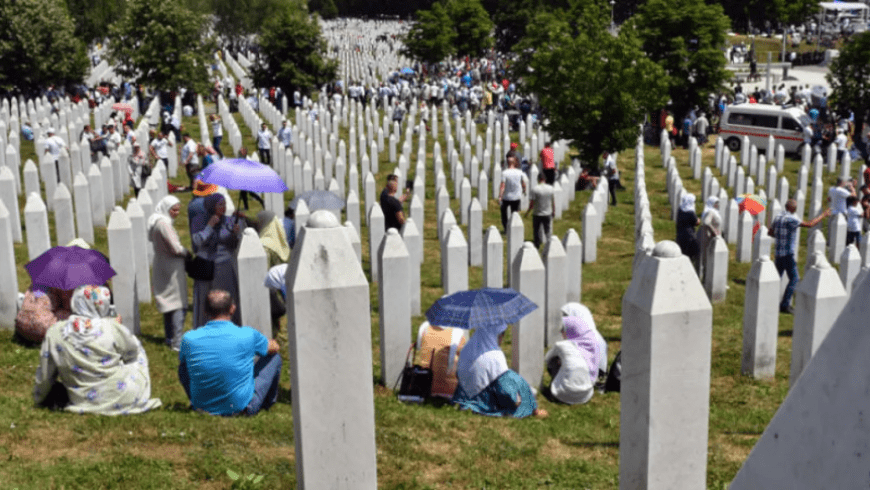
Bosnia constitutes an example that embodies this analytical position clearly. For Bosnian society before 1992 was distinguished by intermarriage, a multi-religious urban culture, and shared civic institutions, yet none of these factors prevented systematic violence once the political elites decided to mobilize identity. Slobodan Milošević’s manipulation of the collective memory revolved around the Battle of Kosovo of 1389, which was transformed from an obscure historical event into a narrative that portrays the Serbs as victims facing an existential threat. The myth of Kosovo, in the form it took in the late 1980s, wasn’t derived from authentic cultural repositories, but was deliberately reshaped to glorify an exclusionary nationalism. Radovan Karadžić extended the same logic to make it an organizing principle for the territorial aims of the war. Thus the Bosnian record shows that coexistence is structurally fragile at a time where it relies on social practice alone, without an institutional and legal structure capable of restraining the elites’ exploitation of identity.
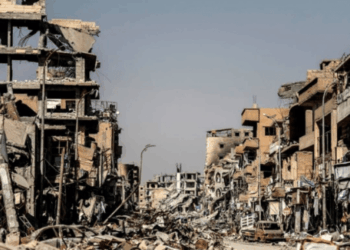
As for Syria, discrimination and division emanated from within the State itself, through the security apparatus, the legal system, the military strategy, and the policies of the militias. The State was the chief architect of the sectarian geography, not its incidental victim. This matter has consequences of the utmost importance for the transitional analysis, for the societies that suffered the atrocities, and whose fragmentation the State engineered, can’t rely on the restoration of the social practices prior to the conflict; because those practices were deliberately dismantled at the hands of the institutions that the transitional phase must now reform.
If the Bosnian and Syrian records both show that coexistence alone isn’t sufficient to prevent violence, and that the absence of institutional accountability keeps the conditions for its recurrence in place, then the question that poses itself is: what could stand in the place of the imagined unity as a foundation for stability after atrocities? Here the experiences of transitional justice emerge as the most prominent attempt to build institutional alternatives for acknowledgment and accountability, and the Rwandan experience is often invoked as a successful model to be emulated. However, a precise examination of this experience reveals that what is presented as a model for communal reconciliation involves structural problems that call for a critical reading, not an applied replication.
Phil Clark’s study of the gacaca system documents how the communal proceedings handled more than 1.9 million cases, and achieved a wide-scale participation in the accountability of communities across the country. Nevertheless, the same record reveals methodological deficiencies. Human Rights Watch documented in its report “Justice Compromised” that the gacaca proceedings didn’t meet the minimum standards stipulated in the International Covenant on Civil and Political Rights and the African Charter on Human and Peoples’ Rights, pointing to the absence of legal representation, the coercion into self-incrimination, and the insufficiency of witness protection. Lars Waldorf described the system as an informal formula imposed by the State, one that expands the scope of the prosecution’s authority to encompass communities, rather than being a revival of customary methods of dispute resolution. The jurisdiction of gacaca was confined exclusively to the crimes of genocide, excluding accountability for the crimes attributed to the Rwandan Patriotic Front. Thus this selective application reinforced political domination, while it narrowed the scope of reconciliation within the process. Hence, Rwanda’s stability after the genocide is reflective of the consolidation of authoritarian power alongside transitional justice mechanisms, not the effect of transitional justice alone.
The societies that survived total collapse in the wake of mass atrocities didn’t do so by relying on historical unity, but rather constructed, with varying degrees of legitimacy and success, mechanisms for redress founded on a documented acknowledgment of the crime. The Bosnian record shows that coexistence remains structurally fragile in the absence of protective institutions, and that the political elites remain capable of exploiting identity wherever impunity persists. The Syrian record likewise shows the additional difficulty facing communal restoration after the fragmentation engineered by the State. In both cases, the discourse of prior unity can’t replace the mechanisms of transitional justice. For acknowledgment of what happened is an essential condition for reconciliation, not a substitute for it. Therefore, at a time where this sequence is inverted, the institutional vacuum that produced the violence remains in place, and the conditions for its recurrence are preserved within the discourse that claims to transcend it.