Fadel Abdulghany
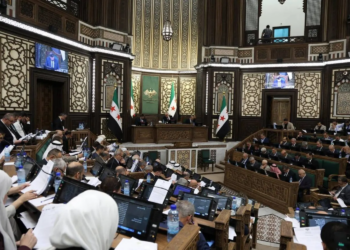
The death sentences issued by the Damascus court against Bashar al-Assad, Maher al-Assad, and Atef Najib appear to be the first internal judicial convictions targeting the former president and members of his inner circle since the fall of the previous government.
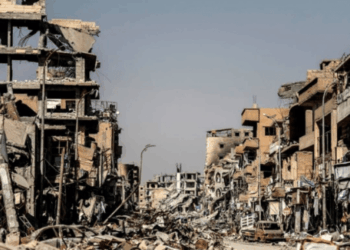
The judicial proceedings brought the 2011 crackdown in Daraa—and the broader structures of repression associated with it—before a Syrian criminal court. Najib was tried in person on charges directly linked to the events in Daraa, while the two verdicts against the Assad brothers were issued in absentia and addressed broader allegations concerning responsibility for grave crimes.
The case’s fundamental significance lies in the fact that allegations long documented by victims, investigators, and human rights organizations are now being tested before a Syrian criminal court, with victims and their relatives participating as civil parties in the proceedings.
This is the first time that the capacity of Syrian institutions to convert accumulated evidence into domestic criminal accountability has been openly subjected to scrutiny, rather than being confined to the exercise of universal jurisdiction abroad.
The historical significance of the verdict must not be conflated with its final legal authority. Its credibility—domestically and internationally—will depend on the publication of a written, reasoned judgment made available to the public, together with appropriate protection for witnesses. That judgment should clarify the court’s jurisdiction, the facts it found established, the evidence it relied on, the standard of proof applied, and the guarantees afforded to the defense. The interval between the opening of proceedings and the issuance of the verdict likewise warrants procedural scrutiny.
Speed alone does not, in itself, indicate an absence of justice. However, cases involving crimes against humanity, the responsibility of senior officials, and multiple defendants typically require considerable time for the disclosure of evidence, the conduct of defense investigations, the completion of forensic assessments, and the formulation of fully reasoned conclusions.
The central legal question concerns individual criminal responsibility. Bashar al-Assad’s status as president, or Maher al-Assad’s status as a military commander, does not by itself constitute a sufficient basis for establishing criminal responsibility. For each defendant, the judgment should specify the legally recognized mode of responsibility and the evidence supporting it—whether this concerns the issuing of orders; incitement; participation in a joint criminal enterprise, where such a basis exists in domestic legislation; aiding and abetting; or command/superior responsibility for subordinates under the defendant’s effective control, in circumstances where the accused knew of the crimes, or had reason to know of them, and then failed to prevent or halt them or to punish those responsible.
The legal problem is not merely technical. Syrian law does not comprehensively criminalize crimes against humanity, war crimes, enforced disappearance, or modes of command and superior responsibility as freestanding offenses. The court must therefore apply the offenses that already exist under Syrian law, without retroactively creating new crimes, while clarifying whether the evidence reveals a broader, organized pattern of violations linking the specific criminal acts to the decision-making structure, the security and military apparatus, and the senior leadership.
Legislative reform that brings domestic law into alignment with the definitions and modes of responsibility recognized under international criminal law is a fundamental precondition for coherent accountability—not a peripheral matter.
The in-absentia character of the proceedings against Bashar and Maher al-Assad, combined with the imposition of the death penalty, raises concerns regarding fair-trial standards and the enforceability of the verdicts. In-absentia trials meet fair-trial standards only under limited conditions, including the provision of actual and timely notice and an opportunity to participate in the proceedings.
In a case ending in a death sentence, the possibility of a retrial following the accused’s arrest or voluntary surrender must be explicit, practicable, and independently verifiable—not merely a theoretical guarantee set out in legislation. The death penalty adds a further concern, since it renders any judicial error irreversible, and its retention is likely to obstruct international judicial cooperation.
Many states will not extradite wanted individuals unless they receive credible guarantees that the sentence will not be carried out, and unless they are satisfied that the in-absentia proceedings allow for a genuine retrial in the presence of the accused.
There is a practically significant distinction between the issuance of an in-absentia verdict and the possibility of enforcing it. A verdict against defendants who are not in the custody of the Syrian authorities may support their criminal prosecution, restrict their movement, and provide a legal basis for extradition requests and cooperation, but it does not by itself lead to their arrest or to enforcement of the sentence outside Syrian territory. An Interpol Red Notice is a request to locate and provisionally arrest a person; it is not an international arrest warrant.
Its practical effect also depends on the domestic law of the state in which the wanted person is located, that state’s relations with Syria, its extradition regime, and its assessment of the case’s political character and of fair-trial guarantees.
Bashar al-Assad’s presence in Russia illustrates the limits of this tool. Parallel avenues available include submitting bilateral extradition requests; cooperating with the authorities of states exercising universal jurisdiction; referring documented case files to foreign prosecutors; and acceding to the Rome Statute, or issuing a declaration accepting the jurisdiction of the International Criminal Court as of a specified date.
Each of these avenues will still require the court in question to satisfy itself as to jurisdiction and admissibility, and the execution of any arrest warrant will remain contingent on state cooperation.
Accordingly, the verdict carries weight as a legal foundation, but it cannot substitute for building a comprehensive national accountability system. Transitional justice, in its established sense, is not reducible to high-profile criminal trials; it requires truth-seeking; clarifying the fate of the missing and of victims of enforced disappearance; opening and protecting the archives of security agencies and detention centers; identifying the locations of mass graves; providing reparations to victims; offering psychological, social, and legal support to survivors and families; vetting personnel within security and judicial institutions and reforming those institutions; and providing guarantees of non-recurrence.
It also requires a specialized judicial mechanism—whether in the form of dedicated chambers or a hybrid Syrian–international body—capable of handling complex international-crime cases while preserving national ownership of the process.
Any credible process must reject selectivity and revenge. The grave crimes committed in Syria involved multiple parties across different phases of the conflict, and any accountability limited to a single group of defendants, or to a single period of the conflict, will remain vulnerable to a loss of social and legal legitimacy.
The verdict will not constitute a genuine turning point unless it inaugurates systematic accountability extending from direct perpetrators to branch and agency officials, and on to military and political leadership, across all regions and parties—and unless that accountability is grounded in judicial independence, individual criminal responsibility, the presumption of innocence, defense rights, reasoned and reviewable judgments, and a genuine possibility of retrial should the accused later appear before the court. This process will derive its authority not from the severity of the punishment imposed, but from the rigor of the proceedings that produced it.