Fadel Abdulghany
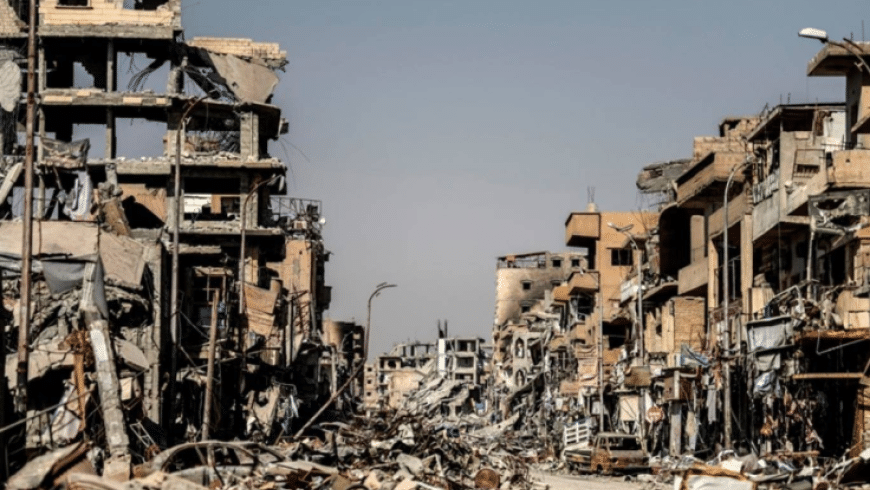
The reconstruction of Syria is being planned at a time where many of those who will be directly affected by this process are absent from it. In September 2026, the United Nations Population Fund reported that some 5.5 million people remain internally displaced, while nearly four million Syrians live abroad as refugees. At present, decisions are being made regarding which services should be prioritized for rehabilitation, which areas should be replanned, and how to deal with the land and property whose ownership or possession has changed during the conflict.
International human rights law and United Nations standards provide displaced Syrians with a strong basis for participating in these decisions, although the legal basis for participation and its appropriate form differ according to the status of the person and the nature of the decision in question. The key criterion is whether such participation gives them real influence over decisions before amending or reversing them becomes exceedingly difficult. However, participation also has its limits. It is one of four interrelated safeguards, and it loses its function when it is relied upon as a substitute for the independent adjudication of rights or for effective remedies.
Determining whether reconstruction investment, both public and private, will be directed first to water, electricity, schools, housing, or transport has implications that go beyond the scope of project management. The International Organization for Migration indicates that the sustainability of return is linked to security, housing, services, livelihoods, and infrastructure. Therefore, reconstruction choices affect the extent to which return is possible in practice, as well as the ability of people to reclaim their rights in their areas of origin. Reconstruction may also entrench the physical and legal effects of past violations, or it may, on the contrary, contribute to redressing them. The Pinheiro Principles on Housing and Property Restitution make this link explicit, as they connect restitution to restorative justice, sustainable return, the rule of law, and peacebuilding.
The first distinction lies in the difference between consultation and actual influence. The measure of participation is whether the affected persons were able to contribute to shaping the decision at a time where alternatives were still open. Timing, therefore, is a crucial matter. Once contracts have been concluded, the investor selected, or the design approved, consultation can, in most cases, do no more than comment on outcomes that have already been decided. The United Nations Guidelines for States on the effective implementation of the right to participate in public affairs call for participation to begin before decisions that are difficult to reverse are made, and warn against entering into financial or contractual commitments that predetermine the outcome before the consultation process has concluded. They also require the authorities to explain which proposals they adopted, which they rejected, and the reasons for this. Actual influence further depends on the availability of information, since people cannot object to a project or assess its impact if they do not know its boundaries, the properties that will be affected by it, the planned land uses, or the basis on which compensation will be determined.
As for the second distinction, it concerns the legal basis for participation, which is not the same for all those affected. Article 25 of the International Covenant on Civil and Political Rights protects the right of citizens to take part in the conduct of public affairs, a right that extends to the formulation and implementation of policy and is not limited to elections. As for non-citizens affected by reconstruction, they rely instead on the rights and rules relating to housing, non-discrimination, displacement, and restitution. With regard to internally displaced persons, the Guiding Principles on Internal Displacement call for special efforts to ensure their full participation in the planning and management of their return or resettlement and reintegration. The Pinheiro Principles likewise require consultation with affected persons in restitution and return programs. Hence, the depth of participation should vary according to the nature of the decision: consultation on national priorities, closer participation in local planning, and independent adjudication where individual rights are in dispute.
This last point marks the essential limit of participation: a collective decision-making process may not adjudicate individual legal rights. A meeting of neighborhood residents, a local council, or even a majority of the population cannot decide that an absent person has lost their ownership or their right to pursue a legal claim. These limits are of particular importance for those who remain displaced, because their physical absence may, unless these limits are safeguarded, weaken their ability to defend their individual rights and claims. Disputes relating to ownership, possession, and compensation require the notification of rights holders, the examination of evidence, the issuance of reasoned decisions, and the availability of appeal and enforcement. International law does not impose a single institutional model for carrying out these functions; existing institutions may assume them, provided that they are independent, fair, and adequately resourced.
Conversely, property rights also have their limits; they do not grant the owner a veto over every legitimate planning decision. Planning, expropriation, and even resettlement may be lawful if they rest on a clear legal basis and pursue a legitimate aim, are non-discriminatory and proportionate, are preceded by genuine consultation and adequate notice, are open to challenge, and are accompanied by compensation where appropriate. Nor does every pending claim need to halt necessary repair works. A proportionate approach can protect disputed rights from measures that are difficult to reverse, such as demolition or the transfer of ownership, while at the same time allowing works that do not affect the subject matter of the claim to continue, such as the repair of a school or a water network. Protection should also not be limited to registered owners, but should extend to tenants, heirs, persons who hold property without complete documentation, and secondary occupants; although the nature and scope of the rights of these groups differ, they may not be excluded from the procedures and decisions that affect them.
Given the large numbers of Syrian refugees outside the country, participation or the claiming of rights should not be conditional upon return to Syria. The Pinheiro Principles treat the right to property restitution as distinct from the decision of the person regarding return, and call for claims procedures to be made accessible to displaced persons wherever they are, including in countries of asylum. A refugee should not be compelled to travel to Syria in order to object to a zoning plan or to submit a claim, nor should the submission of a claim be considered evidence of a decision to return. If participation or the exercise of procedural rights is made conditional upon physical presence, this will cause structural harm to those who remain displaced, and will grant an advantage to those who are able to attend in person, regardless of the strength of their legal rights or claims.
Participation, without an effective remedy, does not provide adequate protection for the affected persons. A person who is able to express their opinion, but unable to legally challenge a decision affecting their home, does not enjoy actual protection merely because they have been given the opportunity of participating in consultation.
Finally, participation protects affected communities adequately only as part of a system of four interrelated safeguards: sufficient information before decisions are made, genuine influence while options remain open, independent protection of individual rights, and effective remedies. When one of these elements is absent, participation may continue in form, while reconstruction, in practice, entrenches the very dispossession that the transitional period is supposed to address. Therefore, in Syria, the review of the property legislation issued by the Assad regime before and during the armed conflict should proceed in parallel with the development of consultation and participation mechanisms, and the legal effects of the changes in ownership in the affected areas should be resolved before planning and reconstruction decisions fix the future of the land and the rights associated with it in a manner that is difficult to reverse.