Fadel Abdulghany
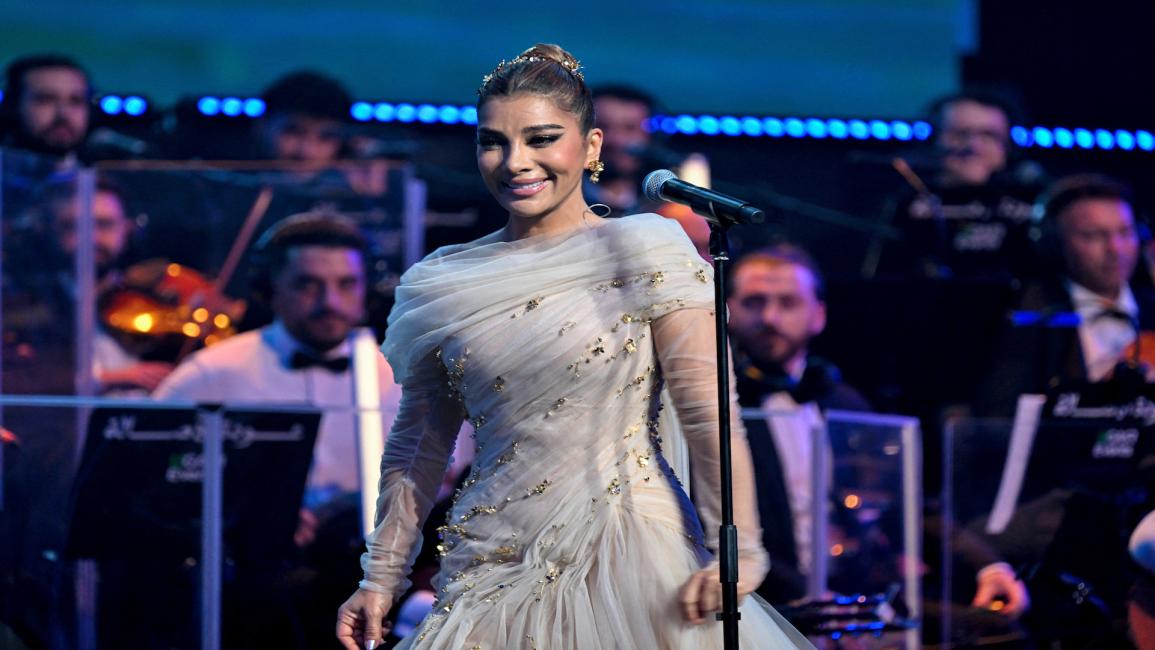
Last week, the Syrian singer Assala Nasri held a concert in Damascus, her first artistic appearance in her country since February 2010, after the Assad regime had expelled her from the Artists’ Syndicate over her support for the Syrian revolution. Art can contribute, within certain limits, to the recovery of societies emerging from authoritarian rule and protracted conflicts; however, this contribution is neither automatic nor guaranteed, and it remains moral in nature, so it can’t be measured by the standards by which the processes of truth-seeking, accountability, reparations, and institutional reform are measured.
Some of what has been written about the concert went as far as claiming that it made hundreds of speeches, lectures, and dialogues unnecessary, and that it contributed to healing the social rift. It is this assessment in particular that this article discusses, even though the organizers and presenters of the concert didn’t present it in this way. Undoubtedly, art has an important role in societal recovery, and the country is in need of dozens of artistic and cultural events; however, its role is complementary rather than foundational, it comes at the later stages of the healing, and it doesn’t work alone. The concert of Assala offers an occasion to raise a broader question about the role that art can play in a society going through a transitional phase. The question here is how artistic and cultural activity can contribute to restoring public life, to opening spaces for expression, memory, and participation, and to conveying some of the outcomes of the justice processes to a wider audience.
What art is able to do can be viewed on two different levels. On the individual level, music and singing provide a space for enjoyment, expression, and remembrance, and they give people, even if temporarily, a sense of ordinary social life after long years of conflict, repression, displacement, and pain. As for the collective level, a public concert may offer a shared experience that doesn’t impose on those attending a single political interpretation of the past of Syria or its future. The concert of Assala drew on musical traditions associated with different Syrian governorates, which may open a space for the recognition of cultural diversity.
Art can contribute, within certain limits, to the recovery of societies emerging from authoritarian rule and protracted conflicts; however, this contribution is neither automatic nor guaranteed
Studies on the role of art in peacebuilding support this understanding without overestimating its role. Among the foundational references in this field is the study of Michael Shank and Lisa Schirch, “Strategic Arts-Based Peacebuilding,” which moves the discussion from the general claim that “art is powerful” to more precise questions: when is art used? What can it actually do? And how are its outcomes measured? It indicates that the arts may contribute to fostering dialogue, strengthening a sense of agency, and building relationships, but it ties this to clear conditions, among them local participation, voluntariness, safety, good facilitation, attention to power dynamics, and the linking of cultural activity to broader political and institutional processes.
The literature of transitional justice adds to that a more precise definition of the place of art within post-conflict processes. The book Transitional Justice, Culture, and Society: Beyond Outreach, edited by Clara Ramírez-Barat, is among the most prominent references in this direction; in its foreword, Pablo de Greiff argues that cultural interventions deserve a wider place in the field of transitional justice, while cautioning that they may amplify the public resonance of justice processes just as they may undermine it. Thus, this literature views artistic work as one of the forms through which truth, memory, and recognition circulate in the public sphere. Trials establish individual criminal responsibility, truth commissions establish a documented narrative of the violations, and reparations programs address their material and symbolic effects on the victims; however, none of these mechanisms, by itself, guarantees that its outcomes will pass into the consciousness of the wider society. Hence, artistic and cultural activity plays the role of the intermediary in this transfer.
This function is linked to the concept of guarantees of non-recurrence, which aren’t limited to legislative and institutional reform, but extend to building a public culture that rejects violations and preserves their memory. Artistic, memorial, and educational materials contribute to this aspect when they are linked to the outcomes of justice mechanisms, and when they are made available to an audience that goes beyond the circles of specialists and official actors. In this sense, art is a tool for access and participation, not a mechanism of accountability.
The concert of Assala drew on musical traditions associated with different Syrian governorates, which may open a space for the recognition of cultural diversity
The same literature draws attention to the limits and risks of this role, since an artistic event may serve a counterproductive function when it is used to perform the role of symbolic recognition without being matched by progress in the processes of truth, accountability, and reparations; it then turns into a substitute for the entitlements, rather than an entry point to them. It also cautions that the artistic representation of the experiences of victims raises issues relating to consent, to who holds the right to tell the story, and to the necessity of avoiding the reproduction of harm. The criterion this literature settles on is that of connection: the value of artistic activity in the context of transitional justice is measured by the extent of its connection to these processes and by the participation of victims in them. The same applies to the right to take part in cultural life; this participation isn’t only about the existence of events, but also about their availability, their accessibility, and the extent of their acceptability, appropriateness, and adaptability to the needs of people, while ensuring non-discrimination. In this context, the most important question emerges: does cultural policy extend beyond famous artists and the audience that can afford to buy tickets?
The possibilities of this participation depend, first and foremost, on the legal framework regulating freedom of expression and the cultural space. As for Article 13 of the Constitutional Declaration issued in March 2025, it provides for freedom of opinion and expression, of the media, of publishing, and of the press. The actual value of these guarantees is determined by the implementing legislation, the rules governing access to theaters and cultural spaces, the possibility of recourse to the judiciary, and the extent of protection afforded to artists and speakers who hold critical views.
An artistic event may serve a counterproductive function when it is used to perform the role of symbolic recognition without being matched by progress in the processes of truth, accountability, and reparations
The Colombian experience offers an example from which lessons can be drawn. The Truth Commission in Colombia was established within the framework of an agreement that ended an armed conflict lasting decades, and it carried out its work by collecting the testimonies of victims, conducting investigations, and organizing spaces for public dialogue, then issuing its findings and recommendations. The platform of the Final Report shows that artistic and cultural activities, audio and memory materials, and educational resources were presented alongside the testimonies, investigations, findings, and recommendations.
This arrangement enables the artistic work to perform a function that the written report alone can’t carry out: the official text establishes the facts and determines responsibilities, while the artistic, audio, and memory materials convey the experiences of victims to a wider audience, and make the findings of the Commission circulable in schools and public spaces after the Commission has completed its work. Herein lies the practical benefit of the Colombian example: artistic activity gains its public value when it is connected to these findings and carries them into education and institutional follow-up, not when it remains an event detached from them.
It isn’t fair to load a single concert with more than it can bear. Its value, in the context of this article, remains that it is an occasion to reflect on cultural policy after tyranny, not a model of transitional justice. This type of cultural activity may contribute to creating some of the conditions for recovery, by expanding the possibilities of participation in the public cultural sphere, and by opening spaces for grief, memory, and recognition. Therefore, the role of art in the process of recovery is complementary, not foundational; its value is measured by its connection to the processes of truth, accountability, and reparations, not by a capacity attributed to it to heal the rift on its own.