Fadel Abdulghany
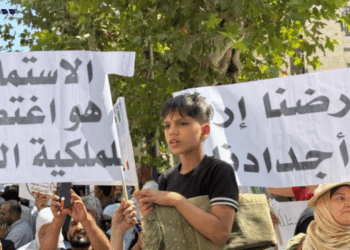
Syrian law does not attach the same legal effect to the nationality of the father and the nationality of the mother. Thus, the child born to a Syrian father acquires Syrian nationality by operation of law from birth, while the child born to a Syrian mother does not, in most cases, enjoy the same right. It is by this standard that the government initiative to amend the Nationality Law should be measured; on November 4, 2026, the Minister of Social Affairs and Labor, Hind Kabawat, announced, during a session at the United Nations Office at Geneva, that the proposal to grant Syrian nationality to the children of Syrian women married to non-Syrians “has reached the approval stage,” without specifying a date for its issuance.
However, no official text of the proposal has been published, and I have read on the pages of two members of the People’s Assembly that the draft has not yet been referred to the Assembly. Whatever the final wording may be, the test is the following: does the law recognize the nationality of the Syrian woman as an independent ground, sufficient in itself, for her children to acquire her nationality, on an equal footing with the man?
Under Article 3(a) of Legislative Decree No. 276 of 1969 (the Nationality Law), any person born to a Syrian father, whether inside or outside Syria, is considered Syrian by operation of law. As for paragraph (b) of the same article, it does not recognize Syrian nationality for the child born to a Syrian mother unless the child was born inside Syria and the filiation of the child to the father has not been legally established. Paragraphs (c) and (d) protect specific categories of persons born in Syria, such as those of unknown parents, from statelessness.
Moreover, Article 30 provides that minor children follow the nationality of their father, unless the Decree expressly provides otherwise. Thus, the law does not absolutely deprive the Syrian woman of the ability to transmit her nationality to her children; however, it renders it a subsidiary ground that is only taken into account by way of exception, such as where the filiation of the child to the father has not been established. This is a discrimination that does not affect children alone; rather, it diminishes the citizenship of the woman herself.
This discrimination is difficult to reconcile with the Constitutional Declaration issued on March 13, 2025; Article 10 thereof provides that citizens are equal before the law in rights and duties, without discrimination among them on the basis of sex, while Article 3 of the Nationality Law expressly distinguishes between the father and the mother. Furthermore, Article 12(2) of the Constitutional Declaration considers the rights and freedoms enshrined in the human rights treaties ratified by Syria to be an integral part of the Declaration.
However, the reliance here on the Convention on the Elimination of All Forms of Discrimination against Women (CEDAW) is of a limited effect, because Syria still maintains its reservation to Article 9(2) thereof, which grants women equal rights with men with respect to the nationality of their children. Therefore, the stronger basis remains the International Covenant on Civil and Political Rights, to which Syria acceded in 1969 without a reservation to Article 24, paragraph 3 of which guarantees every child the right to acquire a nationality, nor to Article 26, which prohibits discrimination on the basis of sex.
In March 2019, the Committee on the Rights of the Child recommended that Syria expedite the adoption of the draft amendment to Article 3 so as to place the mother on an equal footing with the father in the transmission of nationality. Nevertheless, Article 3 remains in force, since, to the extent of what has been published, no ruling has been issued declaring it unconstitutional, and the power to adjudicate this matter is vested in the Supreme Constitutional Court established by Article 47 of the Constitutional Declaration. Hence, legislative amendment remains the shortest path to equality.
Equality in law means that the father and the mother enjoy an equal right to transmit nationality to their children, and equality in practice means that families are able to prove this right and exercise it through accessible and neutral procedures. Years of conflict have undermined this ability: marriages that were documented only before religious authorities, fathers who are disappeared or deceased, civil registries that were destroyed or have become inaccessible, and displacement and asylum outside the country.
Here, a distinction must be drawn between holding nationality by operation of law and proving it through documents. The child whose filiation to a Syrian father is legally established is Syrian by virtue of Article 3(a), even if the child is unable to prove that nationality due to the disappearance of the father. As for the child born to a Syrian mother and an Iraqi father whose filiation is established, the child is not entitled to Syrian nationality under paragraph (b) at all, unless another provision applies. Thus, improving documentation does not remedy the absence of entitlement in the second case, just as equality in the text alone is not sufficient to overcome the difficulties of proof and registration in the first.
Neither of the two cases means that the child is stateless or that the rights of the child to education and health care are forfeited. There remains, however, the question of those born before the amendment, including those who have reached the age of majority: will the new law cover them? And will their nationality take effect from birth or from the date of entry into force? The two options are not equivalent in their effects on prior legal acts, records, and personal status situations. Syrian legislation has a precedent in this regard; Article 3 of the Nationality Law itself provides that its provisions apply “even if the birth took place before the date of entry into force of this Legislative Decree.”
Nevertheless, the announcement of the Minister, despite the ambiguity surrounding it, contains what calls for hope; it moves a demand that remained for years confined to campaigns and postponed drafts onto the table of the government. However, transforming this opportunity into a settled right requires serious work: that the draft be put forward for public debate; that it make the nationality of the mother a sufficient ground in itself for establishing the nationality of her children from birth; that it cover those born before its entry into force; that it bring Article 30 into line with it; that it limit the role of the administration to verification and registration rather than granting and withholding; and that all of this be crowned by the withdrawal of the reservation to Article 9(2) of CEDAW.
Then, no Syrian mother will stand in the queues of government offices requesting a residence permit for her child in her own country, no pupil born in Homs or Daraa will be treated as a foreigner in the school of his neighborhood, and no young man will reach the age of majority as a stranger in the only land he has ever known. For when the child of a Syrian woman becomes Syrian by operation of law, not by permission of the administration, nationality regains its original meaning: a belonging inherited from the mother and the father together, not a grant to be requested.