Fadel Abdulghany
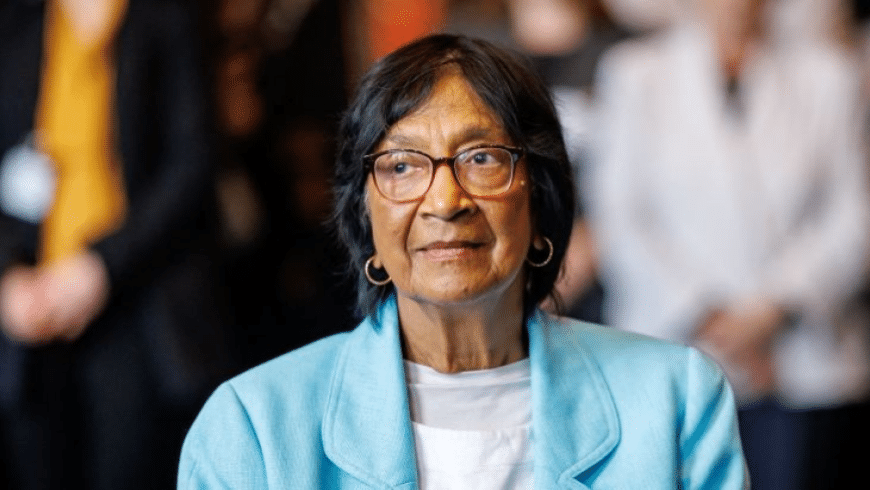
On October 9, the Norwegian Nobel Committee announced the award of the Nobel Peace Prize for 2026 to Navi Pillay, in recognition of her efforts to promote peace and international law. Syria is not mentioned in the grounds announced by the Committee, and I do not claim that Syria was a reason for the award of the prize. I write as a Syrian who has documented violations since 2011, in order to record a reason for gratitude that those grounds did not include. When she was the United Nations High Commissioner for Human Rights, Pillay used the limited powers of her office to acknowledge publicly what was being committed against Syrians, to seek its investigation, and to press for criminal accountability and redress. However, her most prominent recommendations, namely the referral to the International Criminal Court (ICC) and the protection of detainees and the disappeared, were not implemented. The thanks here, therefore, are for what she did; as for the responsibility for what was not achieved, it lies with the Assad government, which barred the investigators of the Office of the United Nations High Commissioner for Human Rights (OHCHR) from entering the country, and with the states that blocked action by the Security Council.
Pillay raised her voice early. On March 26, 2011, less than two weeks after the protests began, she urged the Syrian authorities to listen to the demonstrators rather than use force against them, and warned that repression threatened a spiral of anger and killing. On August 2, after reports of the killing of at least 120 people in Hama, she declared her solidarity with the peaceful protesters and with the families of those killed. The Assad regime attributed the violence to armed gangs; as for Pillay, she spoke of peaceful protesters whose rights were being violated.
When the Human Rights Council requested, on April 29, 2011, the dispatch of a fact-finding mission, Pillay formed a 13-member team headed by her Deputy. She demanded of Damascus, in official notes verbales and in a direct meeting, that the mission be allowed entry, and she wrote to the Prime Minister Adel Safar asking him about the acts of killing, detention, and torture. The mission was not allowed to enter, so it worked from outside the country, interviewing 180 people in four countries and receiving testimonies from Syrian activists and from human rights organizations. The mission also compiled a confidential list of 50 alleged perpetrators of violations, for possible use in future investigations or prosecutions.
The report of the mission, made public on August 18, 2011, concluded that there was a pattern of violations constituting widespread or systematic attacks against the civilian population, which may amount to crimes against humanity under Article 7 of the Rome Statute. Its value lies in its timing and its method: five months after the uprising began, OHCHR had formally recorded the grounds on which the repression may amount to crimes against humanity, setting out its evidence and stating the limits of its findings.
The report called on the Security Council to consider referring the situation in Syria to the ICC, and Pillay presented this recommendation to the members of the Council in closed consultations on the same day. Syria was not a State Party to the Rome Statute; hence, a referral by the Security Council under Article 13(b) of the Statute was the principal avenue through which the Court could exercise its jurisdiction. Pillay reiterated the recommendation on June 1, 2012, after the killings in Houla, and held to it until she left office.
In April 2014, OHCHR published a paper on torture based on 38 interviews with persons released from detention. Pillay said that the findings of the paper confirmed that torture was routinely practiced in government detention facilities, and that some armed groups practiced it as well. She called for it to stop, for the release of those arbitrarily detained, for independent monitors to be granted access to places of detention, for those responsible to be prosecuted, and for survivors to receive compensation and rehabilitation. Thus, according to this understanding, redress is a right of the survivors regardless of the outcome of any prosecutions.
OHCHR also commissioned a statistical study built on Syrian documentation. The last of the three analyses prepared by the Human Rights Data Analysis Group (HRDAG), published on August 22, 2014, counted 191,369 documented killings between March 2011 and April 2014. This figure covers killings in which the victims were identified individually, without distinguishing between combatants and civilians, and Pillay considered it likely to be lower than the true number. The Syrian Network for Human Rights (SNHR), which I direct, was one of three Syrian organizations whose records covered the entire period, and it remained a key source for OHCHR throughout the years of the armed conflict; the analysts had worked with us directly since 2012. It was an institutional and technical relationship, and its outcome was that records collected by Syrians were vetted and cross-matched, then used in an analysis commissioned by the United Nations.
None of this, during her mandate, led to the outcomes that Syrians needed. On May 22, 2014, a draft resolution referring the situation in Syria to the Court received 13 votes in the Security Council; however, Russia and China defeated it by exercising their veto. Nor were her recommendations on detention implemented. In August 2014, she said that international paralysis had emboldened the perpetrators of killing and torture in Syria.
The High Commissioner is able to investigate, to report, and to recommend. However, the High Commissioner cannot compel a state to open its prisons, nor refer a situation to the Court, nor direct its Prosecutor. Nor was it Pillay who established the investigative bodies that came later: it was the Human Rights Council that established the Independent International Commission of Inquiry on the Syrian Arab Republic on August 23, 2011, and it was the General Assembly that established the International, Impartial and Independent Mechanism (IIIM) in December 2016.
In March 2015, after she had left office, she was asked what she would say to someone in a country like Syria who asked what she had done for them. She listed the tools of the office: speaking up for the victims, pushing inside the United Nations, and speaking to political leaders. She then said: “We can’t say: ‘Nothing works, so I am going to do nothing.’” An office that has a voice but no power of enforcement is measured by the way in which that voice is used. As for the Syrian case, Pillay used it early, with care for the evidence, and without exempting any party.
Pillay dedicated the prize to the survivors of international crimes. Among them are Syrians, and what they deserve is what she pressed for between 2011 and 2014: criminal accountability for the perpetrators of violations from all parties, the disclosure of the fate of the disappeared, and reparation for those who were subjected to torture and for the families of those killed.
Thank you, Judge Pillay, for entering those demands early into the official record of the United Nations and for keeping them there. What was written in that record at a time where silence was easier is now something that Syrians are able to turn into a justice that is lived.