Fadel Abdulghany
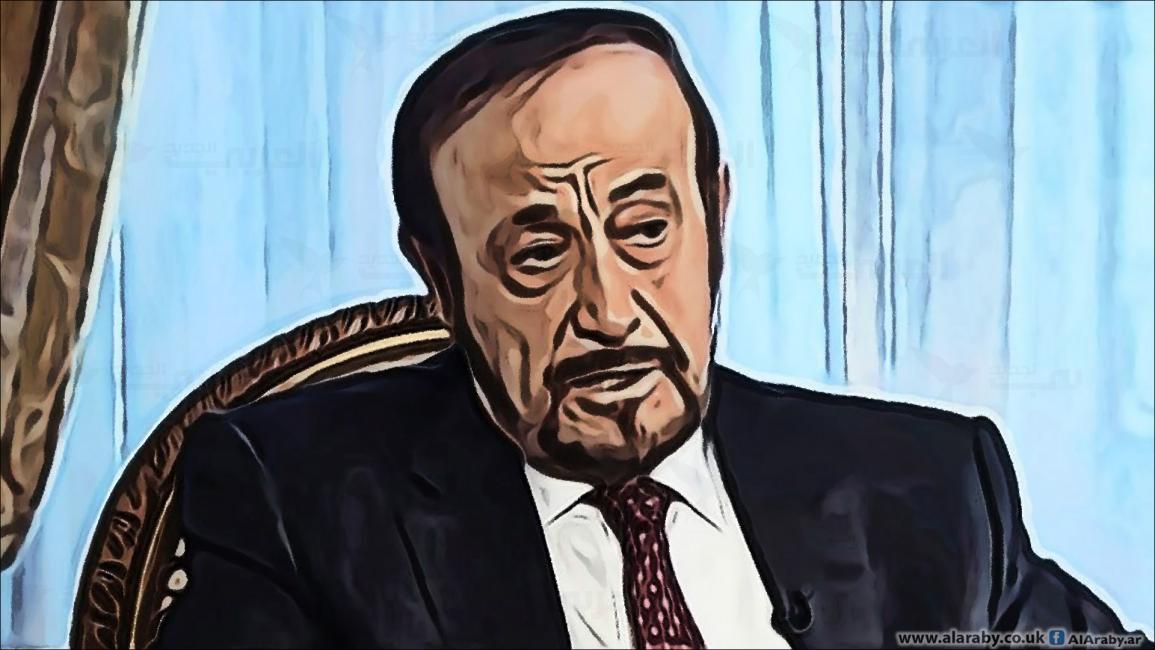
On January 21, Rifaat al-Assad (88), brother of former Syrian President Hafez al-Assad and the most prominent commander of the forces that destroyed the city of Hama in 1982, died in Dubai. For me, a son of that city, this death is a weight that transcends the event itself, becoming a renewed sense of loss. It extinguishes a hope that has accompanied the survivors for more than four decades: to see the architect of their city’s destruction humiliated behind bars, publicly confronted with the murder, rape, forced displacement, and systematic looting he perpetrated. The death of this man, who turned Hama into a scene of mass atrocities, leaves deep wounds etched in the collective memory of its people. The most profound pain surrounding Rifaat al-Assad’s death lies not in the fact of his passing, but in its timing. He died without facing his victims, without acknowledgment, and without a trial that could have restored some dignity to the memory and given justice its rightful public framework. This absence embodies the moral paradox that haunts survivors: death, which is supposed to be equal for all, becomes in this context an instrument of escape, allowing a perpetrator of crimes against humanity to evade the public accountability his actions deserve.
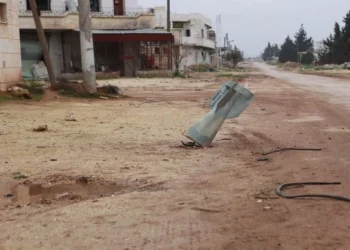
The massacre in Hama, carried out under his direct command as part of a weeks-long military campaign, remains one of the largest mass atrocities in modern Middle Eastern history. The Syrian Network for Human Rights estimates that between 30,000 and 40,000 civilians were killed, in addition to some 17,000 people who were forcibly disappeared and whose fate remains unknown. The documented crimes go beyond mass killing to include systematic torture, sexual violence as a tool of terror, widespread enforced disappearances, and the extensive destruction of neighborhoods and civilian infrastructure. These were not accidental consequences of the fighting, but rather the hallmarks of a planned campaign aimed at subjugating an entire city through terror and collective punishment.
Several legal proceedings against Rifaat al-Assad were left incomplete. He faced multiple avenues of accountability in several jurisdictions, but his death prevented the conclusion of what could have been one of the most significant trials related to the Assad regime. In Switzerland, the Federal Prosecutor’s Office referred his case to the Federal Criminal Court on charges of war crimes and crimes against humanity, stemming from his alleged orders to kill, torture, cruel treatment, and unlawful detention during the Hama events of February 1982. In France, legal proceedings resulted in his conviction for financial crimes related to money laundering and embezzlement of public funds. The verdict was definitively upheld by the Court of Cassation on September 7, 2022, with the confiscation of his real estate assets. In Spain, an investigation into a vast network of properties attributed to him and members of his family revealed hundreds of properties with an estimated total value of hundreds of millions of euros.
Although these avenues have not yet culminated in criminal accountability for the most serious crimes, they are establishing a legal record that Rifaat al-Assad’s death cannot erase. On the contrary, it solidifies this record as official documentation that transcends mere narrative and enters the realm of evidence and procedures.
What remains possible after the perpetrator’s death?… Some forms of accountability do not cease with the perpetrator’s demise, particularly those related to looted assets and their recovery. Mechanisms for confiscation and asset recovery can continue in several legal systems even when criminal prosecution becomes impossible due to death or absence, including forms of confiscation that, in some cases, do not require a final criminal conviction. In this context, the French Ministry of Foreign Affairs informed me of a French intention to transfer a portion of the confiscated assets to the Syrian authorities as a first step in a longer process of asset recovery.
Likewise, the networks that facilitated the concealment, management, or illicit gain of wealth remain subject to investigation, including his wives, sons, and daughters, provided that the elements of knowledge, participation, and illicit benefit are present, in accordance with relevant national laws. Therefore, the discussion is not solely about moral responsibility, but also about potential legal responsibility when familial ties intersect with acts of concealment, disguise, or money laundering.
The death of tyrants without their people being able to hold them accountable is an undeserved mercy, for it intensifies moral outrage and simultaneously exposes the institutional structures’ inability to deliver justice in a timely manner. Rifaat al-Assad died after fathering more than 16 sons and daughters, and perhaps dozens of grandchildren, and after traveling the world in extravagant luxury, relying, along with his family, on wealth plundered from Syrians at a time when more than 80% of Syrians live below the poverty line, including millions of displaced people in tents. He escaped the public humiliation of a trial, the judicial pronouncement that would define the crime by its legal name, and the imprisonment that justice demands.
However, incomplete justice does not equate to the absence of justice. The historical record can be formally established, asset recovery efforts can progress, investigations into financial networks can continue, and transitional justice commissions in Syria can document and enshrine the truth about Hama in the national memory, not just in the memories of the victims. For me, a son of Hama, this remains the bitter consolation available now that the possibility of seeing the perpetrator behind bars has faded: that his trail will be pursued, that the looted funds will be recovered, and that those who participated, benefited, or justified the massacre will be held accountable wherever possible.
Shame and disgrace will forever haunt him, and those who defended him or profited from his crimes. History has recorded his name as one of the most heinous criminals of our time, and he should only be remembered by the title that encapsulates his actions: “The Butcher of Hama.” For as long as I live, I will strive to perpetuate this understanding, both as a form of personal solace and as a moral and national duty toward a city that has yet to receive justice.