Fadel Abdulghany
The question of how to support legitimate popular aspirations for freedom while simultaneously opposing both internal despotism and opportunistic foreign intervention is one of the most pressing dilemmas in contemporary international politics.
This challenge is particularly acute when examining protest movements in strategically important countries, where genuine demands for democratic transition become vulnerable to being held hostage by external geopolitical calculations.
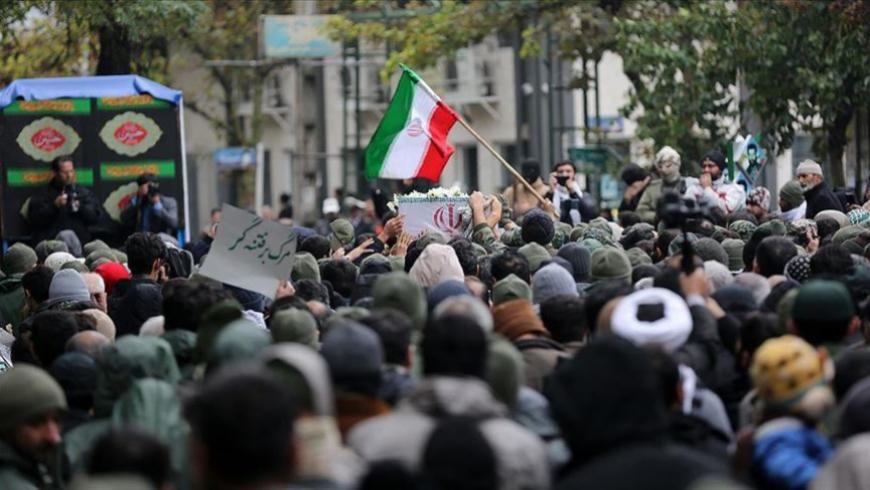
The ongoing protests in Iran, which began in late December 2015 and quickly evolved from economic demands to broader calls for political change, vividly illustrate this tension.
Described as the largest since the 1979 Islamic Revolution, these protests present us observers, and especially those who witnessed the Arab Spring uprisings, with a crucial analytical and ethical challenge: formulating a coherent framework that acknowledges the legitimacy of popular resistance against tyranny while simultaneously rejecting its exploitation by foreign powers seeking to advance their own strategic interests.
The Nature of the Popular Uprising and the Legitimacy of Democratic Demands
The protests that erupted on December 28, 2015, in the context of economic collapse and a sharp decline in the value of the national currency, transcended their immediate economic motives, gradually crystallizing into demands of a structural political nature.
The slogans raised in major cities and various towns reflected a high level of popular dissent against the ideological foundations of the Islamic Republic and its regional policies, as well as a clear rejection of the nature of the existing theocratic regime.
Public opinion polls indicate that a significant percentage of Iranians, across provinces, urban and rural areas, and from various age groups and genders, oppose the current regime.
The broad base of participation, which includes merchants, students, workers, and retirees, demonstrates that the current uprising differs from previous waves of protest and reflects a deep sense of popular alienation that cannot be explained as the work of isolated groups or the result of external incitement.
The Iranian regime’s response was disastrous in its brutality. A recent report by Human Rights Watch and Amnesty International documents the killing of 28 citizens, mass arrests, and frequent internet shutdowns.
This violent repression underscores the legitimacy of demands for political change. People subjected to such treatment have an inherent right to resist oppression and seek alternative forms of governance that uphold human dignity and fundamental rights.
The ideological evolution of the protests reveals the breadth of the opposition and the complexity of envisioning alternatives. While the demand for a democratic political system enjoys widespread support, detailed visions of institutional arrangements appear less defined. Some protesters have expressed monarchist leanings, while others have focused on rejecting the existing system without offering specific visions of what should replace it.
This diversity reflects the accumulation of multifaceted grievances within a society where the boundaries between the economic, social, and political spheres have blurred. Thus, the movement represents a powerful expression of popular will, but it may also be susceptible to manipulation by actors seeking to impose their own agendas.
The Dangers of Geopolitical Exploitation
The Iranian protests have become deeply intertwined with regional geopolitical rivalries and great power competition, threatening to delegitimize the movement and provide the Iranian regime with pretexts to justify repression or open the door to destructive foreign intervention.
The rhetoric adopted by some external actors—Israel in particular—reveals the danger of conflating support for democratic aspirations with their exploitation to serve strategic interests.
The rhetoric advocating military coercion, including the threat of widespread airstrikes, represents a model of intervention that undermines democratic movements rather than supports them. I believe that military intervention carries serious risks; striking military sites may not stop the crackdown and may instead contribute to diverting protests and weakening their momentum.
Likewise, wider attacks targeting security forces could practically extend into the densely populated urban area, increasing the likelihood of civilian casualties and threatening to discourage protesters. Targeting political leaders does not guarantee results that serve the demonstrators, but may turn internal mobilization into national resistance against external aggression.
Similarly, overt external support coupled with the implication of a willingness to escalate militarily creates a highly dangerous dynamic. When foreign entities send direct messages to protesters suggesting practical or on-the-ground solidarity, they provide authoritarian regimes with effective propaganda material.
While some external actors view regime change in Iran as a means to weaken a major regional rival—an interest that may occasionally align with the protesters’ demands—their ultimate goals and objectives differ significantly.
The Iranian government exploited these external signals to delegitimize the protests, portraying them as riots linked to a hybrid war waged by hostile states and opposition figures abroad.
While this narrative is clearly propagandistic, it capitalizes on understandable political anxieties. Any foreign military intervention could severely damage domestic activists by allowing the regime to portray internal opposition as an extension of a foreign conspiracy. This perception might even lead military institutions, which are usually reserved on domestic issues, to publicly support the government and present the crackdown as a national defense rather than a political repression.
Towards a Principled International Solidarity
Rejecting both tyranny and military intervention requires building a framework for international solidarity that respects national freedom of action, the right to demand political change, and the potential for genuine democratic transformation. Through the experiences of the Arab Spring revolutions, and in particular the Syrian revolution, a set of practical principles can be drawn from a careful reading of the relationship between protest movements and external actors.
The first of these principles is that change has no real prospects unless it originates from within. Therefore, international support should recognize the centrality of peaceful local movements rather than attempting to direct or co-opt them. External assistance must be transparent, non-directive, and sustainable, fostering long-term capacity building rather than creating dependency.
The right to political self-determination, a fundamental principle of international law, lies at the heart of this vision. It is undermined when external interventions supplant the popular will in determining the political course.
Furthermore, the most effective international support relies on diplomatic and political tools rather than military intervention, and the protesters themselves have expressed a preference for political and diplomatic support over any military intervention.
Documenting the protests and the authorities’ responses contributes to building a realistic record that can play a crucial role in future accountability processes. Raising awareness among policymakers and peacebuilding bodies also provides opportunities to support a peaceful democratic transition and enhances the potential for mutual learning among activists through comparative experiences, without imposing external dictates.
Transnational solidarity is most effective when it amplifies local voices rather than replaces them. Principled solidarity adheres to the demands of the protesters, rejects all forms of violence—whether state violence or the threat of external force—and safeguards the political independence of the movement.
It also rejects the exploitation of suffering by any geopolitical actor, whether through the use of force to serve foreign interests rather than democratic aspirations, the manipulation of protests as a pretext for imposed regime change, regional opportunism driven by sectarian or geopolitical calculations, or the portrayal of any legitimate international support as interference that justifies authoritarian repression.
Active support focuses on building sustainable democratic capacities by protecting civic space, supporting independent media and civil society organizations, building capacities when requested by actors in the movement, and activating accountability mechanisms, including international investigations and measures directed against those responsible for serious violations.
Conclusion
The choice between authoritarianism and intervention is fundamentally a false dichotomy, designed to preclude any possibility of genuine democratic transition.
The protesters in Iran deserve regional and international solidarity that respects their independence, supports their demands, and upholds their right to determine their country’s political future, without imposing external agendas or resorting to military options. This simultaneously requires opposing the regime’s brutal repression and the opportunistic interventions of foreign powers.
The international community can support the aspirations of the Iranian people through documentation, diplomatic pressure, providing thoughtful assistance to civil society, activating accountability mechanisms, and building solidarity that amplifies the Iranian voice.
Maintaining this dual stance—rejecting both Iranian authoritarianism and foreign interference—is a consistent expression of the fact that democratic transformation cannot be imported or imposed by force, but rather built from within societies.
Foreign military intervention often undermines the prospects for democracy rather than enabling it, while international solidarity, if it adheres to the limits of principles, can support popular movements without dominating them. It is only through this balance that international engagement can genuinely serve the cause of democratic transformation for which the Iranians themselves are struggling.