In this article, I set out the significance of Syria’s accession, on 21 May 2026, to the Global Initiative for the Renewal of Political Commitment to International Humanitarian Law, and assess whether this step represents an institutional transformation, or merely a diplomatic declaration. This initiative was launched in 2024 by Brazil, China, France, Jordan, Kazakhstan, South Africa, and the International Committee of the Red Cross, as a consultative framework built on political commitment rather than on new treaty obligations. This means that Syria’s accession does not add newly created legal obligations, but rather reaffirms well-established duties that the deposed Assad regime had previously violated in a systematic and documented manner, from the destruction of medical facilities and the use of chemical weapons to the systematic torture and enforced disappearance in detention centers. The immediate practical importance of this accession lies in its potential effect on the access of the International Committee of the Red Cross to detention facilities, on the system for searching for the missing, and on programs for disseminating international humanitarian law within state institutions undergoing reform. However, the article cautions against the risk of falling into what the political science literature calls “cheap talk,” that is, declarations that ease international pressure without leading to a documented institutional transformation. The article concludes that the state whose violations the initiative itself documented in its founding context has now become bound to demonstrate its compliance through the actual conduct of its forces, the openness of detention facilities to monitoring, and the credibility of national accountability mechanisms.
Fadel Abdulghany
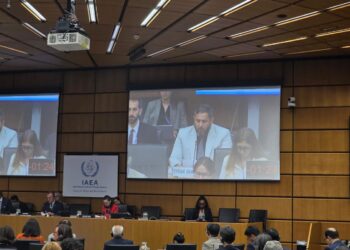
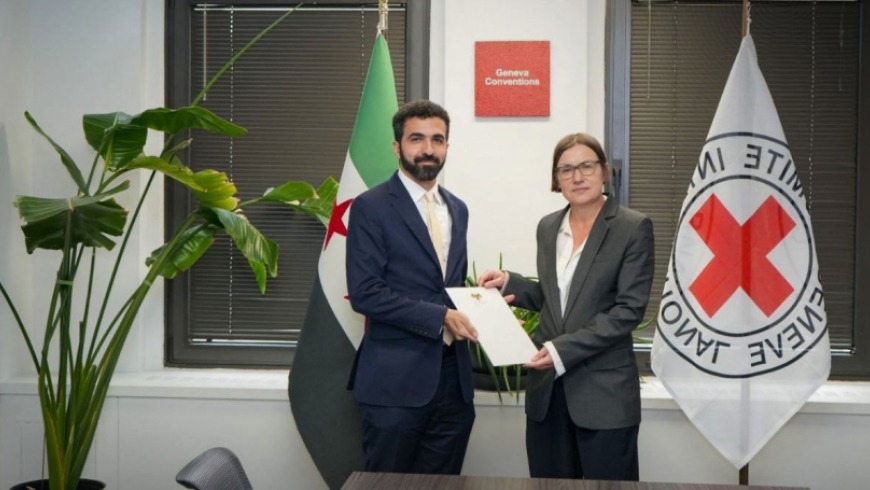
On 21 May 2026, Syria’s Permanent Representative to the United Nations, Ibrahim Olabi, handed over the country’s formal instrument of accession to the Global Initiative for the Renewal of Political Commitment to International Humanitarian Law directly to the President of the International Committee of the Red Cross, Mirjana Spoljaric Egger. This step may perhaps be modest in form: a political declaration of accession to a framework that does not impose new legal obligations. However, its significance lies in the context, not in the content. For Syria is a state whose armed conflict has left behind some of the most widely documented patterns of violations of international humanitarian law in the twenty-first century. Hence, the reaffirmation of its public commitment to the laws of war, under a transitional government that was formed after the fall of the Assad regime in December 2024, rises to the level of a formal institutional break with the approach of deliberate non-compliance that lasted for more than a decade.
The Global Initiative on International Humanitarian Law was launched in September 2024, on the sidelines of the United Nations General Assembly, by Brazil, China, France, Jordan, Kazakhstan, South Africa, and the International Committee of the Red Cross, in response to what the founding states described as widespread and escalating violations of the laws of war at the global level. By the time of Syria’s accession, 99 states had formally joined the initiative, with shared leadership of 27 states across seven thematic workstreams covering the protection of civilian infrastructure, healthcare facilities, missing persons, the integration of international humanitarian law into peace processes, and the governance of emerging technologies in warfare. This initiative is regarded as a consultative framework built on recommendations, since it operates through political commitment and not through binding treaty obligations. The states that accede to it do not bear new legal duties; rather, they commit to fulfilling existing duties more effectively. So it follows that this distinction is essential when considering Syria’s accession; for the legal framework governing its conduct, including the Geneva Conventions and their Additional Protocols, customary international humanitarian law, and international criminal law, remains unchanged.
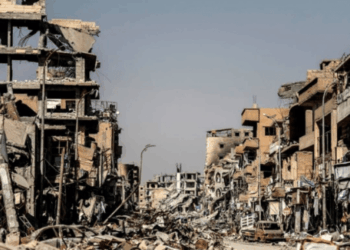
The record of the deposed Assad regime throughout the armed conflict was a record burdened with systematic, widespread, and deliberate violations. The Independent International Commission of Inquiry on the Syrian Arab Republic has documented, across more than 36 reports, systematic attacks on the civilian population, a siege warfare designed to starve civilian areas and force them into surrender, the deliberate targeting of medical facilities, widespread and systematic torture and enforced disappearance in detention centers, and the use of chemical weapons against civilians. The documentation of the Syrian Network for Human Rights records the death of around 45,000 Syrians under torture since 2011, alongside more than 177,000 persons who remain forcibly disappeared. The Assad regime denied the International Committee of the Red Cross access to detention facilities for prolonged periods, and continuously obstructed humanitarian operations, which made Syria one of the most prominent cases of a state party to the Geneva Conventions that, at the same time, weaponized the humanitarian crisis it had itself created. In the face of this record, Syria’s renewed public commitment acquires a qualitatively different significance from routine diplomatic engagement; it represents, at the declaratory level, a disavowal of the state’s prior pattern of conduct.
The new Syrian government has framed this accession as an acknowledgment of the suffering arising from the grave and systematic violations under the previous administration. The Syrian Foreign Ministry presented the step as a demonstration of compliance through active practical and diplomatic measures. From an international relations perspective, the accession represents a credible signal to donor states, United Nations bodies, and the humanitarian actors whose cooperation Syria’s reconstruction requires. The Ninth Brussels Conference on Supporting the Future of Syria and the Region, in March 2025, reaffirmed the European Union’s commitment to a Syrian-led transition process, conditioned on accountability and legal reform. Formal engagement in international humanitarian law frameworks is, therefore, a fundamental prerequisite for full access to those diplomatic and financial channels. However, the danger lies in diplomatic normalization taking the place of legal accountability. As for the restrictions imposed on the jurisdiction of the International Criminal Court regarding Syria, they remain unchanged, in the wake of the Russian and Chinese veto in the Security Council in 2014. Accession to the International Humanitarian Law Initiative does not alter Syria’s exposure to universal jurisdiction proceedings, nor the work of the International, Impartial and Independent Mechanism, for the declaratory commitment and the duty of accountability run on two separate tracks, and conflating them would serve the interests of normalization at the expense of justice.
The most important and direct dimension in Syria’s accession concerns its effect on the operational access of the International Committee of the Red Cross. The humanitarian work of the International Committee in Syria, including detention monitoring, the dissemination of international humanitarian law, tracing services for the missing, and support for affected communities, was severely restricted under the Assad regime. The International Committee has publicly linked the terms of its engagement in post-Assad Syria to respect for international humanitarian law, humanitarian access, and the provision of tangible answers to the families of the missing. The renewed political commitment at the highest levels should, in principle, translate into broader and more systematic access of the International Committee to detention facilities, more organized cooperation with the tracing network, and institutional support for the dissemination of international humanitarian law within the armed forces and security agencies undergoing reform. However, the gap between declaration and practice is still tangible; and the current Syrian government must work assiduously to narrow this gap, eventually closing it.
The political science literature on treaty compliance consistently distinguishes between behavioral compliance, normative compliance, and what is known as “cheap talk,” that is, public declarations that involve a minimal political cost and ease external pressure without generating a real institutional change. Syria’s accession faces the risk of falling into this third category if it is not accompanied by concrete and verifiable implementation benchmarks. The progress report of the initiative, published in October 2025, identified the most important steps at the national level in integrating international humanitarian law into national law and military doctrine, updating military training programs, strengthening national accountability mechanisms, and empowering national international humanitarian law committees with sufficient resources and independence. Syria has so far established a transitional justice authority by executive decree, as President al-Sharaa issued a decree in August 2025 mandating the establishment of the National Authority for Transitional Justice; however, the legal infrastructure for the systematic integration of international humanitarian law, including amended military penal codes, rules of engagement compatible with international humanitarian law, and judicial mechanisms capable of pursuing violations, is still in the early stages of development.
The high-level conference of the initiative, scheduled to be held in Jordan in the fourth quarter of 2026, represents a tangible test in the near term. Syria’s participation in the thematic workstreams, if substantive, can provide a structured framework for national legal reform. The workstream on international humanitarian law and peace is of direct relevance to the architecture of transitional justice in Syria, as it provides a structured opportunity to link international legal commitments to national accountability programs.
Syria’s accession to the Global Initiative on International Humanitarian Law is a legally important step, and it may have tangible consequences; however, its significance will not be determined by the ceremony in which the instrument was exchanged, nor by the diplomatic language in which it was drafted; rather, it will be measured by the practices of the Syrian army and security forces, the extent of accessibility of International Committee of the Red Cross monitors to detention facilities, the resources allocated to the forensic identification of the missing, and the credibility of national accountability mechanisms. The state that committed some of the gravest violations of international humanitarian law, in the founding context of the initiative, has declared its commitment to the framework that was put in place specifically to prevent the recurrence of such failures. Hence, the burden of proof now rests entirely on the institutional conduct of the state.