In this article, I demonstrate that the Assad regime’s 2013 declaration of its chemical weapons programme was a systematic and deliberate institutional deception. The findings of the Organisation for the Prohibition of Chemical Weapons in May 2026 came to provide the material confirmation of what had for years remained a matter of suspicion without conclusive proof: the recovery of more than seventy rockets and aerial bombs, alongside precursors for sarin gas, the substance hexamine, and production infrastructure, all of which were found at sites the regime had never disclosed.
I focus on three pivotal points. The first is that the legal significance of these discoveries does not stop at revealing what had already become known; rather, it manifests itself in transforming the legal characterisation of the violation from an incomplete declaration into a systematic, intentional falsification, in a manner that satisfies the threshold for referral to the United Nations General Assembly or the Security Council under Article XII of the Chemical Weapons Convention. The second is that the recovery of the substance hexamine carries grave criminal value, since it constitutes a technical link connecting the institutional programme to the Ghouta attacks of 2013 and the Latamneh attacks of 2017, thereby supporting the accumulation of the chain of evidence necessary for individual criminal prosecution. The third is that establishing individual criminal responsibility remains the fundamental challenge facing any future prosecution, because international criminal law requires proof of the knowledge and authorisation of the particular official, rather than reliance on institutional proof alone.
The article concludes that the cooperation being shown by the current Syrian authorities with the Organisation for the Prohibition of Chemical Weapons serves considerations of international rehabilitation, however the evidence recovered remains a firmly established legal asset in favour of accountability, particularly within the framework of universal jurisdiction proceedings before the European courts.
Fadel Abdulghany
On 26 May 2026, the Organisation for the Prohibition of Chemical Weapons confirmed what its inspectors had long suspected, yet had been unable to prove materially: that the Assad regime’s 2013 declaration of its chemical weapons programme was a deliberate fraud.
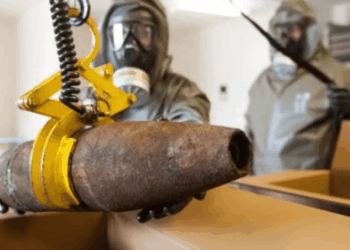
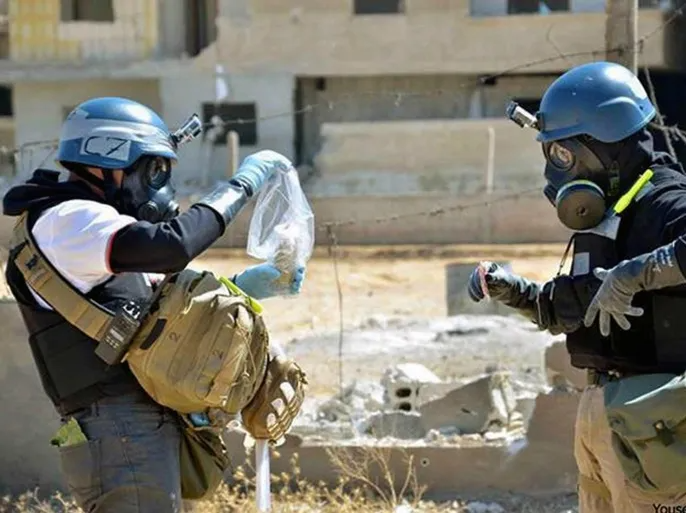
The teams of the Organisation for the Prohibition of Chemical Weapons, working alongside the current Syrian government at undeclared sites in the northern coastal and central regions, recovered more than 70 rockets and aerial bombs, precursors for sarin gas, mixing and storage equipment, and hexamine, the stabilising substance that constituted a technical signature linking regime forces to the Ghouta and Latamneh attacks.
Thousands of pages of documents were also found alongside the munitions. Syria’s Permanent Representative to the Organisation for the Prohibition of Chemical Weapons, Mohammed Katoub, stated that 18 persons suspected of involvement in the programme had been detained, among them major generals whose names appear on the European, British, and American sanctions lists.
The legal significance of this discovery does not lie in the fact that Syria under Assad possessed chemical weapons it had not declared; this fact was established gradually as of 2014, when the Declaration Assessment Team (DAT) of the Organisation for the Prohibition of Chemical Weapons first identified the gaps and inconsistencies in the initial Syrian declaration. By October 2024, the Declaration Assessment Team (DAT) had documented 26 unresolved issues; and Syria had submitted 20 amendments to its original declaration in which it acknowledged elements of the programme it had not previously disclosed.
The Technical Secretariat of the Organisation for the Prohibition of Chemical Weapons also formally assessed that Syria’s declaration could not be regarded as accurate or complete under the Chemical Weapons Convention.
As for what the findings of May 2026 add, it is the material confirmation: intact munitions, precursor chemicals, and production infrastructure recovered from sites the regime had never disclosed. The distinction between an incomplete declaration and a systematically and intentionally falsified declaration carries legal consequences. Thus, under Article XII of the Chemical Weapons Convention, systematic concealment of this character satisfies the minimum threshold for referral to the United Nations General Assembly or the Security Council.
United Nations Security Council Resolution 2118, adopted under Chapter VII in 2013, established the framework within which such violations acquire binding force. This falsification was an institutional programme of deception that the Assad regime maintained throughout the period of Syria’s nominal compliance with the Convention.
I believe that the discovery of hexamine entails an important significance; for the Joint Investigative Mechanism between the United Nations and the Organisation for the Prohibition of Chemical Weapons (JIM), and the Investigation and Identification Team of the Organisation for the Prohibition of Chemical Weapons, had previously identified hexamine as an amine stabiliser used in the regime’s sarin production process, thereby linking it criminally to the Ghouta attack of August 2013 and the Latamneh attacks of March 2017.
The recovery of this substance, alongside types of aerial bombs compatible with those used in the documented chemical attacks, reinforces the chain of evidence connecting the institutional programme to specific acts of use. To date, the Investigation and Identification Team has issued five reports in which it attributed six incidents of chemical weapons use to Assad’s forces: three attacks in Latamneh during March 2017, an attack in Saraqib in February 2018, the Douma attack in April 2018, in addition to the Kafr Zita attack in October 2016, which the Team, in its fifth and most recent report issued in January 2026, attributed to the Syrian Air Force operating through the Tiger Forces.
The fourth report also attributed a separate incident in Marea in September 2015 to the ISIS organisation. This cumulative record, compiled across five reports and over several years of investigation, establishes the existence of a pattern of systematic use. The newly recovered documents and munitions can fill the most intractable gap in that record: the link between the institutional existence of the programme and the operational authorisation of specific attacks issued by senior, identifiable officials.
This gap represents the foremost challenge for any criminal prosecution arising from this evidence. Thus, under international criminal law, establishing the existence of a chemical weapons programme and the use of those weapons is necessary, yet insufficient to establish individual criminal responsibility. For the prosecution must prove that a particular official was aware of the stockpile, or participated in its concealment, or issued orders for its use.
The traditional distinction between possession and use remains relevant here; for possession alone, although it constitutes a violation of the Chemical Weapons Convention that engages State responsibility, does not directly establish individual criminal responsibility under the Rome Statute. Nevertheless, in a context where the Assad regime repeatedly denied possession, while maintaining a concealed operational capability, and where this capability was in fact activated on multiple documented occasions, possession does not remain legally neutral.
Courts may infer criminal intent from continuous institutional concealment, when assessed in light of a documented pattern of actual use. As for the theory of the “continuing crime,” in which each act of concealment after accession to the Chemical Weapons Convention extends the scope of criminal responsibility, it is a doctrinally accepted theory, and it may find its strongest applications in European universal jurisdiction proceedings, where the courts have shown greater flexibility in adapting the doctrine of the continuing crime to complex institutional crimes.
The cooperative stance of the Syrian authorities in the post-Assad-fall phase, and their readiness to grant the Organisation for the Prohibition of Chemical Weapons access to the undeclared sites and to investigate the suspected officials of the programme, performs a clear function: presenting Syria as a responsible partner in the field of countering the proliferation of chemical weapons, with the aim of easing sanctions, financing reconstruction, and international rehabilitation.