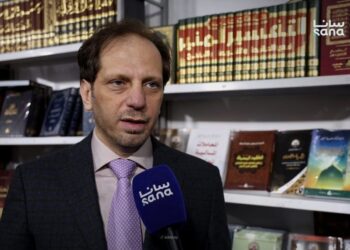
Fadel Abdul Ghany, founder and chairman of the Syrian Network for Human Rights (SNHR), said that “what has been uncovered so far does not represent a comprehensive breakthrough in the file of forcibly disappeared children. It primarily concerns a specific group whose cases can be traced through institutions. The figures related to care institutions do not reflect the true scale of Syria’s forcibly disappeared children.”
He noted that, according to the Syrian Network for Human Rights database, at least 5,359 children have remained detained or forcibly disappeared between March 2011 and November 20, 2025, including 3,736 children who were detained or forcibly disappeared by the former Assad government.
“What has been uncovered so far represents only a limited part of a much larger case,” Abdul Ghany said. “It is neither a final figure nor one that comes close to reflecting the full extent of the problem.”
He concluded with a message to the families of missing children:
“Your right to know the truth does not expire with time. General promises or administrative settlements cannot replace it. Keep every photograph, document, testimony, letter, the employee’s name, the date of a visit, and every piece of information about the last place your child was seen. Do not hand over original documents except in exchange for an official receipt and only to a trusted authority. Try to document every communication with institutions or government authorities. At the same time, families cannot be expected to carry the burden of this search alone. The primary responsibility lies with the current Syrian state, every institution that possessed, received, or concealed records, and the international community, which established mechanisms to address Syria’s missing persons crisis.”