Assessing the Proceedings
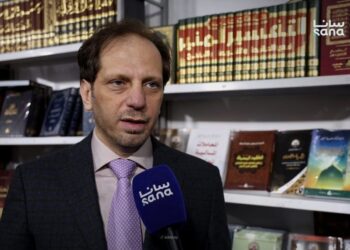
Fadel Abdulghany, executive director of the Syrian Network for Human Rights, said the seriousness of the trial should not be assessed solely by the number of hearings held.
Speaking to Enab Baladi, he explained that the current case involves only 14 defendants. The widely circulated figure of 563 refers to individuals identified by the investigative committee or referred within the broader case file. They include 265 people affiliated with groups loyal to the former regime and 298 people suspected of involvement in violations committed by forces that participated in the military operations.
He added that this does not mean all those individuals are named in a single indictment or that their cases have reached the same judicial stage. Describing the current trial as involving more than 560 defendants is therefore “inaccurate,” he said.
According to Abdulghany, the scale of the violations illustrates the magnitude of the task facing the judiciary. The Syrian Network for Human Rights documented the deaths of 1,663 people in connection with the Syrian Coast events in its latest annual figures. Of these, 1,217 were killed by armed forces participating in the military operations, while 446 were killed by armed groups linked to the former regime.
The figures include civilians, military personnel, and disarmed individuals, and are not limited to civilian victims.
The National Investigation Committee, meanwhile, announced that it had documented 1,426 deaths, while the United Nations Independent International Commission of Inquiry estimated that approximately 1,400 people had been killed, most of them civilians. Abdulghany attributed the differences among the figures to variations in methodology, time periods, and classification criteria.
Five Indicators
Abdulghany believes the judicial process has so far demonstrated “preliminary procedural seriousness,” but has not yet established the existence of a comprehensive prosecution strategy.
He said genuine seriousness would be determined by five indicators:
- Expanding proceedings beyond a limited sample of defendants to include other cases supported by sufficient evidence.
- Ensuring genuine equality in investigations and prosecutions between defendants associated with the former regime and members of the current forces.
- Avoiding a focus solely on direct perpetrators by also investigating incitement, the issuing of orders, assistance, and failures by commanders to prevent crimes or punish those responsible.
- Applying legal classifications that reflect the nature and context of the alleged crimes, rather than relying only on charges such as murder, theft, and incitement to discord, when the evidence permits broader charges.
- Issuing reasoned judgments that can be appealed and are based on evidence subjected to judicial scrutiny.
Regarding the length of the evidentiary stage and the adjournments, Abdulghany said presenting evidence, hearing witnesses, and conducting technical examinations constitute a natural and necessary sequence in complex cases, particularly when they involve video recordings and digital material whose authenticity is disputed.
No defendant may be convicted on the basis of a video before its authenticity, integrity, context, the identities of those appearing in it, and its chain of custody have been verified, according to Abdulghany.
He added that the court had taken some measures reflecting this principle. It ordered an examination by three experts after the defense challenged certain video recordings.
The court also allowed the defense to respond to expert reports, permitted the summoning of defense witnesses, and granted newly appointed lawyers time to review the case files and prepare their submissions.
Abdulghany said these procedures are consistent with Article 14 of the International Covenant on Civil and Political Rights, which guarantees adequate time and facilities to prepare a defense, access to legal counsel, the right to examine prosecution witnesses, and the right to call defense witnesses.
He stressed that an arbitrary deadline should not be imposed on the evidentiary stage. The legal standard is for a trial to proceed “without undue delay,” not to conclude rapidly at the expense of the requirements of justice.
At the same time, he noted that some adjournments reveal issues requiring attention. Hearings were postponed because new lawyers had been appointed or because responses and expert assessments had not been completed.
Signs of Weakness
A hearing scheduled for January 22 was also postponed without sufficient public information about the reasons. Some hearings were effectively limited to appointing a lawyer or requesting a short extension before being adjourned.
Abdulghany said each of these reasons might be legitimate individually, but their repetition could indicate inadequate preparation before the trial or shortages in resources and technical capacity.
He explained that the solution is not to accelerate the issuance of judgments, but to improve case management by setting a procedural schedule, identifying disputed issues, preparing expert assessments before hearings, explaining the reason for every adjournment in a brief judicial decision, and ensuring that postponements do not become an open-ended routine measure.
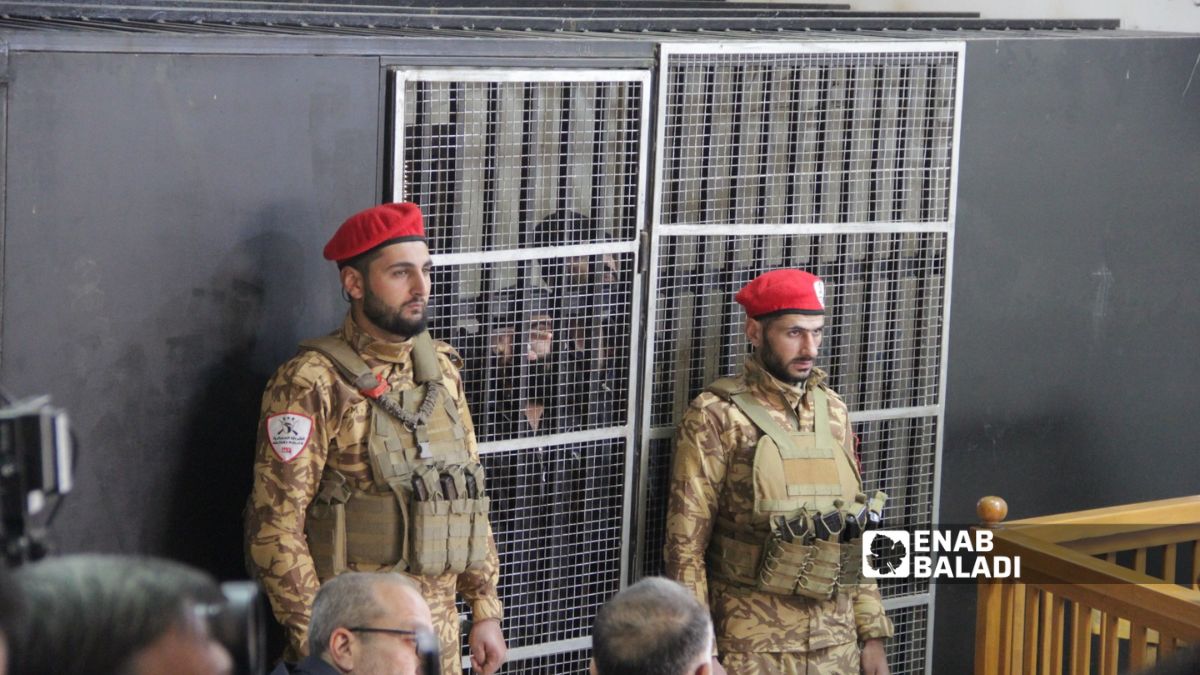
One of the most significant positive aspects of the current proceedings is that the hearings have been public. Media outlets, relatives of some defendants, and human rights observers have been allowed to attend several sessions.
Parts of the proceedings have also been broadcast. This represents a relative break from the secretive and exceptional trials conducted under the former regime, although transparency alone is not sufficient to establish that the trial is fair.
The human rights organization’s director also described the defense’s ability to submit motions as a positive development. He noted that the court heard defense witnesses, allowed challenges to digital evidence, ordered technical examinations, gave lawyers time to prepare their arguments, and appointed court-assigned lawyers when defense counsel were absent.
He added that prosecuting individuals linked to the current government forces alongside defendants associated with the former regime is particularly significant. Accountability loses its legitimacy when it operates in only one direction or is shaped by political or sectarian affiliation.
Areas Requiring Improvement
Abdulghany said several aspects still require improvement, particularly the handling of torture allegations.
One defendant told the court that his statements had been taken under torture at the Political Security branch in Latakia and asked to be examined by a doctor to substantiate the allegation. No published information has clarified how the court responded to the request.
Abdulghany stressed that such allegations require an immediate and independent investigation, a forensic medical examination in accordance with the Istanbul Protocol, and the exclusion of any statements found to have been extracted under torture.
He also emphasized that the issue concerns both the admissibility of the evidence and the conditions of detention and cannot be postponed until after a judgment has been issued.
What Does a Public Trial Mean?
According to Abdulghany, a public trial does not simply mean opening the courtroom. It also requires enabling the public, victims, and researchers to understand the subject of the case, the legal basis for the charges, the reasons for postponements, and the outcome of motions, while withholding information that could endanger witnesses or violate their privacy.
He also pointed to the lack of sufficient information about whether a witness protection program exists, whether mechanisms are in place to assess risks and provide psychological and legal support, and how victims’ families are informed of developments in the cases. He said such an environment requires effective and confidential protection to ensure witnesses can continue cooperating.
Abdulghany also called for respect for the presumption of innocence, urging prosecutors, authorities, and official media outlets to describe individuals as “defendants,” rather than “criminals” or “perpetrators of violations,” until final judgments have been issued against them.
He warned against using definitive descriptions for people whose guilt has not been established, particularly in a case marked by considerable political and sectarian sensitivity.