Fadel Abdulghany
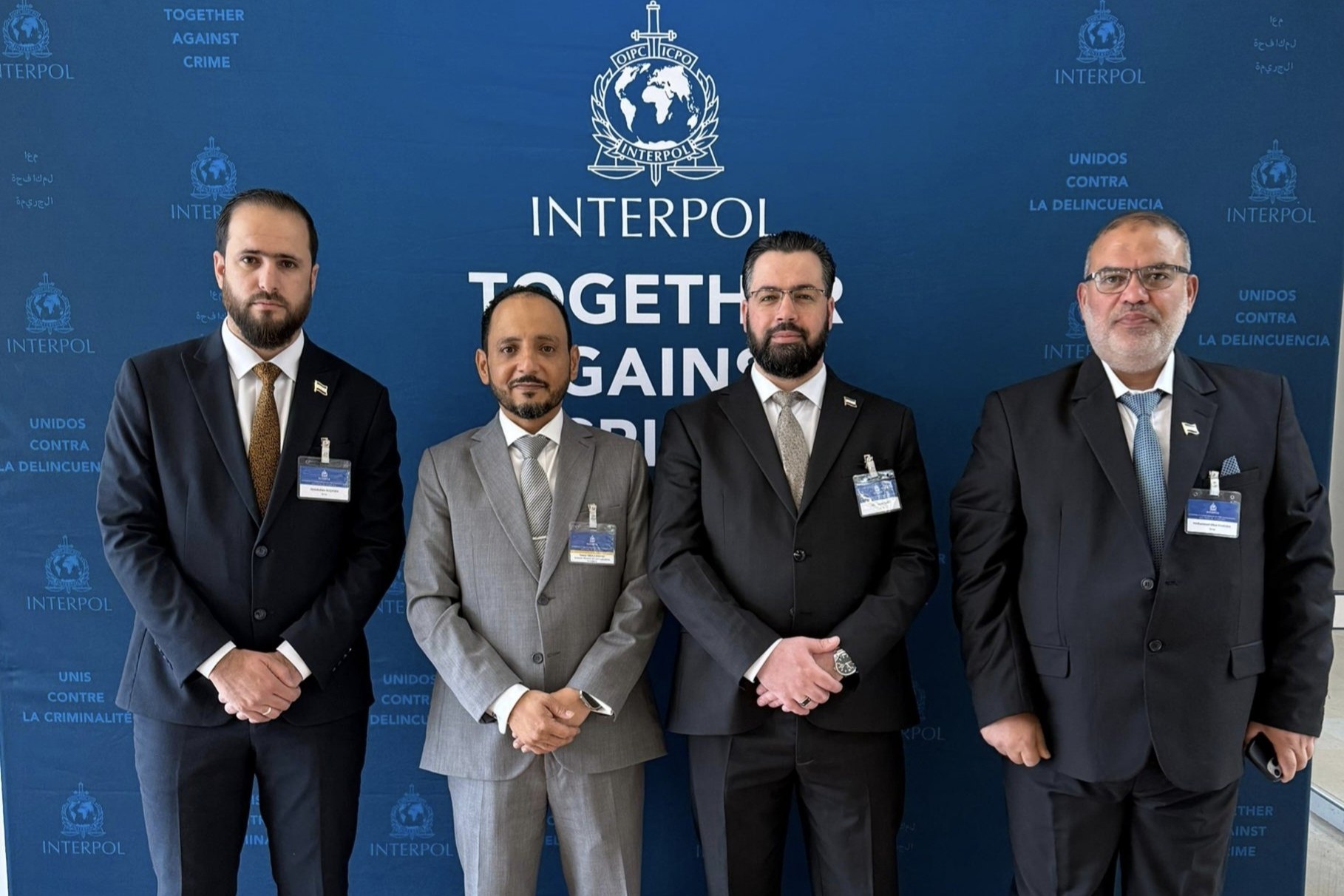
The Syrian Ministry of Justice announced the formation of an “Extradition Committee” to communicate with Interpol regarding the persons wanted by the Syrian authorities. The announcement, which was made by the Deputy Minister of Justice Mustafa al-Qasim on 12 August, also referred to the establishment of offices to receive transitional justice complaints, and to the efforts being made to recover Syrian assets allegedly embezzled and transferred abroad.
This lays the ground for an institutional initiative, however it doesn’t in itself create an international mechanism for arrest or for extradition. Nor does the official announcement specify the members of the committee, or its legal mandate, or the list of the targeted persons, or its working procedures, or whether there is any red notice or extradition request under consideration.
I deliberately clarified this at the outset of this article, because international cooperation in the field of policing is often portrayed as though it allows a state to simply locate a suspect abroad and secure his return to it. But the matter isn’t so. Interpol is an organization for cooperation between the national police authorities, and it doesn’t issue binding international arrest warrants, nor does it administer extradition proceedings, nor does it determine criminal responsibility, nor does it oblige any member state to hand over a person.
As for the Syrian National Central Bureau in Damascus, it is a channel of communication linking the Syrian law enforcement authorities to Interpol’s secure communications network and to the rest of the member states, and not an authority exercising powers beyond the borders of Syria. Interpol records Syria’s membership as running since 29 June 1953.
And the most important practical tool in this context is the red notice, which is a request addressed to the law enforcement authorities around the world to locate a person and provisionally arrest him pending his extradition, his transfer, or the taking of another legal measure against him. The red notice remains a request, and not an arrest warrant, hence the person is wanted by the requesting state or court, and not by Interpol, and each state applies its own law when deciding whether it will take action against him. Interpol’s own guidelines confirm this point clearly.
Therefore, the legal path is more complicated than it may appear, since a competent Syrian judicial authority must first issue a valid arrest warrant or judicial decision, and after that, the Syrian bodies concerned must prepare a precise request that includes identification data, a clear description of the alleged conduct, the applicable criminal provisions, and the judicial basis for requesting the person.
And when the issuance of a red notice is requested, Interpol assesses the extent to which its publication is compatible with its Constitution and with its rules on the processing of data, and if the person is located, the state concerned decides whether its national law permits his provisional arrest. Syria then has to pursue the extradition proceedings in accordance with the legal system in force in that state.
The committee may help at this preparatory stage, and its value is likely to lie in coordinating the judicial, the police, the prosecutorial, and the diplomatic work, as well as in coordinating the aspects relating to the evidence, and this coordination can improve the quality of the requests and their consistency, including the translation and the communication with the foreign authorities, however it can’t compensate for the evidence, or for the nullity of the judicial decision, or for the shortcomings in a particular case.
Likewise, it isn’t permissible, as a matter of sound law, for the request to rest on political affiliation, or on official capacity, or on membership in a former governing structure; rather, it must be built on establishing individual criminal responsibility through an allegation that is sufficiently clear and grounded in a legal basis.
And Interpol’s own rules impose additional restrictions, thus red notices ordinarily require that the matter concern a serious ordinary-law crime, that it satisfy minimum thresholds relating to the penalty, and that it include judicial information and data sufficient for identification. The Organization’s Constitution likewise requires that the cooperation be carried out within the limits of the national laws and in the spirit of the Universal Declaration of Human Rights, with a prohibition on intervention in matters of a political, military, religious, or racial character, and the rules on the processing of data set out these requirements.
This doesn’t mean that the allegations directed against former officials are automatically excluded merely because they arose in the context of a political transition or of an armed conflict. Serious crimes may well remain within the scope of Interpol’s work.
And the question is whether the ordinary criminal character of the alleged conduct predominates over the political or the conflict-related elements in which Interpol is prohibited from intervening, and this assessment isn’t automatic, but rather depends on the nature of the charges, the facts on which they rest, the capacity of the person sought, the wider context, the quality of the information provided, and the requirements of the Organization’s neutrality.