I explain in this article the legal and political dimensions of the decision of the UN Security Council Sanctions Committee, issued unanimously on 27 February 2026, ordering the delisting of “Jabhat al-Nusra li-Ahl al-Sham,” under all its designations, including “Hay’at Tahrir al-Sham,” from the ISIL/Da’esh and Al-Qaida sanctions list emanating from Resolutions 1267, 1989, and 2253. This delisting entails the lifting of the asset freeze, travel ban, and arms embargo imposed on the group since 2014. I also clarify that the decision represents the final link in a gradual track of international legal rehabilitation of the Syrian transitional authority, which began with the fall of the Assad regime in December 2024, and which has included successive steps at the national and UN levels. I likewise address the paradox between the full-delisting model applied to Hay’at Tahrir al-Sham, and the parallel-framework model to which the Taliban remains subject despite governing Afghanistan. I conclude that this precedent may be invoked as a reference in future contexts for designated groups seeking rehabilitation through transformation into governance entities, which raises questions about the standards of the UN sanctions regime and the conditions for delisting.
Fadel Abdulghany
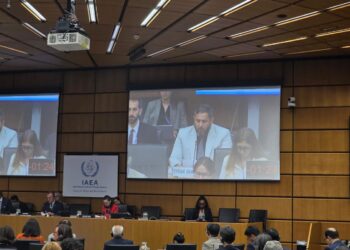
On 27 February 2026, the Security Council Committee operating pursuant to Resolutions 1267 (1999), 1989 (2011), and 2253 (2015) concerning the Islamic State of Iraq and the Levant (ISIL/Da’esh) and Al-Qaida, unanimously decided to delist “Jabhat al-Nusra li-Ahl al-Sham” from the ISIL/Da’esh and Al-Qaida sanctions list.
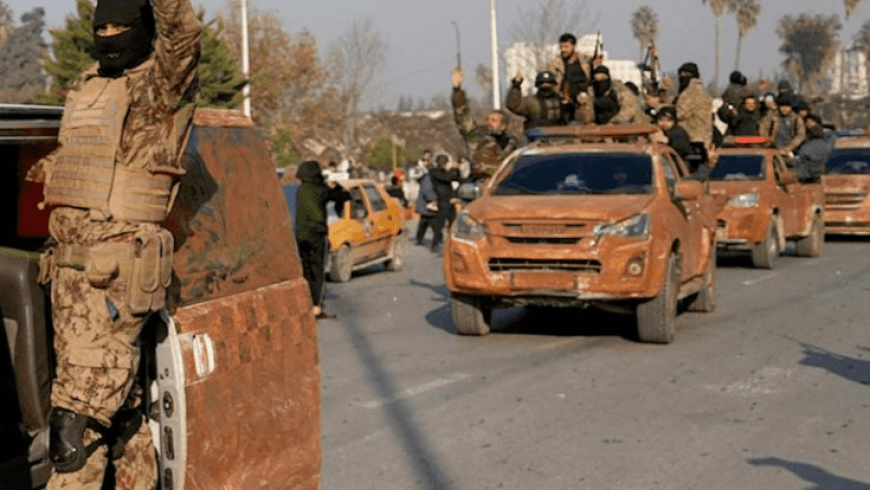
The decision covered all the group’s known aliases, including “Hay’at Tahrir al-Sham,” “Jabhat Fath al-Sham,” and the related subsidiary units.
By virtue of this decision, the asset freeze, travel ban, and arms embargo imposed on the group since 14 May 2014, pursuant to Chapter VII of the Charter of the United Nations, have officially ended. This delisting is not merely a procedural correction of a prior designation; rather, it represents a station in a transitional international legal rehabilitation track for the Syrian transitional authority in the post-Assad phase, with all this entails in terms of repercussions on international cooperation, post-conflict reconstruction, and the structure of UN counter-terrorism sanctions, as well as the tension between the requirements of political normalization and the imperatives of comprehensive accountability.
The original listing described the group as being linked to Al-Qaida, noting that it attracted Syrian and foreign fighters from Al-Qaida in Iraq and Asbat al-Ansar, along with other foreign Al-Qaida cadres, to engage in the conflict inside Syria. The listing also indicated that even after the successive renaming operations in 2016 and January 2017, the group remained aligned with Al-Qaida, and continued to carry out terrorist operations.
What is worth pointing to in this track is that the ISIL/Da’esh and Al-Qaida Sanctions Committee 1267/1989/2253 operates by the principle of consensus, meaning that delisting does not require an affirmative vote so much as it requires the absence of any objection from members of the committee. Because no member objected, the decision entered into force immediately, and lifted from the Member States of the United Nations all legally binding obligations relating to the enforcement of the relevant restrictive measures.
This procedural track is distinct from the decision lifting individual sanctions in November 2025 on President Ahmad al-Sharaa and Interior Minister Anas Khattab, which required a resolution issued by the Security Council itself (Resolution 2799), adopted by fourteen votes in favor with China abstaining. This distinction takes on analytical importance because it shows that the individual delisting reached specific persons through a higher procedural threshold represented by a Security Council resolution, while the February 2026 procedure addressed the collective entity itself through the consensus mechanism inside the committee. By the conjunction of the two procedures, what may be called the “institutional delisting structure” of the leadership of the transitional phase in Syria was completed.
The delisting of “Hay’at Tahrir al-Sham” from the UN sanctions list did not come in isolation from context; rather, it came as the final step of a gradual track of legal rehabilitation that set out beginning from the fall of the Assad regime in December 2024. This track began at the national level, when the United States announced in May 2025 its intention to lift all sanctions on Syria, followed by the issuance of General License No. 25 from the Department of the Treasury. In parallel, the European Union lifted most of the restrictive economic measures imposed on Syria, while retaining restrictions of a security nature. In June 2025, Executive Order No. 14312 revoked the U.S. sanctions on Syria, and in the following month the U.S. Department of State revoked the designation of “Hay’at Tahrir al-Sham” as a Foreign Terrorist Organization (FTO). The United Kingdom followed in October 2025 by delisting “Hay’at Tahrir al-Sham” from the list of proscribed terrorist organizations. In November 2025, Security Council Resolution 2799 delisted President al-Sharaa and Foreign Minister Khattab in their individual capacities. Then Canada removed Syria from its list of state sponsors of terrorism and delisted “Hay’at Tahrir al-Sham” in December 2025, the same month in which the “Caesar Syria Civilian Protection Act” was repealed through the National Defense Authorization Act for fiscal year 2026.
This sequence reveals: addressing the national designations first, then the delisting of individuals at the UN level, followed by broader legislative reform, reaching the delisting of the institutional entity at the UN level.
The legal rehabilitation process for “Hay’at Tahrir al-Sham” rested on the proposition that the group definitively severed its ties with Al-Qaida after 2016, and transformed from an armed faction of jihadist orientation into an entity heading toward governance. The U.S. Department of State decision revoking the “Foreign Terrorist Organization” designation was based on “the announced dissolution of Hay’at Tahrir al-Sham and the commitment of the Syrian government to combat terrorism in all its forms.” UN sanctions monitors likewise reported the non-observation of “active links” between Al-Qaida and “Hay’at Tahrir al-Sham” as of mid-2025. Added to this is Syria’s joining of the Global Coalition to Defeat ISIS — all of this provided a factual basis for the delisting within the framework of the standards governing the sanctions regime.
However, the track toward the delisting was not free of political controversy. China expressed “serious reservations” early in February 2025, considering that “the conditions are not yet ready” for the delisting, and calling on the new Syrian authorities to “take concrete measures to respond effectively to the concerns of the international community.” Beijing’s principal concern focused on the presence of Uyghur fighters affiliated with the “East Turkistan Islamic Movement” (ETIM) who had been integrated into the Syrian armed forces. During the negotiations of the November 2025 resolution, China pushed for the delisting to be time-limited and subject to Security Council review, however these demands were not incorporated into the final text. The International Crisis Group also indicated that the United States initially circulated a comprehensive draft resolution in June 2025 proposing to delist President al-Sharaa, Interior Minister Khattab, and “Hay’at Tahrir al-Sham” in one batch, however months of negotiations led to separating the delisting of individuals from the delisting of the entity within two distinct tracks.
The delisting of “Hay’at Tahrir al-Sham” represents an important historical development within the structure of the 1267 sanctions regime. Although the sanctions lists have witnessed prior delisting operations of entities and individuals, the delisting of a group previously described explicitly as a branch of Al-Qaida in Syria, which then ended up controlling a state, is an unprecedented occurrence. The closest comparative parallel is represented in the Taliban movement, which remains subject to a separate UN sanctions regime (Resolution 1988) despite its rule of Afghanistan. The approach taken with “Hay’at Tahrir al-Sham” reflects an entirely different model built on full delisting, instead of the establishment of a parallel framework, and on acceptance of the disengagement from Al-Qaida and the transformation into a governing entity whose legitimacy is treated, in an increasing manner, as legitimate.
This precedent establishes a path that may be invoked in the future for armed groups carrying terrorist designations, such that they would be able, through a mixture of political transformation, diplomatic engagement, and transitional legal rehabilitation, to reach full delisting from the international sanctions lists. Here a question is raised about the standards and conditions that led to the speed in the rehabilitation, which did not take more than fourteen months. The repercussions of this extend beyond Syria, as this model may be cited in contexts where designated groups transition to roles of governance.