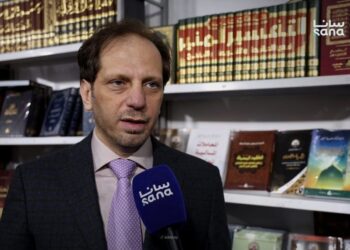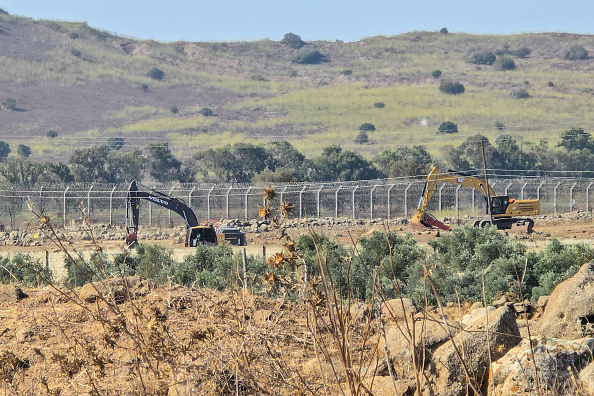
The Syrian Network for Human Rights (SNHR) told The New Arab that the deaths and attacks were part of a pattern of assaults and operations carried out by the Israeli army in the south.
The director of the organisation, Fadel Abdul Ghani, said the Israeli army has carried out “repeated ground incursions, detentions, raids, searches of homes, built checkpoints, restricted the movements of residents and demolished civilian property using force”.
According to Abdul Ghani, data documented by the organisation shows that the number of Israeli attacks surged in 2025, particularly during the latter half of the year.
Records show that from 9 June to 5 July 2025, there were at least 22 ground incursions in Quneitra, Daraa, and the Damascus countryside. During this time, at least one civilian was killed and around 13 were detained.
On Monday, at least three people have been shot by Israeli forces in Quneitra province, with one of them being identified as a child.
The Syrian Network for Human Rights has called for urgent investigations, accountability and for the protection of civilians in a bid to stop any future violations.
Legality of Israeli incursions
Abdul Ghani called for an investigation into the legality of Israeli attacks in Syria.
“We must distinguish here between the legality of use of force inside Syrian territory, the rules governing the behaviour of forces towards civilians, Israel’s responsibility as a state, and individual criminal responsibility for possible war crimes,” he said.
Article 2(4) of the Charter of the United Nations prohibits threats or use of force against the territorial integrity or political independence of any state.
Should Israel invoke the right of self-defence under Article 51 of the Charter, “it must be evaluated in the light of legal considerations governing the exercise of this right, foremost among which is the existence of an armed attack, necessity and proportionality,” Abdul Ghani explained.
He also said that the 1974 Syrian-Israeli disengagement agreement established a separation zone that is supposed to be free of military forces, except the United Nations Disengagement Observer Force (UNDOF).
He noted that the presence of Israeli forces and the military operations carried out within the separation zone have raised concerns over compliance with the conditions of the agreement.
Further questions have also been raised on whether Israeli attacks and incursions could be considered an occupation.
Abdul Ghani said there are certain guidelines and frameworks which outline what constitutes an occupation, noting that article 42 of the Hague Regulations state that this includes when a territory is effectively under the authority of an enemy army.
While he stopped short of calling the attacks an occupation, he demanded Israel to “stop the use of force and incursions that are not based on a legitimate legal basis, respect the disengagement agreement, stop arbitrary detentions, and reveal the names and whereabouts of detainees and the legal basis for their detention”.
He also called on detainees to be able to communicate with their families and lawyers, and for the ICRC to be able to reach out to them.