• عربي
Fadel Abdulghany
No Result
View All Result
  • Home
  • BIO
  • Articles
  • Researches
  • Books
  • Quotes to the Media
  • Transitional Justice
  • Interviews
    • Talks and Lectures
    • Videos
  • Home
  • BIO
  • Articles
  • Researches
  • Books
  • Quotes to the Media
  • Transitional Justice
  • Interviews
    • Talks and Lectures
    • Videos
No Result
View All Result
Fadel Abdulghany
No Result
View All Result
Home Articles

The Limitations of the Principle of Universal Jurisdiction in the Service of the Accountability Process and Its Inability to Prosecute the Highest Ranking Officials

2 May 2021
The Limitations of the Principle of Universal Jurisdiction in the Service of the Accountability Process and Its Inability to Prosecute the Highest Ranking Officials

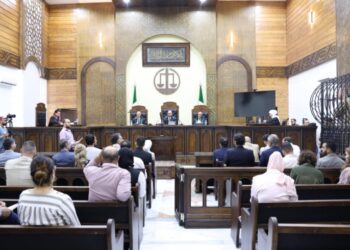
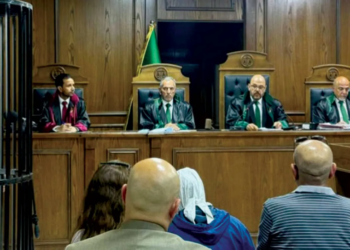
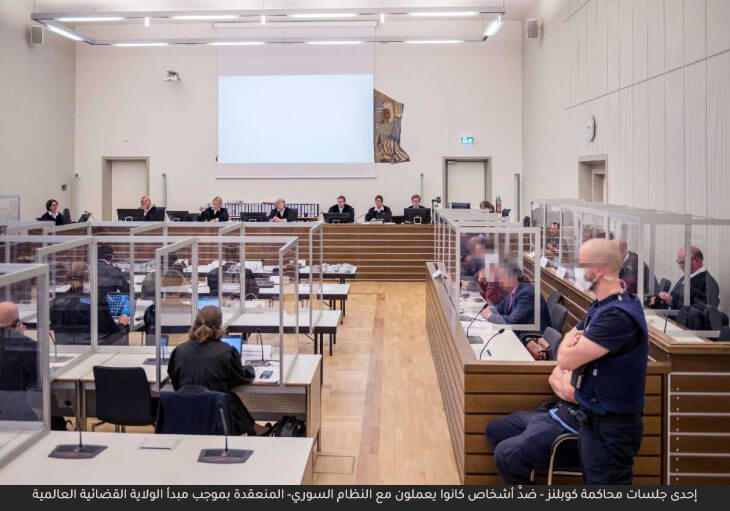
The Geneva Conventions of 1949 , the Convention Against Torture of 1984 , and the International Convention for the Protection of All Persons from Enforced Disappearance of 2006 , all stipulated the principle of universal jurisdiction ; this principle enables local prosecution bodies to prosecute those involved in atrocity crimes such as war crimes , crimes against humanity , terrorism, and torture, even if they are not committed on the state’s territory, and even if the perpetrator or the victims are not citizens of the state. In the last three years, however, there have been tremendous exaggerations of the limited role that universal jurisdiction can play. The application of this principle means that the national judiciary in the country in which the violation was committed has failed, and the international criminal judiciary, represented by the International Criminal Court, or the establishment of a special international court have also failed.

The task that universal jurisdiction can play is narrow and beset by numerous complications and difficulties stemming firstly from the nature of this principle itself, and secondly from the willingness or otherwise of the world’s countries to interact with it. Whilst it is, obviously, one of the tools used in achieving accountability, it is a simple tool in its essence, for several reasons, perhaps the most prominent of which is that the laws of most countries require the presence of the perpetrator within the state’s territory, and it is highly unlikely that anyone from the first or second tiers of offenders among the perpetrators of violations in the Syrian regime will travel to any of the countries whose judiciaries exercise the principle of jurisdiction. In this, we find that all the cases that have been brought have been against low-ranking persons, the majority of whom are not decision-makers, with their status possibly around the ninth or tenth tier among the ranks of regime officials if we assume that there are ten such categories. In addition to these difficulties, there are many legal problems with conducting trials in absentia. Finally, the states allied with the Syrian regime, such as Russia, Iran, China, Venezuela, and Lebanon will not hand over wanted criminals to the German, French or Swedish public prosecution service, even if judgments are issued against them and the public prosecution officially requests their extradition. This in no way suggests that no work should be done to issue arrest warrants against high-level Syrian regime and other party’s individuals involved, but is simply an acknowledgement that such judgments will not usually lead to their arrest and trial.

It was published by the Harmoon Center for Contemporary Studies in a file titled “Transitional Justice: The Path and Indicators … Open Discussion with Experts and Specialists”.

View full Article

ShareTweetShareSend

Related Posts

Syrian People's Assembly
Articles

The People’s Assembly in Syria and the Law of Parliamentary Immunity

21 July 2026
Collective Guilt… How Do We Prevent the Return of “Assadism” in a New Form?
Articles

Collective Guilt… How Do We Prevent the Return of “Assadism” in a New Form?

19 July 2026
Who should hold Syria’s evidence?
Articles

Who should hold Syria’s evidence?

16 July 2026
The Restoration of Syria’s Institutional Rights in the Organisation for the Prohibition of Chemical Weapons
Articles

The Restoration of Syria’s Institutional Rights in the Organisation for the Prohibition of Chemical Weapons

14 July 2026
Rescinding the Designation of Syria as a State Sponsor of Terrorism: The Implications and the Legal Effects
Articles

Rescinding the Designation of Syria as a State Sponsor of Terrorism: The Implications and the Legal Effects

13 July 2026
Does the Circular of the Ministry of Justice Limit the Effect of the Cybercrime Law?
Articles

Does the Circular of the Ministry of Justice Limit the Effect of the Cybercrime Law?

6 July 2026
Tweets by Fadel
Fadel Abdul Ghany

Fadel Abdulghany

Founder and Head of the Syrian Network for Human Rights from June 2011 to date.

Master’s in International Law (LLM)/ De Montfort University/ Leicester, UK (March 2020).

Bachelorette in Civil Engineering /Projects Management / Damascus University.

Recent Posts

  • Southern Syria: Ongoing Israeli violations and diplomatic efforts to contain them
  • The struggle for Suweida’s future: A test for Syria’s transition
  • The People’s Assembly in Syria and the Law of Parliamentary Immunity

Quick links

  • Home
  • BIO
  • Articles
  • Researches
  • Books
  • Quotes to the Media
  • Transitional Justice
  • Interviews
    • Talks and Lectures
    • Videos

© 2023 SNHR - Fadel Abdul Ghany.

No Result
View All Result
  • Home
  • BIO
  • Articles
  • Researches
  • Books
  • Quotes to the Media
  • Transitional Justice
  • Interviews
    • Talks and Lectures
    • Videos

© 2023 SNHR - Fadel Abdul Ghany.