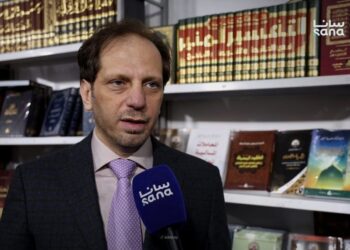
Minority groups in Syria should be seen as a political power, head of the Syrian Network for Human Rights (SNHR) Fadel Abdulghany said, as the country’s interim government works on key reforms and rebuilds institutions.
Speaking on the general situation in Syria following the fall of the Bashar Assad regime, Abdulghany told Daily Sabah: “Now in Syria we need to look to minorities as a political power, not as a minority, because in Syria it’s different.”
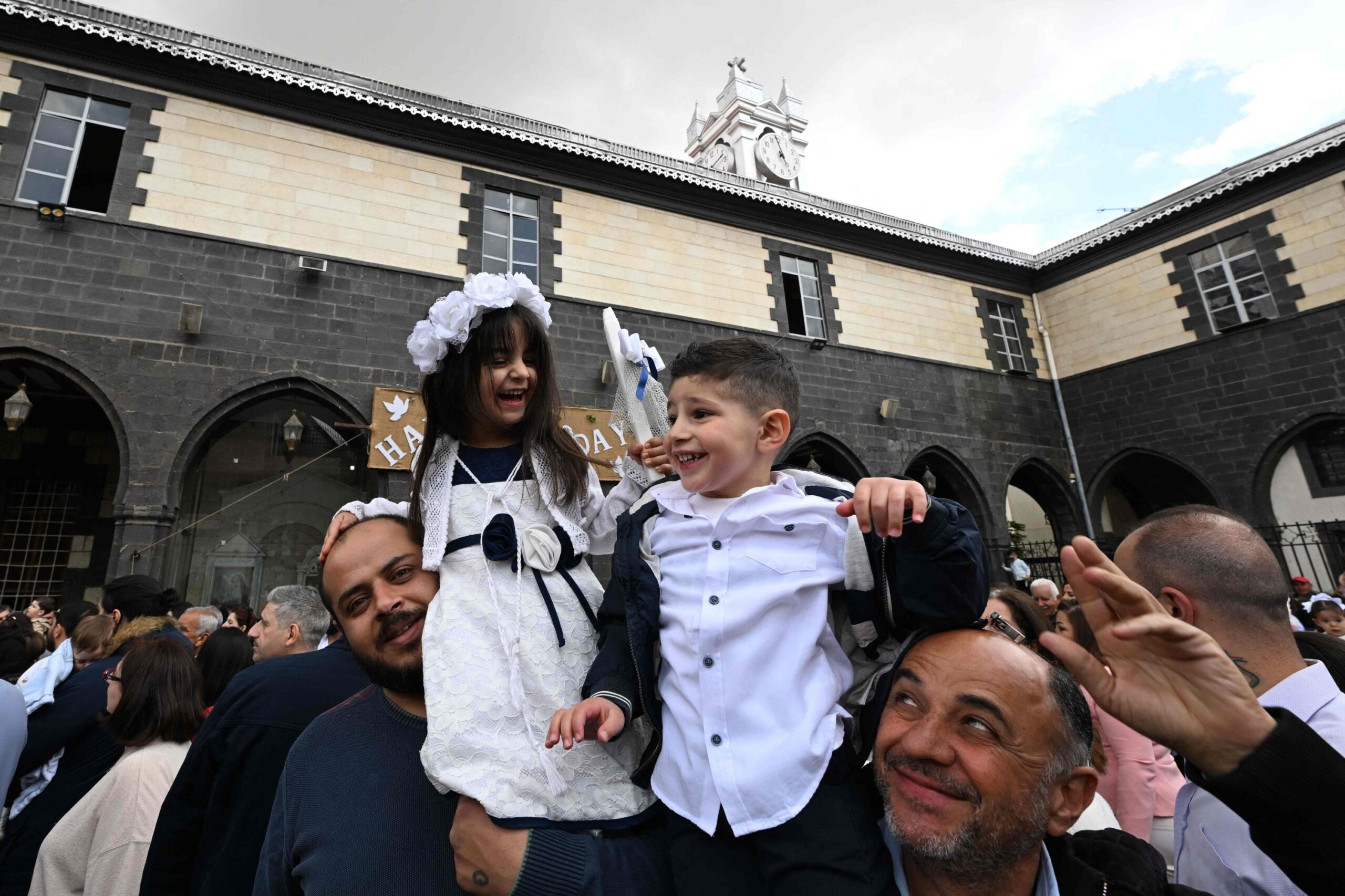
“Here we are not talking about division. We are talking about a situation where those minorities don’t have a party to represent them. So, the only way to represent them is to include them, to include Turkmen, to include Alawite, to include Druze, to include Christians in the process,” he added.
On March 29, Syria’s interim President Ahmad al-Sharaa announced a new 23-member Cabinet, which includes one woman. Five women previously served in the transitional government formed last December.
Amid international calls for an inclusive transition, the new government has four ministers from Syria’s minority groups – a Christian, a Druze, a Kurd and an Alawite. But none were handed key portfolios.
On the Turkmen community’s complaints of weak representation, Abdulghany said: “I agree with this criticism. And I think this needs to be ratified by the government.”
The new Syrian administration needs to be more open to the Syrian community and more inclusive, he added.
“I think that the situation in general looks OK. It can be much better, but due to a lot of challenges after Assad’s fall, I think the new authority is trying to manage,” Abdulghany said, reminding that as the country’s new rulers “liberated Syria from north to Damascus,” no civilian casualties were recorded.
On the developments in Syria’s mainly Alawite coastal regions, he said that violence erupted with Assad regime remnants killing civilians and security forces.
“I think this is a huge challenge for the new government and I think they need to hold accountable who committed all of those violations, because now everyone is looking at what the new government will do toward accountability,” Abdulghany added.
Hundreds of Alawites were reportedly killed in Syria’s western coastal region in early March in apparent retribution for a deadly ambush on Syria’s new security forces by armed loyalists to the toppled dictator Assad, an Alawite.
‘Syrian-owned army’
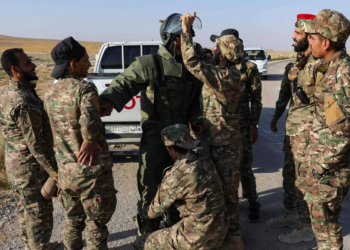
On the situation of the armed forces, Abdulghany said that security forces currently are comprised mainly of former HTS members. “It shouldn’t be like that. It should include all Syrians.”
He mentioned that last week the administration invited defected officers from the Assad regime to be included in the army. Describing the move as “late,” Abdulghany continued to say that the army must not be politicized.
Abdulghany elaborated that if former Assad remnants are not included, they may create trouble and even have the potential to ally with foreign powers against the government. “This would mean we will never achieve stability.”
‘Challenges remain’
One of the main challenges the new Syrian government faces is coming from Israel, he said. “The connection with the spiritual leader of Syria’s Druze community, Hikmat al-Hajari, is empowered by Israel.”