Fadel Abdulghany
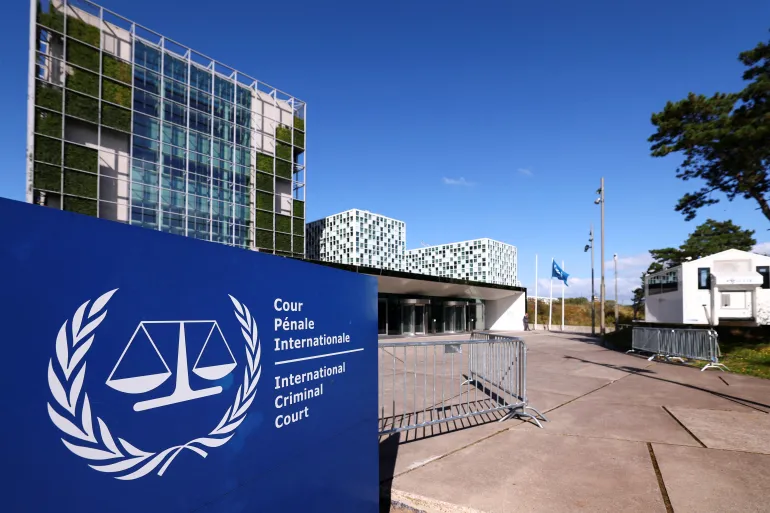
On October 9, 2026, the U.S. Department of the Treasury placed the International Criminal Court (ICC) on its main sanctions list, the Specially Designated Nationals and Blocked Persons List (SDN List), and the decision came only hours after Navi Pillay, a former judge of the Court, was awarded the Nobel Peace Prize.
The name of the Court appeared on the list like that of any other sanctioned entity, accompanied by a dry procedural preamble of identifying details, which include its address (The Hague), the date of its establishment, and its Dutch tax identification number.
However, in the very same announcement, the Department issued four “general licenses,” that is, exemptions which allow the Court to continue a large part of its daily work.
What is new is the targeted entity. Washington had previously sanctioned officials of the Court and organizations that cooperate with it; as for now, it has sanctioned the Court itself. Thus, the access of the Court to part of the funds and services connected to the United States has become conditional on an American authorization, which the administration says it may amend depending on the degree of responsiveness shown by the States Parties.
Washington invokes sovereignty, which is a serious legal argument; however, it does not justify a measure of this magnitude. The dispute revolves around the right of the Court to exercise jurisdiction over specific cases, whereas the pressure reaches everything the Court needs in order to function, from funding to services.
This is coercion in its precise sense: pressure whose aim is to compel the Court to change its conduct. As for whether this pressure violates international law, and whether it has actually harmed the Court so far, these are two different questions.
Washington did not need a new law for this step. Executive Order 14203, which President Trump issued in February 2025, allows the blocking of the property and interests in property of foreign persons who directly engage in an investigation by the Court of nationals of the United States or of allied states, or in their prosecution, without the consent of their states, as well as of those who provide them with material support.
The order is not limited to individuals; rather, it extends to entities as well. Before October 9, it had been applied to 13 officials of the Court, a United Nations Special Rapporteur, and three Palestinian human rights organizations, so dealings with them were already restricted.
What is new is that ordinary dealings with the Court itself have become restricted wherever American authority reaches, that is, in everything related to property and interests in property located in the United States, or in the possession or under the control of “U.S. persons,” who are, according to the Executive Order, U.S. citizens, lawful permanent residents, and entities organized under American law, including their foreign branches, as well as any person present in the United States.
These persons may not provide funds, goods, or services to the Court except under an exemption or a license, and the blocking has been in effect since the moment of the announcement. As for what some reports have stated, namely that the sanctions will only begin after 180 days, it is the opposite of the truth: the sanctions are in force now, and the licenses are merely exemptions from them.
These exemptions are broad. General License No. 13 authorizes, until April 7, 2027, the transactions that are ordinarily incident and necessary to the maintenance of the operations of the Court and of its contracts and agreements, or to their gradual wind down.
The guidance accompanying it clarifies that this includes the contributions of the States Parties, salaries, health insurance, rent, utilities, and routine commercial services; that is to say, this license is not an order to close the Court.
General License No. 14 authorizes, with no expiration date, telecommunications, internet, and software services, including cloud services. Two other licenses, narrower in scope, concern pension payments and the detainees held by the Court.
However, the two main licenses do not authorize dealings with individuals who were previously sanctioned, and this is a significant restriction; for, according to the figures of the Court itself last August, the sanctions list includes the names of 9 of its 18 judges, as well as both Deputy Prosecutors. The expiration of General License No. 13 does not revoke the other licenses; however, Washington is able to amend or revoke any of them.
The statements of the American administration itself on the licenses reveal the real aim of the sanction. The Department of State said that the license for the continuation of operations, with its duration of 180 days, is intended to give the States Parties time “to demonstrate meaningful progress on diplomatic and legal resolutions” that address the American concerns, and that “this GL can be adjusted in response to the success or failure of such efforts to address our concerns.”
The Secretary of State Marco Rubio was more explicit when he said: “Either the ICC will end its threats, or we will end the ICC.”
These statements reveal what Washington wants, not what it has achieved; nothing so far indicates that the Court has changed any decision. However, they show that the license is a bargaining chip in a negotiation, not merely a means to keep the Court operating, and that the message is directed at the states that fund the Court and oversee it.
It is here that the sanction touches upon the independence of the Court, an independence which has two faces: legal and practical. The Rome Statute, the treaty that established the Court, protects, in its Articles 40 and 42, the judges and the prosecutors from any external instructions. However, their work in reality depends on salaries, insurance, evidence preservation systems, and banks.
When access to these things becomes contingent upon an authorization from a government that rejects the jurisdiction of the Court and is able to change this authorization whenever it wishes, independence remains intact on paper, but the Court operates under permanent pressure, even if no judicial decision has changed.
This risk is not limited to the cases to which Washington objects. The Court uses the same financial and technical systems in all of its cases; therefore, restrictions imposed because of the Afghanistan and Palestine investigations could harm other cases, from Darfur to Ukraine.
The objection of Washington is not without foundation. The United States has not acceded to the Rome Statute, and the prosecution of officials from a state that has not accepted the jurisdiction of the Court raises serious questions: may the Court try the nationals of a state that has not consented to become a party to it? And do its officials enjoy immunity? Moreover, any state ordinarily has the right to prevent whomever it wishes from using its financial system, so long as it does not breach an international obligation it owes; this is an unfriendly act, but a lawful one (what is known as retorsion). Nevertheless, this argument does not prove everything the administration claims.
Article 12 of the Rome Statute grants the Court jurisdiction over crimes committed on the territory of a State Party, regardless of the nationality of the accused. It is a jurisdiction over individuals, not over states, and it is on this basis that the Court relied when it authorized the investigation in Afghanistan in 2020, and when it issued its decision on Palestine in 2021.
This jurisdiction does not oblige the United States to cooperate with the Court, and it leaves the question of immunity to be examined in each case separately. Furthermore, Article 17 renders inadmissible before the Court any case that is being genuinely investigated or prosecuted by a state which has jurisdiction over it, and Article 19 allows such a state, whether a State Party or not, to challenge the admissibility of the case before the Court on this ground.
That is to say, Washington has a legal avenue to object from within the Rome Statute system itself. As for Rubio, he holds that Americans are not subject to the Court merely because their country is not a party to it, and this is not what the Rome Statute says.
Moreover, the legality of the sanctions within the United States is one thing, and their lawfulness under international law is another. The American emergency laws answer only the first question.
Even within the United States, these sanctions have limits: in the case of Rona v. Trump, a federal court in New York ruled on July 30, 2025, that barring two law professors from working with the International Criminal Court, a work which is built on speech and the expression of opinion, violates the freedom of expression guaranteed by the U.S. Constitution.
However, the ruling protects only the two professors who brought the suit, and it does not address the sanctioning of the Court itself. As for the international level, the obligations of each party differ. The Netherlands, which hosts the Court, is bound under the “Headquarters Agreement” concluded with it in 2007 to provide it with public services and to protect its property, its communications, and its freedom to dispose of its funds.
The States Parties are bound by the Rome Statute; however, neither of the two agreements binds the United States, nor does either of them compel a private bank to execute any transaction.
In order to say that the sanctions violate international law, it is necessary to identify an international rule binding on the United States, and then to prove that the United States has breached it. The joint objection of Canada, Denmark, France, Germany, Italy, Japan, the Netherlands, and the United Kingdom carries a political weight, but it is not sufficient to prove that.
Furthermore, the administration does not claim that its sanctions are a response to an internationally wrongful act committed by the Court, which international law permits in specific cases under the name of “countermeasures”; rather, it relies on sovereignty and on the American emergency laws.
The existence of restrictions on paper does not mean that actual harm has occurred. As of the writing of these lines, there is no evidence of the freezing of state contributions, the interruption of salaries, or the halting of any judicial proceedings. As for the disruptions that the work of the Court has witnessed, they preceded the latest sanction.
On September 28, the Bureau of the Assembly of States Parties (the Assembly being the body that comprises the member states) decided to move the annual session of the Assembly from New York to The Hague, citing obstacles that might prevent some states from participating if it were held in New York; press reports link this relocation to the sanctions and to the American visa restrictions.
On October 1, the contract of the Court with the insurance company AXA ended by mutual agreement of the two parties, as the Court stated, without mentioning the reason; and the Financial Times reported that the company had pointed to the risk of the extraterritorial reach of American sanctions. Hence, none of this can be linked to the decision of October 9.
The Trust Fund for Victims, which is the body established under the Rome Statute to implement reparations orders and to assist victims, has warned of risks threatening the reparations programs; however, the warning does not mean that any program has stopped. The more likely source of disruption is the companies and banks that deal with the Court.
The license authorizes the transaction, but it does not oblige any bank or supplier to execute it. Companies subject to American law have become compelled to review their dealings with the Court, and some of them may refrain even from authorized business, in order to avoid the burdens and costs of compliance verification, or because they do not know what will happen in April.
Rejecting this sanction does not mean defending everything the Court does. There are serious criticisms of its performance, among them the accusation of selectivity in choosing its cases, and of failing to respect the right of national courts to examine cases first (what is known as the principle of complementarity); however, addressing these criticisms must take place through the mechanisms of the Rome Statute itself, not through sanctions.
The conclusion that the evidence allows is limited and cautious: sovereignty explains the objection of Washington, whereas the precise description of the means it has chosen is coercion. Whether this means is lawful under international law has not yet been settled; as for its actual effect, it will depend on what banks, suppliers, the States Parties, and the U.S. Department of the Treasury do before April 7, 2027.
The authority of the Court to issue its judgments does not come from Washington; however, its access to basic financial and commercial services connected to the United States now requires an American authorization that Washington is able to change whenever it wishes. This is what changed on October 9.
Nevertheless, the coming six months are not a countdown toward an inevitable end, but rather a grace period that can be put to use. If the States Parties hasten to provide banking, technical, and insurance alternatives beyond the reach of American law, the Netherlands abides by its commitments under the Headquarters Agreement, and the capitals that objected to the sanction move from statements to actions, then the Court may emerge from this crisis stronger than it was.
In Darfur, there are victims who have waited for many long years for reparations to reach them; in Ukraine, there are families searching for their children who were forcibly deported; and in Palestine and Afghanistan, there are victims who find no other court to which they can turn. These people do not care much about the debate over licenses and the limits of the jurisdiction of the Court, as much as they care that the doors of the Court in The Hague remain open.
If the states that established the Court make good use of this grace period, April 7, 2027, will not be a date for the closing of those doors; rather, it will be the day on which it becomes clear that international justice is too strong to hinge on a license.